
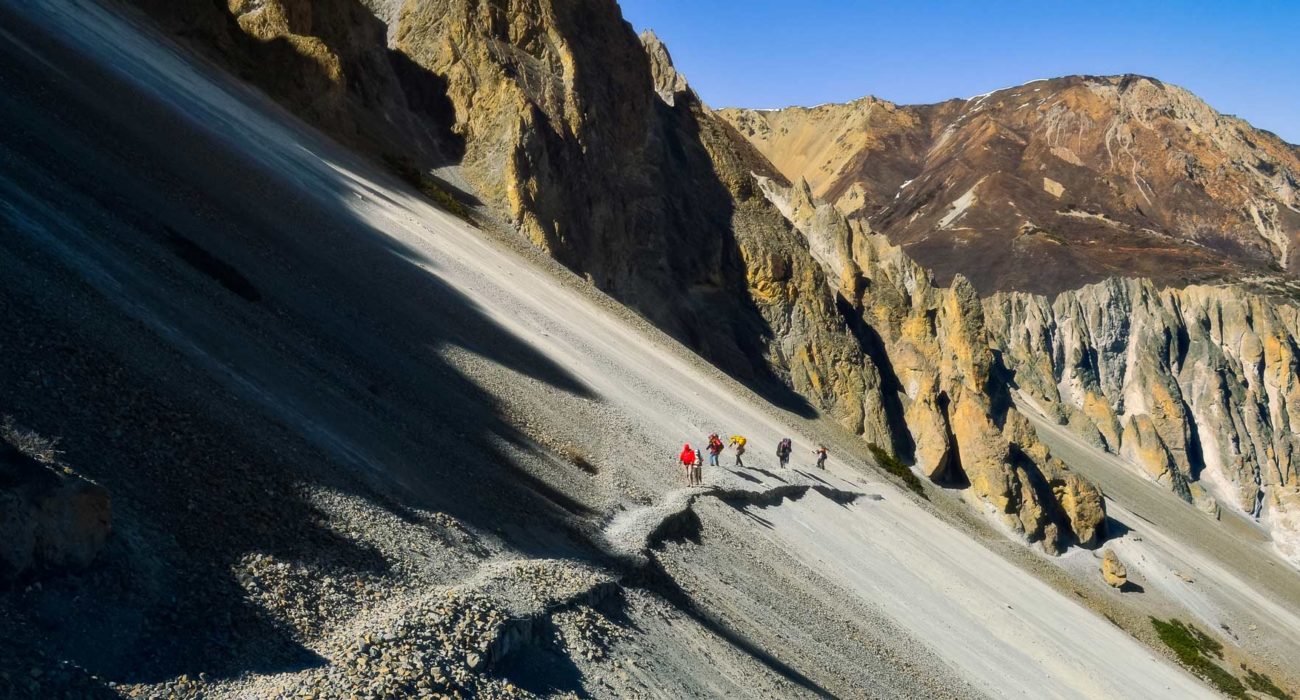
Trekking in Nepal is, for many, the finest hiking experience on the planet — the reason millions of travellers reach the foot of the Himalayas every year. You don't need a tent, you don't need technical climbing skills and you don't have to be an athlete: you need decent fitness, a little preparation and the time to walk slowly among the highest peaks on Earth. This is the complete guide — the hub you start from — to understand what teahouse trekking is, which regions exist, how to choose the right route for you and how to organize it properly.
What teahouse trekking is
In Nepal, "trekking" doesn't mean tents and wilderness survival. On the popular trails you walk from village to village and overnight in teahouses — simple, family-run lodges with basic twin rooms, shared toilets and a warm dining room heated by a stove, where every trekker gathers in the evening. You carry no tent, cookware or food; you eat on the spot. The national dish and the trekker's "fuel" is dal bhat — rice with lentils, vegetables and pickle, usually with free refills.
This system makes Nepal uniquely accessible: you can cross the Himalayas with a light daypack, without expensive camping gear, enjoying a hot meal and a roof every night. As you climb, prices rise (everything comes up by mule, yak or porter), but the hospitality of the locals — Sherpa in the Khumbu, Gurung and Magar in Annapurna, Tamang in Langtang — stays the warmest part of the experience.
A typical day on the trail
The rhythm in the Himalayas is simple and steady. You wake early, usually around 6–7, while the sky is still clear and the mountains stand out before the midday clouds cover them. Breakfast at the teahouse — eggs, pancakes, porridge, black tea or masala chai — and you set off walking by 8 at the latest. The first hours, with cool air and rested legs, are the most enjoyable.
Around noon you stop at a village for a hot lunch — almost always the filling dal bhat, which fuels the afternoon. You reach the next lodge in the early afternoon, so you can rest, take a hot shower (usually for a fee), sip tea with a view and adjust to the new altitude before dark. Evenings are social: everyone gathers around the dining-room stove, swaps stories with trekkers from around the world and turns in early — because tomorrow the same beautiful routine begins again. That simple, slow rhythm is part of the magic: for a few days, life narrows down to walking, eating, the view and sleep.
The main trekking regions
Nepal has dozens of routes, but the vast majority of travellers move through four major regions — plus a world of "off-beat" trails for the more experienced.
- Everest / Khumbu: the most iconic region, aiming for Everest Base Camp (5,364m). It begins with the spectacular flight to Lukla and passes through Namche Bazaar, the Sherpa monasteries and the glaciers below the highest peak on Earth. The highest, the priciest, the ultimate "trip of a lifetime".
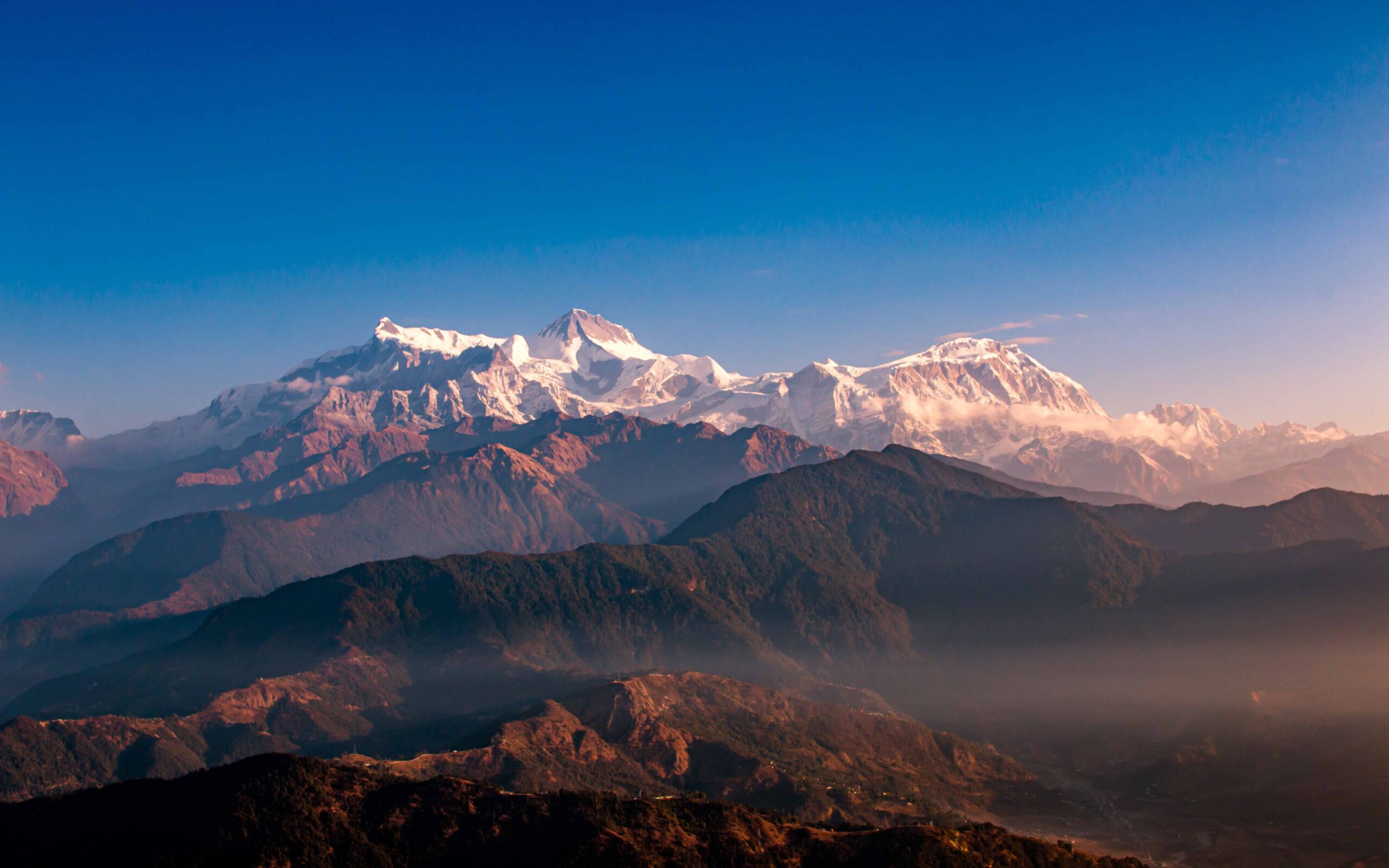
- Annapurna: the most flexible and accessible region, based out of Pokhara. Everything fits here: the easy Poon Hill / Ghorepani, the classic Annapurna Base Camp, the grand Annapurna Circuit with its Thorong La pass, and the rising Mardi Himal. See the full picture in our guide to the Annapurna region.
- Langtang: the closest "true" Himalayan valley to Kathmandu. The Langtang Valley Trek is quieter, cheaper and flight-free — you reach it by road. Ideal if you have 7–10 days and want authentic mountains away from the crowds.
- Manaslu: for those who want a Circuit experience without the tourism of Annapurna. The Manaslu Circuit loops around the world's eighth-highest mountain, crosses the Larke La pass (5,106m) and is a "restricted area" — it requires a special permit and a mandatory guide.
- Off-beat & restricted: for the experienced and the romantics — Upper Mustang (the "forbidden kingdom" with its Tibetan heritage), Kanchenjunga on the eastern border, Dolpo, Nar Phu and Tsum Valley. Bigger budget, special permits, fewer people, singular landscapes.
Comparing the top treks
The fastest way to find your route: a table of the key traits of the seven most popular treks. Click a name for the detailed guide to each route.
| Trek | Days | Max altitude | Difficulty | Best season | Permit |
|---|---|---|---|---|---|
| Everest Base Camp | 12–14 | 5,364m | Demanding | Spring & Autumn | Sagarmatha NP + Khumbu |
| Annapurna Base Camp | 7–10 | 4,130m | Moderate | Spring & Autumn | ACAP |
| Poon Hill (Ghorepani) | 4–5 | 3,210m | Easy | Year-round | ACAP |
| Annapurna Circuit | 12–18 | 5,416m (Thorong La) | Demanding | Spring & Autumn | ACAP |
| Langtang Valley | 7–10 | 4,984m (Tserko Ri) | Moderate | Spring & Autumn | Langtang NP |
| Manaslu Circuit | 14–18 | 5,106m (Larke La) | Demanding | Autumn | Restricted + MCAP/ACAP |
| Mardi Himal | 5–7 | 4,500m | Moderate | Spring & Autumn | ACAP |
"Restricted" for Manaslu means a special permit, a mandatory licensed guide and a minimum of two trekkers — independent trekking is not allowed. Mardi Himal doesn't yet have its own dedicated guide on this site, but it's an excellent, quiet alternative to Poon Hill with panoramic views of "Fishtail" (Machapuchare).
How to choose a trek — by fitness, time & experience
The right route is the one that matches your time, your stamina and your mountain experience. A simple guide:
| Profile | Time available | Ideal treks |
|---|---|---|
| Beginner / first time | 4–7 days | Poon Hill / Ghorepani, Mardi Himal, short Langtang |
| Intermediate / good stamina | 7–12 days | Annapurna Base Camp, Langtang Valley |
| Experienced / wants altitude | 12–18 days | Everest Base Camp, Annapurna Circuit, Manaslu Circuit |
By time: if you only have one week available in total (with flights), stay in Annapurna — Poon Hill or a short ABC, without the expensive and unpredictable Lukla flight. With 2–3 weeks, the whole world opens up: EBC, the Circuit, Manaslu.
By fitness: no classic teahouse trek requires mountaineering skills, but they all require walking stamina. An easy trek (Poon Hill) needs comfort with 4–5 hours of walking; a demanding one (EBC, the Circuit) needs 2–3 months of preparation and comfort with 6–8 hours a day in thin air.
By altitude experience: if you've never been above 3,500m, start lower (ABC, Langtang) before you attempt the 5,000m+ of Everest or Manaslu. Altitude has nothing to do with your fitness — even athletes get altitude sickness if they climb too fast.
Permits & the licensed-guide rule
Each region has its own permits. The most common are ACAP (Annapurna Conservation Area, ~3,000 NPR / ~€22) and national-park entry tickets (Sagarmatha for Everest, Langtang NP). The "restricted areas" (Manaslu, Upper Mustang, Dolpo, Kanchenjunga, Nar Phu) require pricey special permits issued only through an agency.
Most important: since April 2023, the Nepal Tourism Board scrapped independent guide-free trekking in TIMS areas. In practice, an independent trekker must now hire a licensed guide through a registered agency. Beyond the rule, a guide offers altitude safety, weather knowledge, lodging logistics and a cultural connection money can't buy. A porter stays optional, but transforms the experience by carrying 10–15 kg. All permit categories, prices and the process in detail in our guide to trekking permits in Nepal.
What drives the cost
Nepal remains one of the most affordable mountain destinations in the world, but no trek comes with a single fixed price. The cost is shaped by the route and region (a restricted area like Manaslu is nothing like Poon Hill), the season, the size of the group, the length, whether you want a guide and a porter, and the comfort level of the lodges.
The only figures known in advance are the fixed third-party costs: the permits (€20–100 depending on the region), the Lukla flight for Everest (€350–420 round trip) and the Athens–Kathmandu ticket (€430–800, one stop — Turkish, Qatar, Emirates/Etihad), plus travel insurance and gear. Much of the gear can be rented or bought cheaply in Kathmandu's Thamel. What exactly should you bring? See the full checklist in our guide on what to pack for Nepal.
Tell us which region draws you — Everest, Annapurna, Langtang or a restricted area — and how many days you have. Ask us for a quote.
When to go — the seasons
The season makes a huge difference to the views, temperature and safety. Two periods stand out:
- Autumn (Sep/Oct–November): the top season. Crystal-clear skies after the monsoon, stable weather, ideal temperatures — but also the biggest crowds.
- Spring (March–May): warmer weather, blooming rhododendrons on the slopes, Everest climbing season. Slightly hazier midday views.
- Winter (Dec–Feb): clear views but bitter cold; the high passes (Thorong La, Larke La) close with snow and some teahouses come down.
- Monsoon (Jun–Aug): rain, clouds, mud and leeches. Exception: the "rain-shadow" regions like Upper Mustang and Dolpo, which stay dry.
For a detailed breakdown by activity and month, see the best time to visit Nepal.
Altitude, acclimatization & insurance
The number one risk on a trek isn't cliffs — it's altitude sickness (AMS). Above 2,500m, the thin air puts the body under strain and poor adaptation can turn dangerous. The golden rules: "climb high, sleep low", don't raise your sleeping altitude by more than 300–500m per day above 3,000m, respect the acclimatization days, drink plenty of water and — the most important rule — if symptoms worsen, descend. Descent is the only sure cure. Read in detail what it is, how to prevent it and when to descend in our dedicated guide to altitude sickness in the Himalayas.
A separate lesson: travel insurance is not optional. It must explicitly cover trekking to the maximum altitude of your route and helicopter rescue. On the high trails (Khumbu, Manaslu) heli evacuation is the standard in a serious incident, and its cost without insurance runs into the thousands of euros. Confirm the altitude limits of your policy before you leave.
Responsible trekking & porters
The mountains and their people give a lot — it's worth giving something back. A few principles that make a difference: treat your porter with respect — don't load them beyond 20–25 kg, make sure they have proper clothing and boots for the altitude plus insurance, and give a fair tip at the end (a guideline is $80–100 for the guide and $20–40 for the porter). By supporting local guides and family-run teahouses, your money stays in the mountain communities rather than with big chains.
For the environment, follow "leave no trace": carry out your rubbish, use a refillable bottle with purification tablets or a filter instead of bottled water (plastic bottles are a huge problem on the trails), and stay on the marked path so the slopes don't erode. Dress respectfully in the villages, ask permission before photographing people, and learn a couple of words of Nepali — a "Namaste" and a "dhanyabad" (thank you) open every door. Responsible trekking keeps the Himalayas beautiful for those who come next.
Plan your trek with Dimitris — or with premium care
The beauty of Nepal is that you don't have to organize it alone. We run departures with Dimitris and experienced local licensed guides, so you don't deal with permits, transfers, lodging or logistics — you just show up and walk. If you prefer the company of a Greek group, see our group trip to Nepal. And if you want something more private and comfortable — a personal itinerary, hand-picked lodges, a pace on your own terms and safety planned down to the last detail — our premium partner, Elysian Himalaya, designs any of these treks as a refined, private journey by the same Greek team in Nepal. Whether you go independently or organized, the Himalayas are waiting.
Gallery
Frequently asked questions
- For a first time, the top choices are Poon Hill / Ghorepani (4–5 days, up to 3,210m), Mardi Himal (5–7 days) and Annapurna Base Camp (7–10 days, 4,130m). All three follow well-trodden trails with plenty of teahouses, lower altitude and less altitude-sickness risk than Everest Base Camp.
- Essentially yes. Since April 2023, independent trekkers must hire a licensed guide through a registered agency in TIMS areas and national parks. In restricted areas (Manaslu, Upper Mustang, Dolpo, Kanchenjunga, Nar Phu) a guide has been mandatory for years, with a minimum of two trekkers.
- There is no single number that covers every trek. The cost depends on the route and region, the season, the size of the group, the length, whether you want a guide and a porter, and the comfort level of the lodges. The only fixed items are the official permits (€20–100 depending on the area), the Lukla flight for Everest (€350–420 round trip) and the Athens–Kathmandu ticket (€430–800). Tell us which route interests you and we will send you a quote through our contact page.
- Spring (March–May) and autumn (September/October–November). Autumn has the clearest skies and most stable views, spring the blooming rhododendrons. The monsoon (June–August) brings rain, clouds and leeches, while winter closes the high passes with snow.
- No technical climbing — the classic teahouse treks follow trails, with no ropes or crampons. But you need good stamina: you walk 5–7 hours a day, often uphill and in thin air. With 2–3 months of preparation (cardio, hikes, stairs) a healthy person manages comfortably.
- It depends on the route: 4–5 days for Poon Hill, 7–10 for Annapurna Base Camp or Langtang, 12–14 for Everest Base Camp and 14–18 for Manaslu or the Annapurna Circuit. Always add 1–2 buffer days for flight delays and acclimatization.
- The Annapurna region is more accessible, cheaper and more flexible (from 4 to 18 days, no expensive flight), ideal for a first time. Everest / Khumbu is higher, pricier (the Lukla flight) and more iconic. For a first big trek choose Annapurna; if you want the Everest dream, go for Everest Base Camp.
Keep reading
Related articles
 Activities
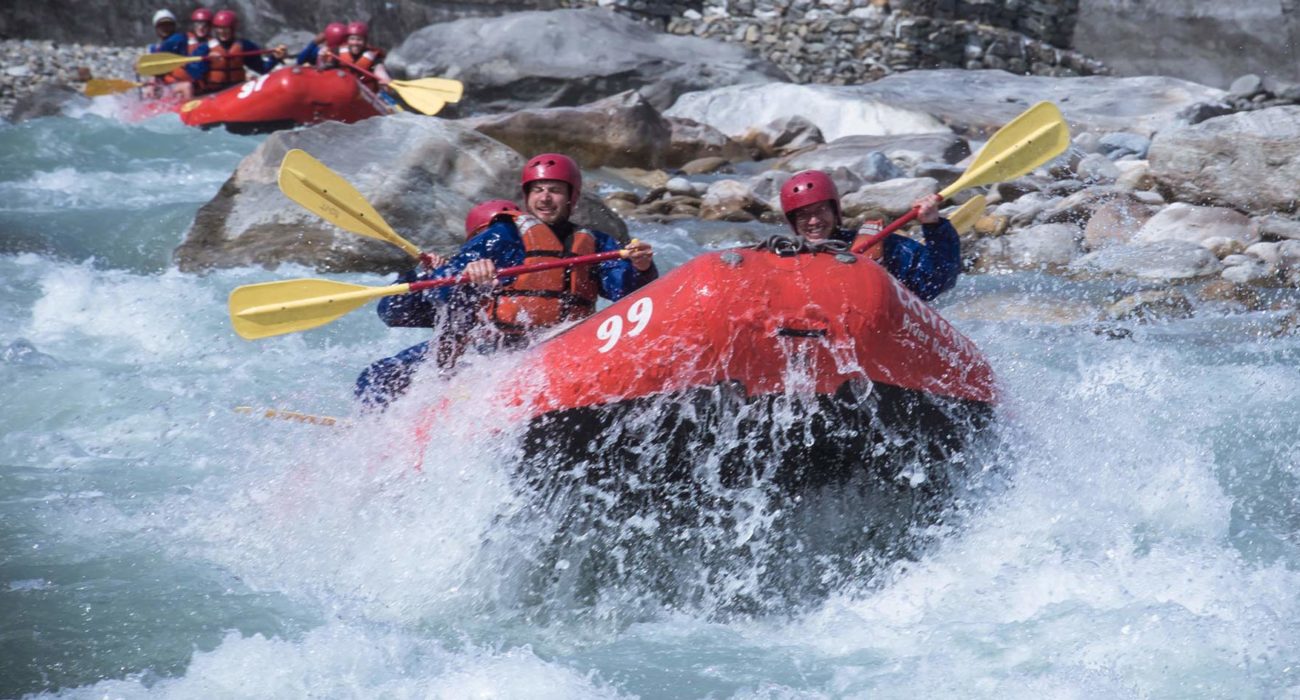
Rafting & Kayaking in Nepal
The complete guide to rafting & kayaking in Nepal: a river table (Trishuli, Seti, Bhote Koshi, Kali Gandaki, Sun Koshi, Marsyangdi, Karnali), difficulty grades, seasons, costs in euros, safety, and how to combine it with trekking.
 Activities
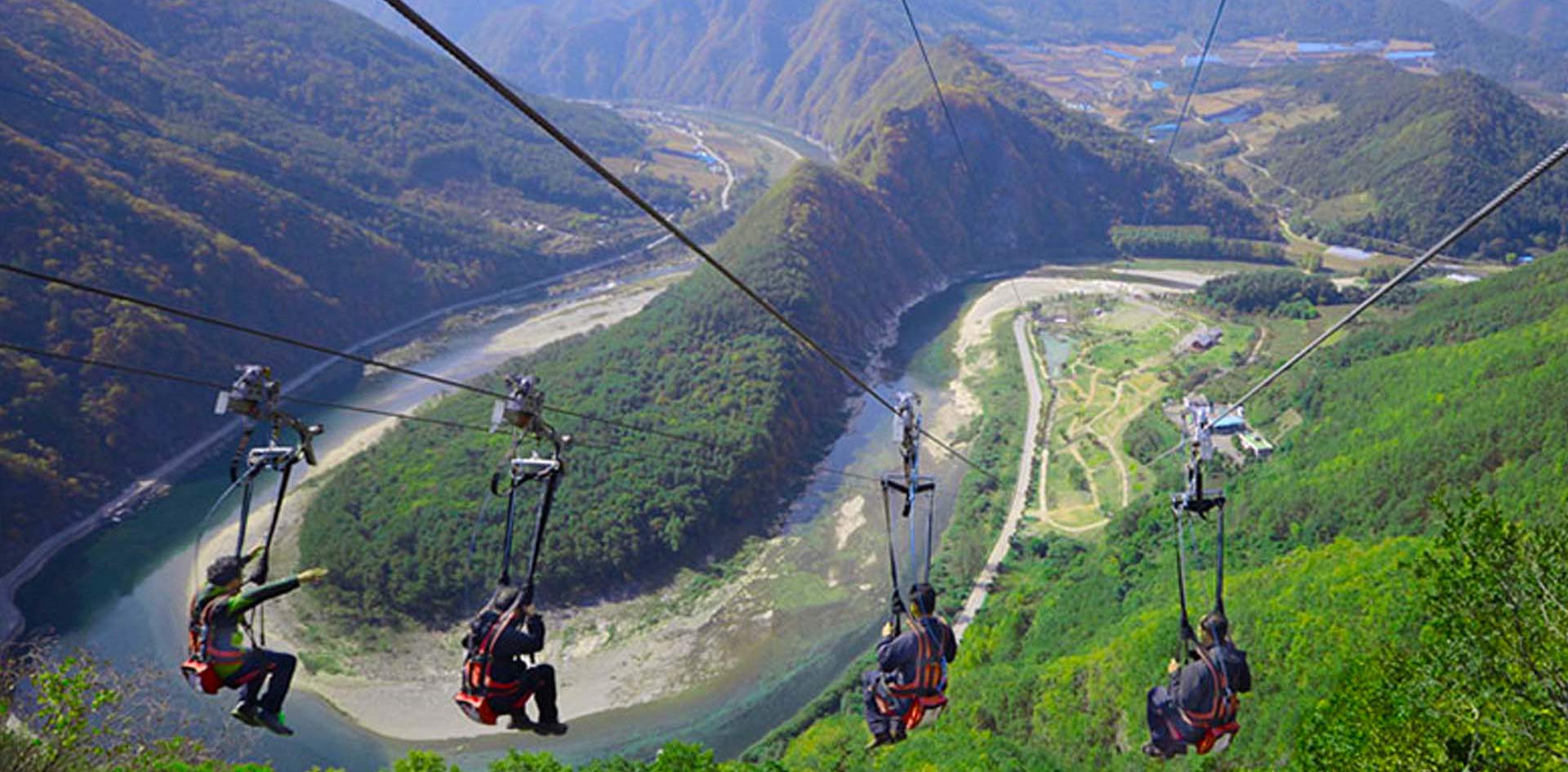
Ziplining in Pokhara: Nepal's Most Intense Adventure
A 1.8 km, 600 m-drop zipline over Pokhara at up to 120 km/h — specs, cost, booking, safety, best season and how it pairs with paragliding.
 Trekking
Annapurna: The Complete Trekking Guide to Nepal's Most Popular Region
The Annapurna massif, the top routes (ABC, Circuit, Poon Hill, Mardi Himal, Tilicho), the ACAP permit, seasons, sample itineraries and how to choose.