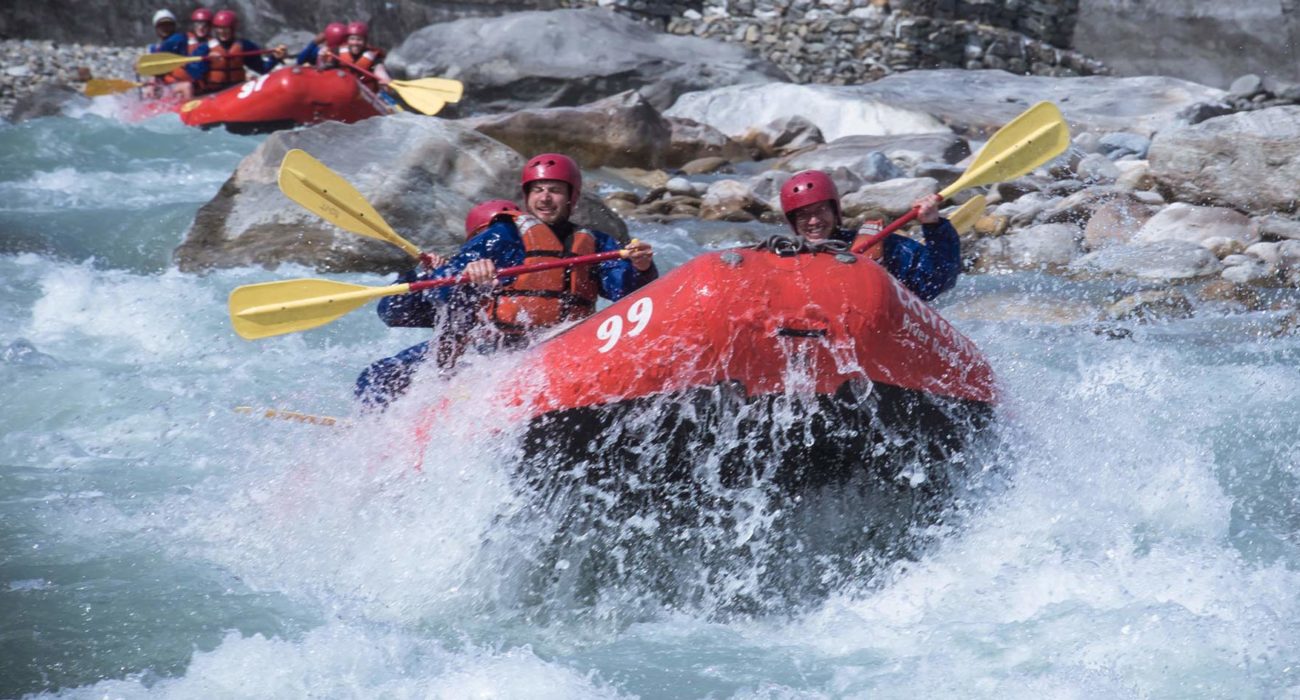
Few travellers realise that Nepal is not only about the Himalayas and trekking: it is also one of the world's premier rafting and kayaking destinations. Rivers pouring off the highest mountains on Earth offer everything — from gentle family floats on warm water to multi-day expeditions through wild gorges, where you camp on sandy beaches beside the current. Whether you travel solo, with friends, or with Dimitris on an organised group trip, rafting is one of the easiest and most affordable hits of adrenaline you can add to your itinerary.
In this guide you'll find a detailed table of the main rivers, the international difficulty grades, the best seasons, costs in euros, what to watch for when it comes to safety, and how to combine rafting with trekking or a safari in Chitwan National Park.
Why Nepal is a whitewater paradise
Nepal has a combination you rarely find anywhere else on the planet: colossal elevation drop, abundant water and dozens of rivers packed close together.
- Enormous gradient: rivers lose thousands of metres of altitude within a few kilometres, creating continuous, powerful rapids.
- Water year-round: fed by Himalayan snowmelt and the monsoon, they flow all 12 months.
- Variety: more than a dozen rivers, from calm grade II to explosive V — there's a run for every level of experience.
- World-class expeditions: the Sun Koshi and the Karnali rank among the world's top river trips according to National Geographic.
- Affordable: a full-day raft starts from around €30, far cheaper than a comparable experience in Europe.
Best of all, most rivers sit on or near the Kathmandu – Pokhara – Chitwan axis — the very route most travellers follow anyway. So rafting slots easily into your plan without long detours.
The difficulty scale: grades I–VI
Whitewater is graded internationally on a scale from I to VI. Most commercial runs a healthy adult with no experience can join sit at III–IV.
| Grade | Rating | What it means |
|---|---|---|
| I | Very easy | Calm water, small ripples — essentially a float. |
| II | Easy | Simple rapids, clear passages. Ideal for first-timers and kids. |
| III | Moderate | Higher, irregular waves; needs coordinated paddling. The sweet spot for most people. |
| IV | Advanced | Strong, fast rapids requiring precise moves. For those who have rafted at least once. |
| V | Expert | Extreme, dangerous passages. Only for experienced paddlers with a top team. |
| VI | At the limit | Barely runnable — a matter of exploration, not commercial trips. |
On Nepal's rivers the grade isn't fixed: it depends on the season. The same rapid that's a III in November can become a IV+ right after the monsoon, when water volume is far higher.
Nepal's rivers at a glance
| River | Grade | Duration | Best season | Put-in / access | Who for |
|---|---|---|---|---|---|
| Trishuli | III (–IV in monsoon) | ½–3 days | Sep–Dec, Mar–May | Kathmandu–Pokhara highway, ~3 hrs from Kathmandu | Beginners, families |
| Seti | II–III | 1–2 days | Year-round (warm water) | ~35 km from Pokhara (Damauli) | First-timers, families |
| Bhote Koshi | IV–V | ½–2 days | Oct–Nov, Mar–early May | ~3 hrs NE of Kathmandu, towards the Tibet border | Experienced, thrill-seekers |
| Kali Gandaki | III–IV+ | 2–3 days | Oct–Nov, Mar–Apr | Near Pokhara (put-in at Beni) | Intermediate–experienced, wilderness |
| Sun Koshi | III–IV+ (V in high water) | 7–9 days | Sep–Oct, Apr–May | Dolalghat (~3 hrs from Kathmandu) → Chatara (east) | Experienced, big expedition |
| Marsyangdi | IV–V | 2–4 days | Oct–Nov | Besisahar area (Annapurna) | Advanced, technical water |
| Karnali | IV–V | 9–10 days | Oct–Nov, Mar–Apr | Far-west Nepal (remote) | Experienced, epic expedition |
Trishuli — the easiest and most popular
If you're rafting for the first time, you'll probably do it here. The Trishuli runs right alongside the Kathmandu – Pokhara highway, so you don't lose a single day of your itinerary: you simply stop en route. Half-day and full-day runs with fun grade-III rapids (with playful names like "Ladies' Delight", "Upset", "Surprise"), warm water in the lowlands and lovely scenery with gorges and suspension bridges. It's the safest, most accessible option for beginners and families.
Seti — warm water, ideal for families
The Seti is the gentlest river on the list: warm, clear water, mellow grade II–III rapids and plenty of life on the banks (birds, occasionally gharial crocodiles from a distance). It sits very close to Pokhara, so it pairs perfectly with an Annapurna trek or a lakeside break on Phewa Lake. The second day, camping on a sandy beach, is the ideal stress-free "first taste" of a multi-day trip.
Bhote Koshi — adrenaline in a few kilometres
One of the steepest raftable rivers in the world. The Bhote Koshi drops hammering down from Tibet at a wild gradient, delivering continuous, explosive grade IV–V rapids over a short distance. It's a single day of pure adrenaline, ~3 hrs from Kathmandu. Not for your first time — but if you've rafted before and want the biggest hit, it's ideal. The water is cold, so a wetsuit is usually provided.
Kali Gandaki — a sacred river inside a gorge
The Kali Gandaki is sacred to Hindus and flows through one of the deepest gorges on the planet, between the Annapurna and Dhaulagiri massifs. A three-day run at grade III–IV+, far from any road: around you only waterfalls, tiny shrines and total solitude. You camp on riverside beaches. Ideal if you want the blend of adrenaline and wilderness without stepping up to a full Sun Koshi expedition.
Sun Koshi — "the river of gold"
The big expedition. The Sun Koshi ("golden river") crosses ~270 km through eastern Nepal over 7–9 days, starting at Dolalghat (~3 hrs from Kathmandu) and finishing at Chatara, near the Terai lowlands. Big water volume, huge grade III–IV+ waves (and V in the high autumn flows), nights camping on beaches and skies full of stars. It's considered one of the world's 10 best river trips. Finishing in the east also makes it a logical pairing with Chitwan.
Marsyangdi — technical whitewater for advanced paddlers
The Marsyangdi drops down from the Annapurna Circuit area and is among Nepal's most technical, continuous rapids (grade IV–V). It demands good fitness and ideally prior experience, but rewards you with stunning views of the snow-capped massifs. Best window is October–November.
Karnali — the epic of far-western Nepal
For the true adventurers: the country's largest river, in remote far-western Nepal. 9–10 days far from any road, grade IV–V, through pristine jungle and deep gorges. It takes time and commitment just to reach the put-in, but it's one of the wildest whitewater experiences out there.
When to go — seasons and water
Water level and difficulty grade change dramatically through the year. The two main seasons are autumn and spring.
- Autumn (Sep–Dec) — the prime season: Right after the monsoon, rivers are full, clean and powerful. September–early October has the biggest volume (and the highest grades), while Oct–Nov is the perfect mix of action, clear skies and runnability. It's also the best time for a trip to Nepal in general.
- Spring (Mar–early Jun): Snowmelt gradually raises the level; warmer weather, fewer people, an excellent choice.
- Monsoon (Jun–Aug): Rivers surge — very high, muddy and dangerous. Only experienced paddlers, on specific rivers, with dedicated high-volume expeditions.
- Winter (Dec–Feb): Cold but calm water; the mellow rivers (Trishuli, Seti) stay runnable for day trips, with a wetsuit.
How much it costs (in euros)
Rafting in Nepal is one of the most affordable adventures you'll do. For day trips, the local operators' prices are per person and fairly steady:
| Run | Indicative cost | What's included |
|---|---|---|
| Trishuli, half-day | ~€25–35 | Transfer, equipment, guide |
| Trishuli, full-day | ~€30–50 | + lunch |
| Bhote Koshi, full-day | ~€50–80 | Transfer, wetsuit, guide |
The multi-day expeditions — Seti over 2 days, Kali Gandaki over 3, Sun Koshi over 7–9, Karnali over 9–10 — are proper trips rather than a day's activity: they include transfers, equipment, guides, camping and all meals. Their price is set per departure, according to the river, the number of days, the season and the size of the group, and it drops noticeably for larger groups. Ask us for a quote for the expedition you have in mind. In your overall Nepal budget, a full-day raft is still one of the cheapest highlights of the whole trip.
Safety — what to check before you book
Rafting is safe when you do it with a serious operator. Before you pay, check:
- Certified operator: ideally a member of NARA (Nepal Association of Rafting Agencies), with experienced, trained river guides.
- Safety kayaker: on demanding rivers at least one rescue kayaker should accompany the raft.
- Equipment: a life jacket (PFD) and helmet for everyone — always, no exceptions — self-bailing rafts, throw bags and a first-aid kit.
- Safety briefing: before launch you'll learn the paddle commands, the "high side" and what to do if you fall in (feet first, on the surface).
- Ratio & season: avoid the monsoon as a beginner. You don't need to be a strong swimmer for a commercial grade-III run, but being comfortable in water helps.
- Travel insurance: make sure it covers adventure / whitewater activities.
What to bring
- For a day trip: swimwear, quick-dry clothes, sandals or old trainers that strap to your feet (no flip-flops), sunscreen, sunglasses with a strap, a hat, a change of clothes for afterwards and a small towel.
- For a multi-day expedition: add a dry bag (often provided), a headlamp, a light fleece for the nights, a sleeping bag (check whether the operator supplies one) and personal medication.
- Leave behind: valuables, jewellery and anything that can't take a soaking. Phone only in a waterproof case — and at your own risk.
Combining with trekking, Pokhara and Chitwan
The beauty of rafting in Nepal is how naturally it clicks into the rest of your trip:
- En route to Pokhara: stop on the Trishuli for a half or full day — zero detour.
- Before or after trekking: the Seti and Kali Gandaki are next to Pokhara, perfect for resting your legs after Annapurna or for a warm-up before the mountains. In Pokhara, also try the zipline and paragliding.
- Sun Koshi + Chitwan: the Sun Koshi's eastern take-out brings you close to the lowlands — ideal for a safari in Chitwan right after the expedition.
Want rafting built into an organised programme, with experienced local guides and zero planning stress? Elysian Himalaya designs private, premium journeys that weave whitewater into Annapurna, Pokhara and the Himalayas — from a relaxed afternoon on the Trishuli to a full Sun Koshi expedition.
Gallery
Frequently asked questions
- Not for the easy runs. The Trishuli (grade III) and Seti (II–III) suit beginners and families. For grade IV–V rivers like the Bhote Koshi or Marsyangdi you'll need prior experience.
- Autumn (September–December) is prime, with full, clean rivers. Spring (March–early June) is also very good. The monsoon (June–August) is for experienced paddlers only.
- A half day on the Trishuli is around €25–35 and a full day €30–50, including transfer, equipment and guide. The multi-day expeditions — Seti, Kali Gandaki, Sun Koshi, Karnali — are all-inclusive trips, and their price is set per departure according to the river, the number of days, the season and the size of the group. Tell us which one interests you and we will send you a quote through our contact page.
- It's not essential for a commercial grade-III run — you always wear a life jacket and helmet. Being comfortable in water helps, though. Either way, follow the safety briefing.
- Yes, very easily. The Trishuli is right on the Kathmandu–Pokhara road, while the Seti and Kali Gandaki are next to Pokhara — ideal before or after an Annapurna trek.
Keep reading
Related articles
 Activities
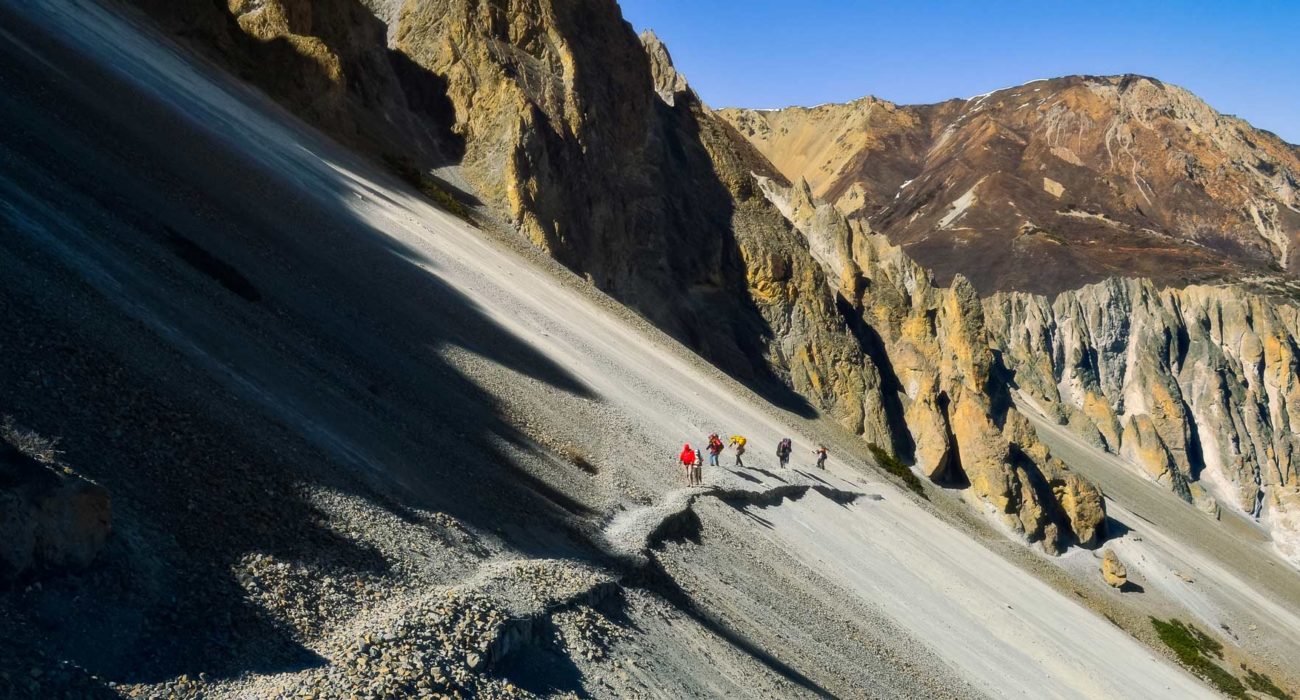
Trekking in Nepal: The Complete Hiking Guide
The definitive guide to trekking in Nepal: teahouse trekking, the main regions, a comparison of the top treks, permits, seasons and how to choose your route.
 Activities
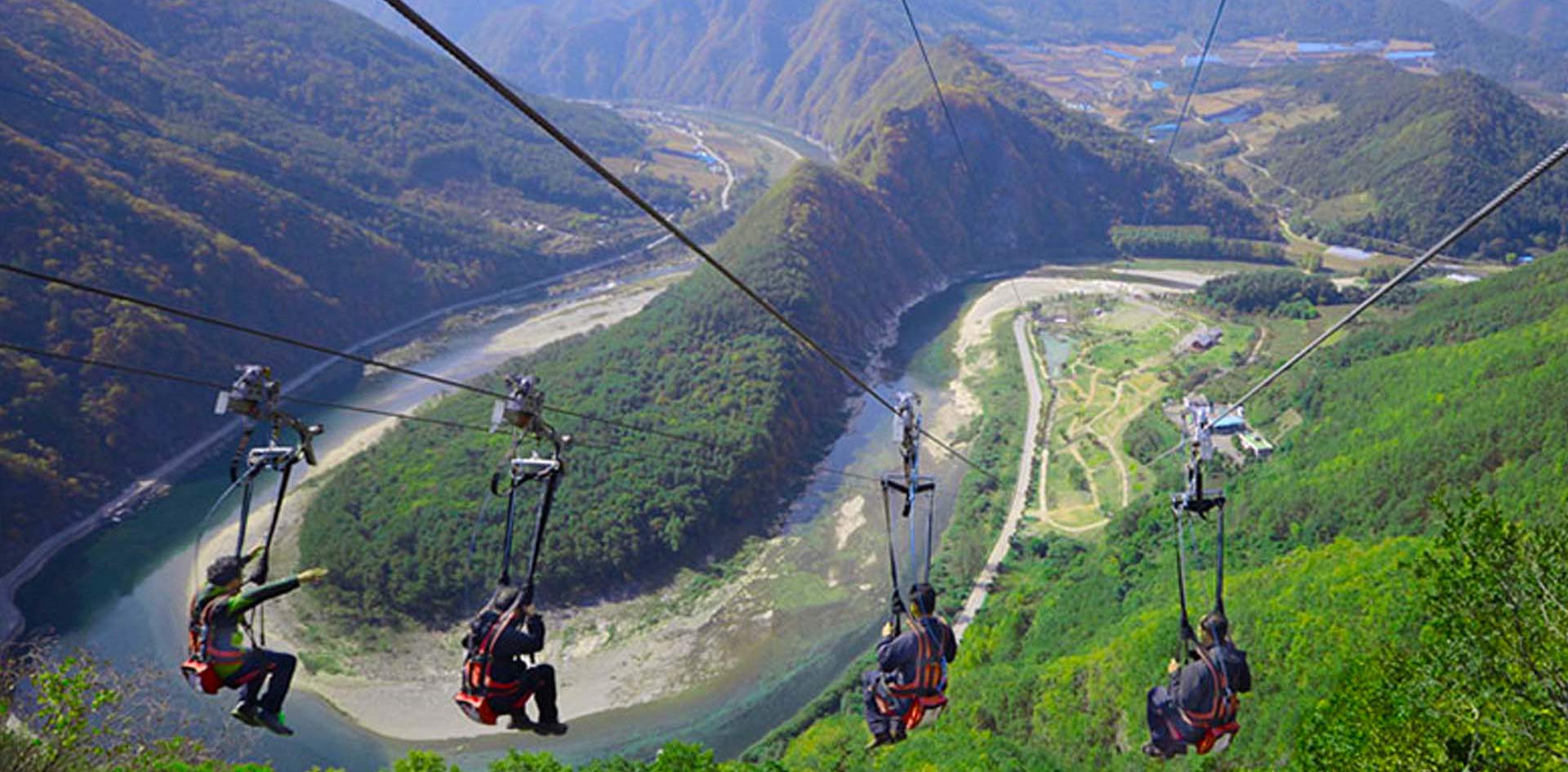
Ziplining in Pokhara: Nepal's Most Intense Adventure
A 1.8 km, 600 m-drop zipline over Pokhara at up to 120 km/h — specs, cost, booking, safety, best season and how it pairs with paragliding.
 Articles
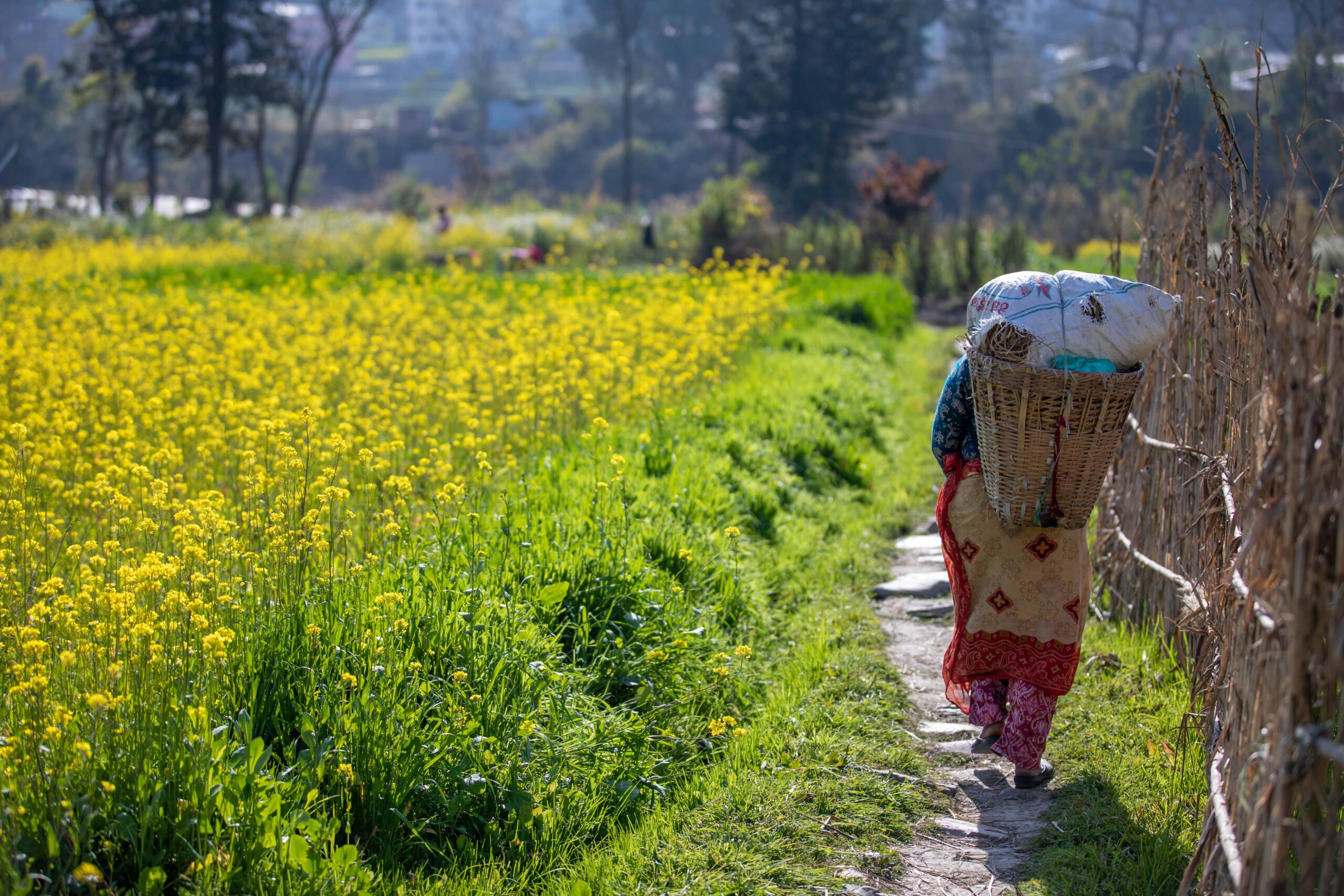
Nepal's Mustard Season: The Golden Fields
Every winter Nepal's countryside turns yellow with blooming mustard fields — when they bloom, where to see them, and why it's a dream for photography.