

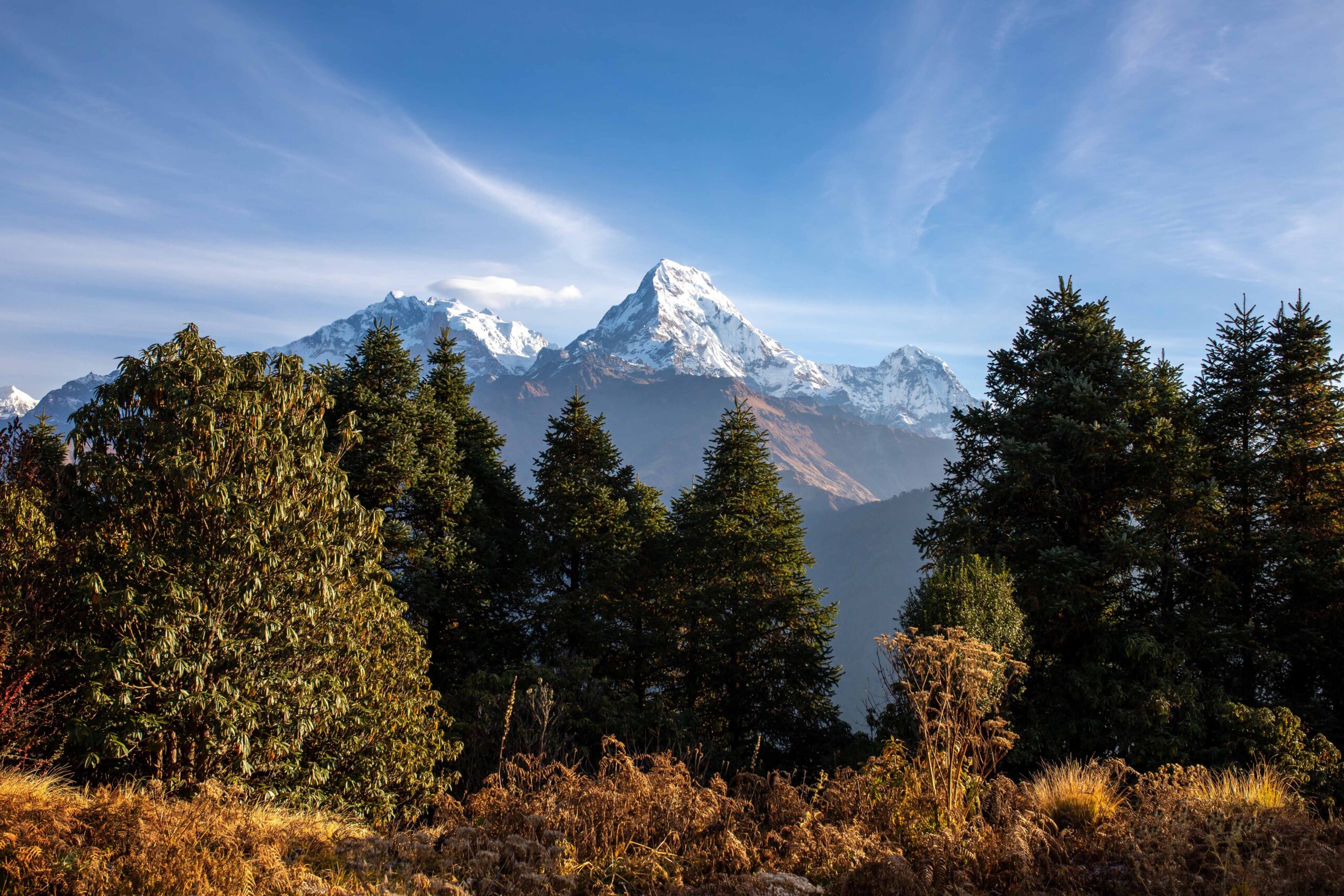
If there is one trek in the Himalayas that combines a genuinely big mountain with reasonable difficulty and an affordable price, it is the Annapurna Base Camp Trek — also known as ABC or the Annapurna Sanctuary. In just 7 to 11 days, starting from Pokhara, you climb to 4,130 metres and find yourself literally inside a natural amphitheatre ringed by peaks over 7,000 and 8,000 metres: Annapurna I (8,091m), Annapurna South, Hiunchuli and the iconic Machapuchare (Fishtail, 6,993m). No wonder Nepalis call it the "sanctuary of the gods".
Together with Poon Hill, it is the most popular choice for travellers doing their first big trek — lower altitude and a smaller risk of altitude sickness than the Everest Base Camp trek, with none of the expensive, nerve-wracking flight into Lukla. In this guide you will find everything: a day-by-day itinerary, the real difficulty, the 2026 permit rules, what drives the cost, the best seasons, how to combine it with Poon Hill and what life in the teahouses is actually like.
At a glance
| Detail | Info |
|---|---|
| Max altitude | 4,130m (Annapurna Base Camp) |
| Duration | 7–11 days (7 classic, 10–12 with Poon Hill) |
| Starting point | Pokhara (820m) |
| Difficulty | Moderate — needs good fitness, no technical climbing |
| Total distance | ~65–75 km (depending on the trailhead) |
| Permit | ACAP (~€22) + a mandatory licensed guide |
| Best seasons | Oct–Nov & Mar–May |
| Accommodation | Teahouses (mountain lodges) all along the trail |
What the Annapurna Sanctuary is and why to choose it
The "Sanctuary" is a high, enclosed glacial basin that opens only through a narrow gorge between Hiunchuli and Machapuchare. As you climb, the landscape changes dramatically: subtropical forests of bamboo and rhododendron, then alpine meadows and finally moraine and ice. Unlike the Annapurna Circuit (12–18 days, looping around the whole massif), ABC takes you straight into the heart of the mountains and brings you back quickly.
Why it suits first-timers to big treks:
- Lower altitude: 4,130m instead of EBC's 5,364m — a much smaller altitude-sickness risk.
- Good ascent profile: you sleep relatively low until late in the route, so your body acclimatises naturally.
- Dense teahouses: a hot meal and a bed every 1–2 hours — no tent or food to carry.
- Easy access: you start from Pokhara, with no dangerous mountain flights.
Difficulty: how demanding it really is
It is rated moderate. You need no mountaineering experience, ropes or crampons in a normal season. You do need leg endurance: the trail has endless stone staircases — the climb to and from Chomrong is thousands of steps. An average hiker walks 5–7 hours a day.
The two real challenges are: (1) the altitude on the final two days up to MBC/ABC, where the air thins and your pace drops, and (2) the relentless up-and-down that wears out knees and thighs. With 6–8 weeks of preparation (walking with a pack, stairs, cycling), ABC is entirely achievable for any healthy adult. Be sure to read the section on altitude acclimatisation below.
Day-by-day itinerary (classic 7-day)
With modern jeep access up to Siwai/Kimche, the "classic" ABC has been condensed into a comfortable, well-acclimatised 7 days. Here is the safest, most realistic plan:
| Day | Route | Altitude (sleep) | Hours |
|---|---|---|---|
| 1 | Pokhara → jeep to Siwai → walk to Chomrong | 2,170m | 4–5 |
| 2 | Chomrong → Bamboo | 2,310m | 5–6 |
| 3 | Bamboo → Deurali | 3,230m | 5–6 |
| 4 | Deurali → MBC → Annapurna Base Camp | 4,130m | 5–6 |
| 5 | ABC (sunrise) → descend to Bamboo | 2,310m | 6–7 |
| 6 | Bamboo → Jhinu Danda (hot springs) | 1,780m | 4–5 |
| 7 | Jhinu → Siwai → jeep back to Pokhara | 820m | 2–3 |
The highlight: you wake at ABC before dawn, when the first light paints the peaks of Annapurna I and Machapuchare golden all around you. It is one of the most powerful mountain sights you will ever see. You start descending the same day, since a second night at 4,130m is not recommended.
10–12 day variant (with Poon Hill): instead of the jeep, you start from Nayapul, climb to Ghorepani, catch sunrise from Poon Hill (3,210m), pass through Tadapani and join the ABC trail at Chomrong. This combination gives better acclimatisation, two separate sunrise spectacles and the most complete experience of the region.
Permits (2026 status)
For ABC you need:
- ACAP (Annapurna Conservation Area Permit): ~NPR 3,000 (~€22) for foreigners. Issued at the Nepal Tourism Board offices in Kathmandu or Pokhara, or through your agency. Bring 2 passport photos.
- Licensed guide (mandatory): since 2023 Nepal requires a licensed guide for teahouse treks inside protected areas such as Annapurna. Independent, guide-free trekking is effectively no longer permitted. Your guide also arranges the TIMS card through an agency.
- TIMS card: historically compulsory; today it is issued together with the guide/agency. Confirm the current status when you book.
Good news: there is no extra "restricted-area" fee for ABC (unlike, e.g., Upper Mustang at $500/10 days). Trekking permits in Nepal are generally simple for the Annapurna region.
What drives the cost
ABC is one of the best value-for-money treks in the Himalayas, but the final figure is never fixed. It is shaped by the season (October–November is peak), the size of the group, the length (7 days for ABC alone, 10–12 with Poon Hill), whether you want a guide and a porter, the comfort level of the teahouses, and how much of the road you cover by jeep rather than on foot.
The only item known in advance is the official fee: the ACAP permit (~€22) per person, with no extra restricted-area charge. Budget separately for the Athens–Kathmandu flight (~€430–800 return) with one stop (Turkish via Istanbul, Qatar via Doha, Etihad/Emirates via Abu Dhabi/Dubai). There is no direct flight.
Tell us when you are thinking of going, how many of you there will be, and whether you want ABC on its own or combined with Poon Hill. Ask us for a quote.
Best time for ABC
| Season | Months | What to expect |
|---|---|---|
| Autumn (peak) | Oct–Nov | Clear skies, stable weather, the best views — and the busiest trails. |
| Spring | Mar–May | Rhododendrons in bloom, warm days; a slightly hazier horizon in the afternoons. |
| Winter | Dec–Feb | Empty trails, freezing but clear days; risk of snow / closed passes higher up. |
| Monsoon | Jun–Sep | Rain, leeches, hidden peaks — best avoided. |
For Annapurna, October–November is the top choice. More in our guide to the best time to visit Nepal.
Combining it with Poon Hill
If you have the time, the Poon Hill + ABC combination is the ideal first Himalayan experience. Ghorepani–Poon Hill adds 3–4 days, gives you a second magical sunrise over the Dhaulagiri range, and significantly improves your acclimatisation before you climb to 4,130m. It is also a gentler introduction: the rhododendron forests between Ghorepani and Tadapani are among the most beautiful in Nepal in spring.
Teahouses: accommodation and food
All along the route you sleep in teahouses — simple family-run lodges. What to know:
- Rooms: basic, with two beds and a blanket; your own sleeping bag (comfort ~ -10°C) is a must higher up.
- Food: dal bhat (rice, lentils, vegetables) is king — it comes with free refills and gives you the energy to climb. You will also find momo, noodles, pancakes and tea.
- Hot shower / charging / Wi-Fi: available for a fee (€1–4); the higher you go, the pricier and rarer they get.
- Water: never from the tap — buy bottled, or (better, cheaper, greener) treat it with tablets or a filter.
- Signal: NTC has better coverage than Ncell in Annapurna — there is 4G in several spots, even near ABC.
Altitude sickness & safety
Even though ABC is "mild", 4,130m is still serious altitude. Rules that save lives:
- Ascend slowly: do not gain more than 300–500m of sleeping altitude per day above 3,000m. The ABC schedule respects this naturally.
- Drink plenty of water (3–4 litres/day) and avoid alcohol at altitude.
- Listen to your body: a persistent headache, nausea, dizziness = signs of AMS. If they persist, descend — it is the only sure cure.
- Diamox (acetazolamide) 125mg ×2/day as prophylaxis, starting 1–2 days before altitude (always on a doctor's advice).
- Insurance: travel insurance covering trekking up to 4,500m and helicopter evacuation — non-negotiable.
What to pack (the essentials)
- Broken-in hiking boots + trekking socks.
- A layering system: base layer, fleece, down jacket, waterproof-windproof shell.
- Sleeping bag comfort ~ -10°C, trekking poles, head torch.
- UV sunglasses, sunscreen, hat/buff, gloves.
- First-aid kit: painkillers, Diamox, anti-diarrhoea meds, blister plasters, water tablets.
- Cash in NPR (ATMs stop in Pokhara) and a power bank.
Cheaply rent whatever you are missing in Thamel (Kathmandu) or Lakeside (Pokhara).
ABC or Everest Base Camp? The comparison
The most common question before you book your first big trek. Both routes are iconic, but they suit different profiles:
| Criterion | Annapurna Base Camp | Everest Base Camp |
|---|---|---|
| Max altitude | 4,130m | 5,364m (Kala Patthar 5,545m) |
| Duration | 7–11 days | 12–14 days |
| Access | Road/jeep from Pokhara | Flight to Lukla (pricey, weather-dependent) |
| AMS risk | Lower | Higher |
| Ideal for | First big trek, limited time/budget | Experienced hikers or those chasing the Everest "myth" |
In short: if this is your first big trek, you have 1–2 weeks and you want the best chance of finishing it comfortably, ABC is the wiser choice. Save EBC as the bigger next step.
Preparation & fitness
You do not need to be an athlete, but a focused 6–8 week preparation makes the difference between "I loved it" and "I suffered". Focus on: (a) endurance — 2–3 long walks/hikes a week, ideally on hills and with a 5–7 kg pack; (b) legs & knees — stairs, squats, lunges, because the endless descents tire you out as much as the climbs; (c) cardio — cycling, swimming or running. Test your boots and pack on a real hike beforehand, so nothing surprises you on the mountain.
How to get there from Greece
You fly Athens → Kathmandu (one stop, ~12–18 hours total). From Kathmandu you reach Pokhara by tourist bus (~6–7 hours, €8–12) or flight (~25 minutes, €50–100). ABC starts from Pokhara by jeep. For the overall plan see our Nepal travel guide, and if you want company, our group trip.
ABC with Dimitris
Annapurna Base Camp is arguably the ideal "first big trek" for a traveller from Greece: high enough to feel the real Himalayas, accessible enough not to intimidate. If you would rather not deal with permits, guides and logistics at all, Elysian Himalaya runs ABC as a premium private experience — experienced licensed guides, hand-picked lodges, first-class safety and Greek-language support from start to finish. You just walk and soak in the amphitheatre of the gods.
Gallery
Frequently asked questions
- Moderate. No mountaineering experience is needed, but you walk 5–7 hours a day over many stone staircases and reach 4,130m. With 6–8 weeks of preparation it is achievable for any healthy adult.
- The classic jeep-access itinerary is 7 days from Pokhara. Combined with Poon Hill you need 10–12 days, with better acclimatisation and two sunrises.
- Yes. You need the ACAP (~€22) and, since 2023, a mandatory licensed guide. The TIMS card is issued through the guide/agency. There is no extra restricted-area fee.
- There is no single number that fits everyone. The cost depends on the season, the size of the group, the length, whether you want a guide and a porter, and the comfort level of the teahouses. The only fixed items are the ACAP permit (~€22) and, separately, the Athens–Kathmandu ticket (~€430–800). Tell us what you have in mind and we will send you a quote through our contact page.
- ABC is lower (4,130m), cheaper, shorter and carries a smaller altitude-sickness risk — ideal for a first big trek. EBC (5,364m) is more demanding and expensive.
- October–November (clear views) and March–May (rhododendrons in bloom). Avoid the monsoon (Jun–Sep) due to rain and leeches.
Keep reading
Related articles
 Activities
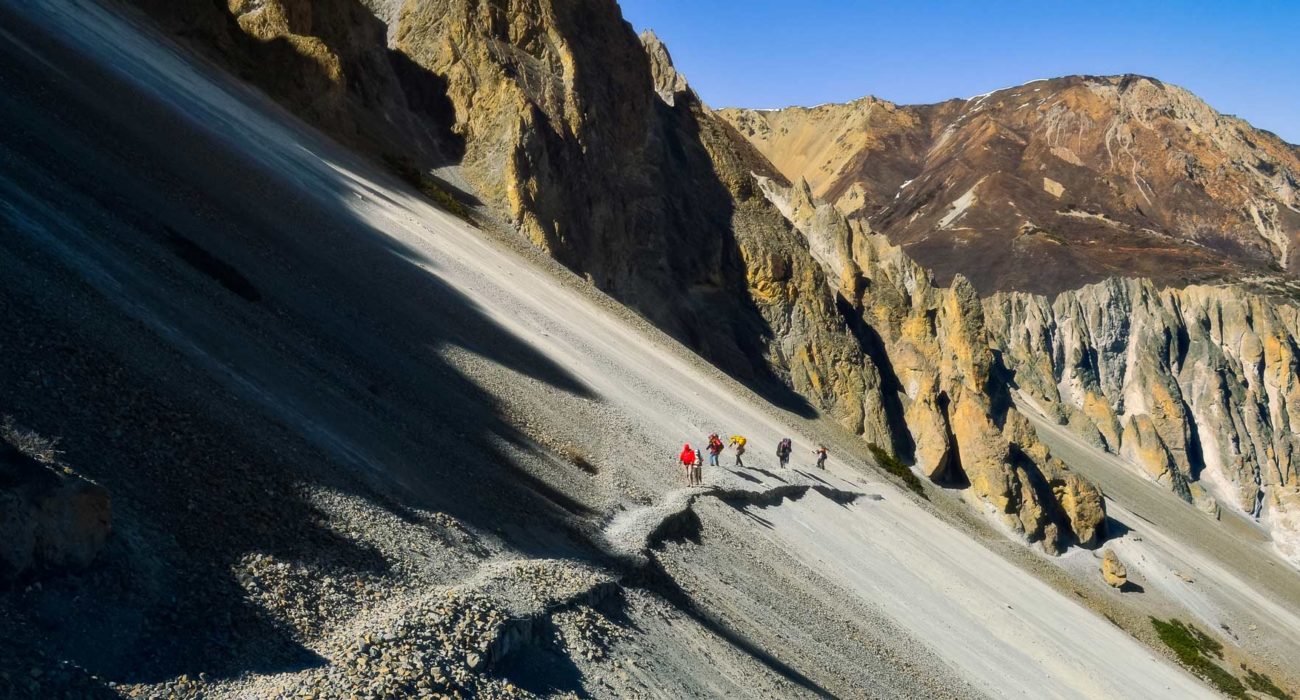
Trekking in Nepal: The Complete Hiking Guide
The definitive guide to trekking in Nepal: teahouse trekking, the main regions, a comparison of the top treks, permits, seasons and how to choose your route.
 Trekking
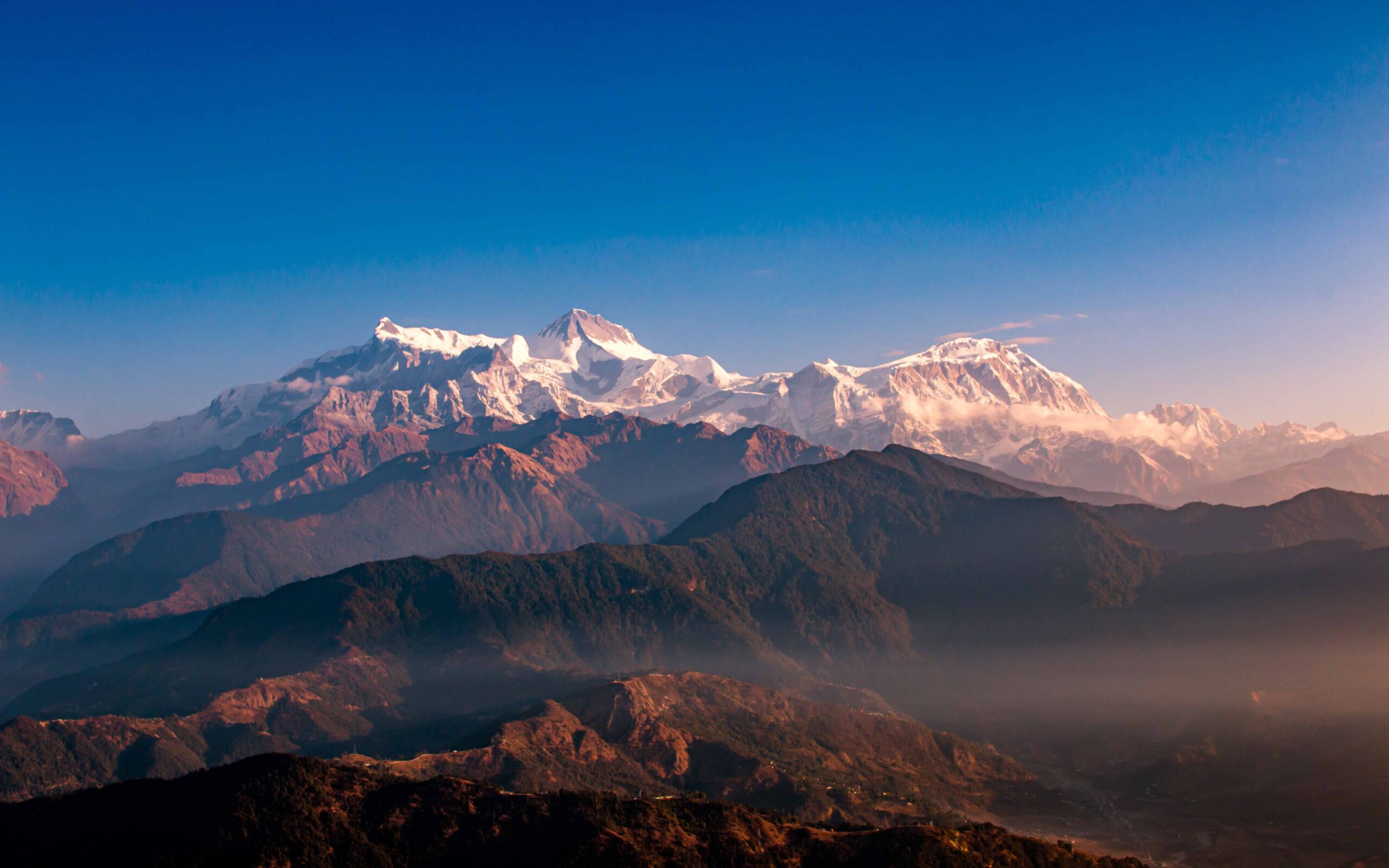
Annapurna: The Complete Trekking Guide to Nepal's Most Popular Region
The Annapurna massif, the top routes (ABC, Circuit, Poon Hill, Mardi Himal, Tilicho), the ACAP permit, seasons, sample itineraries and how to choose.
TrekkingAnnapurna Circuit: The Complete Guide to the Legendary Trek
Everything about the Annapurna Circuit: 12–18 days, the Thorong La pass at 5,416m, a day-by-day itinerary, acclimatization, ACAP permits and the best seasons.