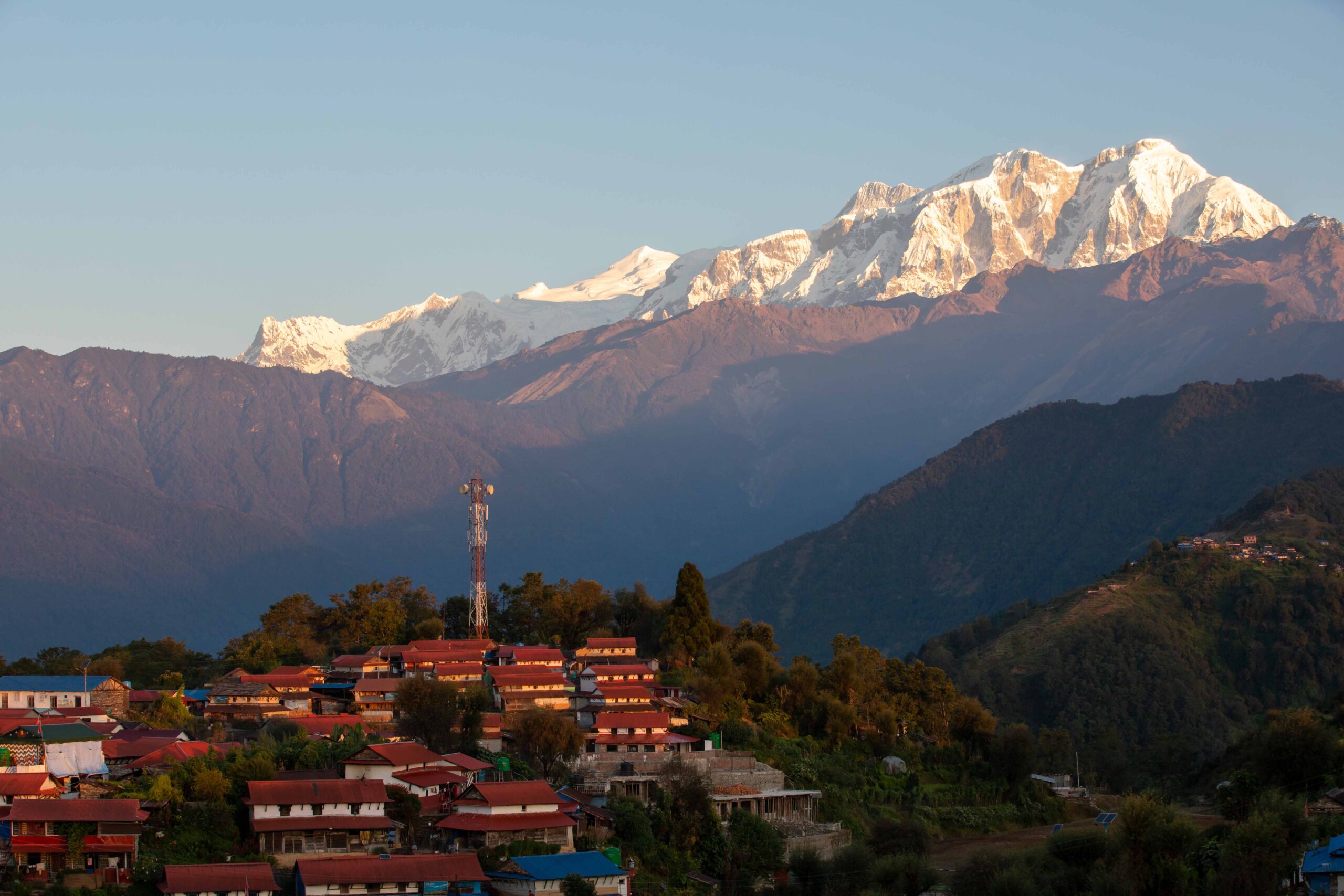
The Everest Base Camp (EBC) trek is not just a hike — it is the most iconic trek on the planet. Standing at 5,364 metres, at the foot of the highest peak on Earth, surrounded by glaciers and prayer flags, is a once-in-a-lifetime experience. This is the complete, practical guide for travellers from Greece: how many days, what drives the cost, which permits you need, how acclimatization works and what really awaits you on the trail to Everest Base Camp.
The essentials at a glance
Before the details, here is the profile of the route:
| Detail | Info |
|---|---|
| Max altitude | 5,364m (EBC) · 5,545m (Kala Patthar summit) |
| Duration | 12–14 days of hiking (16–18 days with flights) |
| Difficulty | Moderate to demanding — no technical climbing |
| Distance | ~130 km round trip |
| Start point | Lukla (2,860m), by flight from Kathmandu |
| Best time | March–May & October–November |
| Accommodation | Teahouses (lodges) along the whole route |
Getting there: from Athens to Lukla
There is no direct flight from Greece. You fly Athens → Kathmandu with one stop (Turkish via Istanbul, Qatar via Doha, or Emirates/Etihad via Dubai/Abu Dhabi). Travel time is around 12–18 hours and a round-trip ticket typically costs €430–800. More in our general guide to trekking in Nepal.
From Kathmandu, the classic EBC begins with one of the most spectacular flights in the world: the small aircraft lands at Lukla's Tenzing–Hillary Airport (2,860m), famous for its short, steeply sloped runway clinging to the mountainside. The flight takes just 30–40 minutes and costs roughly €350–420 round trip. Note: during peak season (spring/autumn) flights are often moved to Ramechhap (Manthali) airport, a 4–5 hour drive from Kathmandu, due to congestion. Weather delays or cancels flights regularly — always keep 1–2 buffer days in your plan.
The day-by-day itinerary
The classic 12-day hiking route — with two crucial acclimatization days — is the safest and most popular:
| Day | Route | Altitude | Hours |
|---|---|---|---|
| 1 | Fly Kathmandu → Lukla · hike to Phakding | 2,610m | 3–4 |
| 2 | Phakding → Namche Bazaar | 3,440m | 5–6 |
| 3 | Namche — acclimatization day (hike to Everest View Hotel) | 3,440m | 3–4 |
| 4 | Namche → Tengboche (monastery) | 3,860m | 5–6 |
| 5 | Tengboche → Dingboche | 4,410m | 5–6 |
| 6 | Dingboche — acclimatization day (Nangkartshang ~5,000m) | 4,410m | 3–4 |
| 7 | Dingboche → Lobuche | 4,940m | 5–6 |
| 8 | Lobuche → Gorak Shep → Everest Base Camp → back | 5,364m | 7–8 |
| 9 | Sunrise at Kala Patthar (5,545m) → descend to Pheriche | 5,545m → 4,240m | 7–8 |
| 10 | Pheriche → Namche | 3,440m | 6–7 |
| 11 | Namche → Lukla | 2,860m | 6–7 |
| 12 | Fly Lukla → Kathmandu | 1,400m | — |
Many agencies add an extra acclimatization day or a buffer for flight delays, reaching 13–14 days. Don't rush: every day you save on the schedule, you lose in protection against altitude sickness.
Namche Bazaar & the teahouses
Namche Bazaar (3,440m) is the "capital" of the Sherpa and the trading hub of the Khumbu: built like an amphitheatre, with cafés, bakeries, gear shops and even ATMs (don't rely on them — carry cash). Here you spend your first big acclimatization day.
Along the whole route you overnight in teahouses — simple family-run lodges with basic twin rooms, shared toilets and a warm dining room heated by a stove. The food is simple but filling: dal bhat (rice with lentils, with free refills) is the trekker's fuel. As you climb, prices rise — a plate might cost €3 in Lukla and €8 in Gorak Shep, since everything comes up by yak or porter. Hot showers, WiFi and device charging are usually extra.
How hard is it really?
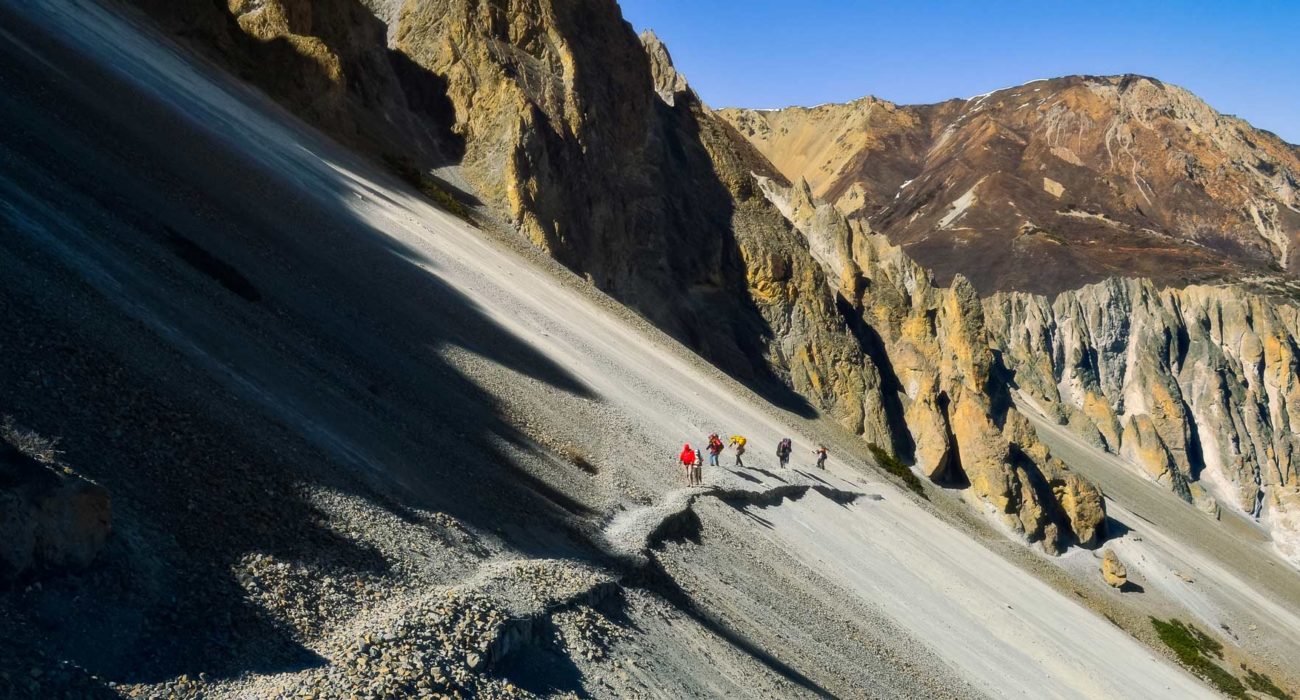
EBC does not require technical climbing, crampons or ropes — it is hiking on well-trodden trails. Its difficulty lies in three things: (1) the duration — 5 to 8 hours of walking every day for nearly two weeks; (2) the altitude — the thin air above 4,000m makes every step harder; (3) the ups and downs — the Khumbu valley is a constant switch between climbs and descents. With 2–3 months of preparation (cardio, weighted hikes, stairs) a healthy person with no mountain experience can manage it comfortably. Fitness helps, but patience with acclimatization matters more than speed.
Altitude & acclimatization — the number one risk
Above 2,500m the body starts reacting to the thin air. Altitude sickness (AMS) is the real danger on EBC — not cliffs. The golden rules:
- "Climb high, sleep low": gain altitude during the day, but sleep lower.
- Above 3,000m, don't raise your sleeping altitude by more than 300–500m per day.
- Respect the acclimatization days (Namche, Dingboche) — they are not optional.
- Drink 3–4 litres of water, avoid alcohol, and never ignore headache, nausea or insomnia.
- Diamox (acetazolamide) 125mg × 2 helps with prevention — discuss it with your doctor before the trip.
- The golden safety rule: if symptoms worsen, descend. Descent is the only sure cure.
Read in detail what it is, how to prevent it and when to descend in our dedicated guide to altitude sickness in the Himalayas. And don't forget: your travel insurance must cover trekking above 5,000m and helicopter evacuation — in the Khumbu, heli rescue is the standard for a serious incident.
Permits
For EBC you need two permits (the old TIMS card is no longer required in the Everest region):
| Permit | Cost | Where to get it |
|---|---|---|
| Sagarmatha National Park Entry Permit | NPR 3,000 (~€25) | Kathmandu or Monjo (park entrance) |
| Khumbu Pasang Lhamu Rural Municipality Permit | NPR 2,000 (~€15) | Lukla or Monjo |
Around €40 total. If you book an organized trek, the agency handles them for you. See every permit category (TIMS, ACAP, Sagarmatha, restricted areas) in our guide to Nepal trekking permits.
Do you need a guide?
Essentially yes. Since 2023 Nepal does not allow independent trekking without a licensed guide in national parks and many trekking areas. Beyond the rule, an experienced Sherpa guide offers altitude safety, weather knowledge, lodging logistics and priceless cultural connection. A porter is optional but transforms the experience, carrying 10–15 kg so you walk with only a light daypack. A tip at the end is customary: around $80–100 for the guide and $20–40 for the porter.
What drives the cost
EBC is done in very different ways, which is why it has no single price. The cost is shaped by the season (spring and autumn are peak), the size of the group, the length and acclimatisation profile (how many rest days you build in at Namche and Dingboche), whether you want a guide and a porter, the comfort level of the teahouses, and whether you fly out of Kathmandu or Ramechhap.
The only figures known in advance are the fixed third-party costs: the permits (Sagarmatha + Khumbu, ~€40), the Kathmandu ↔ Lukla flight (€350–420 round trip) and the Athens–Kathmandu ticket (€430–800). Leave a margin as well for insurance, gear and days in Kathmandu.
An organised trek includes permits, flights, guide, lodging and emergency support — for a trek at this altitude, it is worth it. Tell us when you want to go and how many acclimatisation days you want built in — the Lukla flight and the buffer days move the number more than anything else. Ask us for a quote.
Best time for EBC
| Season | Months | What to expect |
|---|---|---|
| Spring | March–May | Warmer weather, blooming rhododendrons, Everest climbing season — more crowds |
| Autumn | Oct–November | Crystal-clear skies, stable views, ideal temperatures — the top season |
| Winter | Dec–Feb | Clear views but bitter cold; some teahouses close |
| Monsoon | Jun–Sept | Rain, clouds, mud, flight cancellations — avoid |
Autumn gives the most stable weather and the most brilliant view of the peak. See a full breakdown of the best time to visit Nepal by activity.
What to pack
The key is the layering system: thermal base layer, fleece, a waterproof/windproof shell and a thick down jacket for the freezing mornings. Essentials: good hiking boots (broken in beforehand), a −15°C sleeping bag, high-protection sunglasses, sunscreen, trekking poles, a first-aid kit with Diamox and water purification tablets. Much of the gear can be rented or bought cheaply in Kathmandu's Thamel. Full checklist in our guide on what to pack for Nepal.
Useful practical tips for the trail
- Connectivity: the NTC SIM has better mountain coverage than Ncell — there is 4G even above Namche. Alternatively, get an eSIM (Airalo) before arrival.
- Cash: carry enough rupees from Kathmandu. ATMs in Lukla and Namche often don't work or charge high fees, and above Namche there are none at all.
- Water: don't drink tap water. Use purification tablets or a filter; bottled water gets very expensive as you climb and adds plastic waste.
- Side-trips: with extra days, the Gokyo lakes and the Cho La pass are worth it, or a stop at Tengboche monastery for the monks' evening ceremony.
- Pace: walk slowly and steadily — "bistari, bistari" as the Sherpa say. At altitude, a slow pace is not weakness; it's strategy.
EBC or ABC — which should you choose?
Nepal's two top treks suit different profiles:
| Everest Base Camp | Annapurna Base Camp | |
|---|---|---|
| Max altitude | 5,364m (Kala Patthar 5,545m) | 4,130m |
| Duration | 12–14 days | 7–10 days |
| Difficulty | Demanding | Moderate — beginner-friendly |
| AMS risk | Higher | Lower |
| Cost | Higher (Lukla flight) | Lower |
| Character | The iconic "Everest dream" | Amphitheatre of peaks, quick access |
If it's your first big trek or you're short on time, start with Annapurna Base Camp. If you're after the ultimate experience and have 16–18 days, Everest Base Camp is the final destination.
Plan your EBC — with premium support
Everest Base Camp is a trek you don't leave to chance. Good organization — permits, Lukla flights, an experienced Sherpa guide, a realistic acclimatization schedule and insurance with heli evacuation — is the difference between a lifelong dream and a bad experience. For travellers who want EBC organized down to the last detail, with a private itinerary and premium care, see the tailor-made experiences of Elysian Himalaya. Whether you choose to go independently or organized, the base camp of Everest is waiting.
Gallery
Frequently asked questions
- Moderate to demanding. There is no technical climbing or ropes, but you walk 5–8 hours a day for 12–14 days at high altitude. With good fitness and proper acclimatization it is achievable for healthy hikers with no mountaineering experience.
- Base Camp itself sits at 5,364 metres. The highest point of the trek is the summit of Kala Patthar at 5,545 metres, which offers the best view of Everest's peak.
- The classic route is 12–14 days of hiking from Lukla and back, with 2 acclimatization days. Including flights from Greece and a day or two in Kathmandu, budget 16–18 days for the whole trip.
- Essentially yes. Since 2023 independent trekking without a licensed guide is not permitted in the national parks, and for altitude safety a guide is strongly recommended. Confirm the current rules when you book.
- ABC (4,130m, 7–10 days) is lower, cheaper and more beginner-friendly. EBC (5,364m, 12–14 days) is longer, higher and more iconic. For a first big trek choose ABC; if you want the Everest dream, choose EBC.
- There is no single price. The cost depends on the season, the size of the group, the length and acclimatisation profile you choose, whether you want a guide and a porter, and the comfort level of the lodges. The only items fixed in advance are the official fees (Sagarmatha + Khumbu, ~€40), the Kathmandu–Lukla flight (€350–420 round trip) and the Athens–Kathmandu ticket (€430–800). Tell us what you have in mind and we will send you a quote through our contact page.
- Spring (March–May) and autumn (October–November). Autumn has the clearest skies and the most stable views. Avoid the monsoon (June–September) and deep winter, when cold and snow close the high passes.
Keep reading
Related articles
 Activities
Trekking in Nepal: The Complete Hiking Guide
The definitive guide to trekking in Nepal: teahouse trekking, the main regions, a comparison of the top treks, permits, seasons and how to choose your route.
 Trekking
Annapurna: The Complete Trekking Guide to Nepal's Most Popular Region
The Annapurna massif, the top routes (ABC, Circuit, Poon Hill, Mardi Himal, Tilicho), the ACAP permit, seasons, sample itineraries and how to choose.
 Trekking
Annapurna Base Camp Trek (ABC): The Complete Guide
The 'amphitheatre of the gods' at 4,130m: a day-by-day itinerary, difficulty, ACAP permits, seasons and how to combine it with Poon Hill.