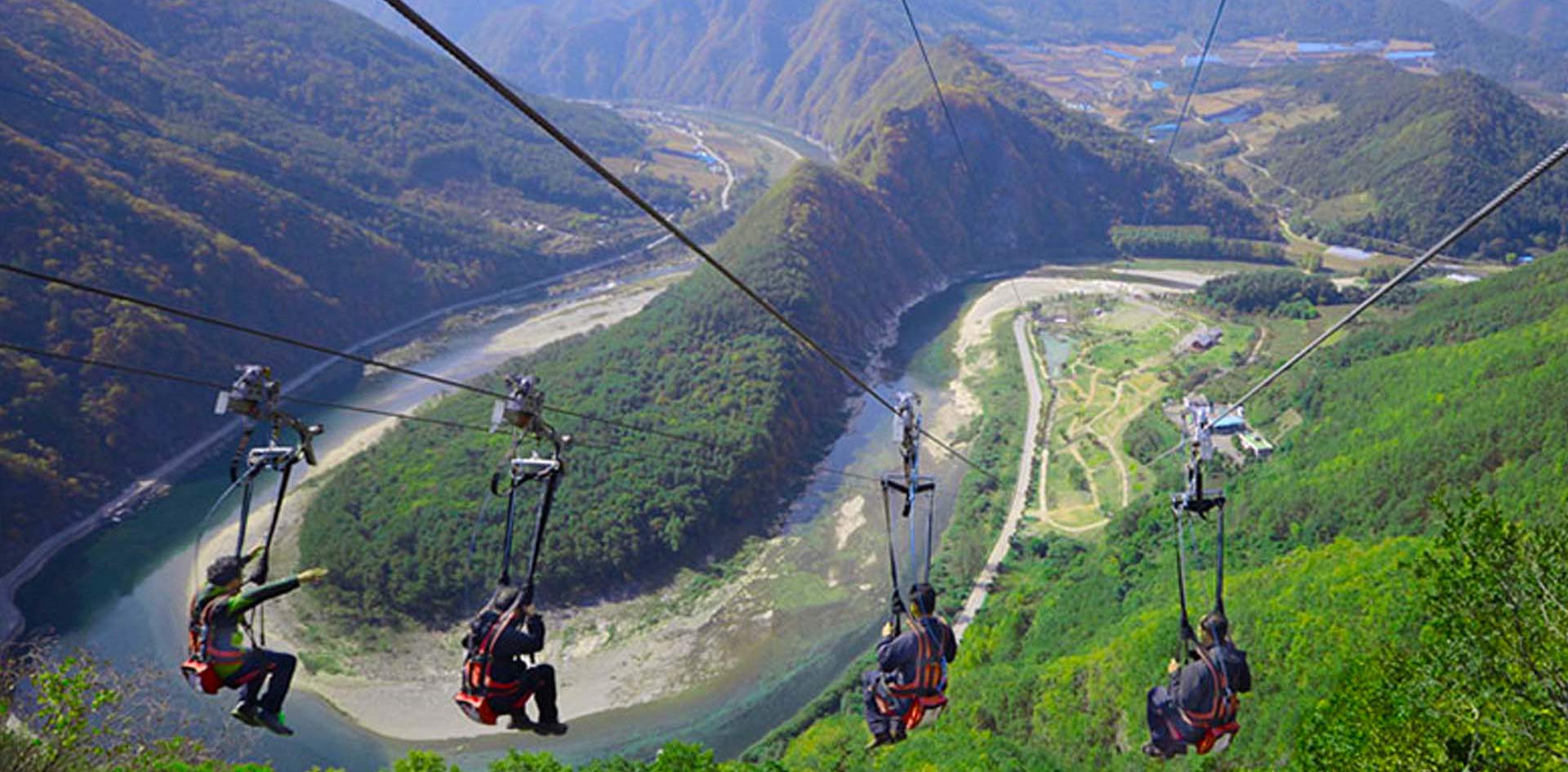
Picture yourself standing at the top of Sarangkot, at 1,600 metres, with the whole Annapurna range and the sharp peak of Machapuchare (Fishtail) right in front of you. Below your feet, Fewa Lake and the town of Pokhara spread out. One click of the harness, one step forward — and within seconds you drop 600 metres of altitude at a speed touching 120 kilometres per hour. This is the Sarangkot ZipFlyer, one of the most intense ziplines on the planet and probably the most immediate hit of adrenaline you will find anywhere in Nepal.
Unlike trekking, which takes days and patience, ziplining gives you the magic of the Himalayas in under two minutes of pure flight. In this guide you will find all the technical specs, the real cost in euros, how to book, what the safety picture actually looks like, the best season to go and — most importantly — how to combine it with paragliding and a base in Pokhara for an unforgettable adventure day.
What the Sarangkot zipline is
The Pokhara ZipFlyer has been running since 2 June 2012 and starts just below the top of Sarangkot — the very hill where thousands of travellers climb each year for the famous sunrise over the Himalayas. The system was designed by the American company ZipFlyer LLC and is considered one of the steepest and fastest in the world. This is not a gentle summer-camp zipline; it is a genuine mountain descent in free glide.
The line ends near the village of Hyangja, down in the river valley, very close to where the paragliders touch down. That is no coincidence: the whole area around Sarangkot has evolved into a natural "adventure park" where paragliding, ziplining and sunrise all come together in a single day.
Technical specs — the numbers that matter
If you care about the hard data, here are the specs that make this zipline stand out:
| Feature | Value |
|---|---|
| Line length | ~1.8 kilometres (1,800 m) |
| Vertical drop | ~600 metres |
| Top speed | up to ~120 km/h |
| Gradient | up to ~56 degrees (among the steepest worldwide) |
| Ride duration | ~90 sec – 2 minutes |
| Launch altitude | ~1,600 m (just below Sarangkot summit) |
| Braking system | magnetic, contactless (ZipFlyer) |
| Operating since | 2012, year-round (weather permitting) |
It is the combination of the long line and the steep gradient that pushes the speed so high. You do not simply "slide" — you accelerate as if gravity were pulling you in free fall, except you stay safely locked onto the cable.
Cost and how to book
The price for a single ride is around €55–75 (roughly $65–80) and in most cases includes the 4x4 jeep transfer from Lakeside or the town up to the launch point above Sarangkot. If you book it as a package with paragliding, the cost per activity drops noticeably.
| Activity | Indicative cost | Duration |
|---|---|---|
| Zipline (only) | ~€55–75 | ~2–3 hrs incl. transfer |
| Tandem paragliding | ~€65–90 | ~30 min flight |
| Combo (paragliding + zipline) | ~€110–150 | half day |
| Video/photo (GoPro) | ~€15–25 extra | — |
How to book: the easiest way is through the agencies in Lakeside, Pokhara's tourist district, where adventure offices sit on nearly every corner. You can also book online in advance or through your hotel. In peak season (October–November) it is worth booking a day or two ahead, because the morning slots — which have the best views — fill up fast. If you travel on an organised trip with Dimitris, the activity can be slotted straight into the itinerary so you do not have to arrange anything yourself.
Age, weight and restrictions
- Minimum age: usually 14–16 (minors with a parent).
- Weight: roughly 35–125 kg — the braking system is adjusted to your weight.
- Health: not advised for pregnant travellers or people with serious heart conditions, uncontrolled high blood pressure, or neck/back injuries.
- Clothing: closed shoes, comfortable clothes, tied-back hair; sunglasses are best kept on a strap.
Safety: how safe is it really
The first question almost every traveller asks is fair enough: "Is it safe?" The answer is yes — by a wide margin. The Sarangkot ZipFlyer features:
- A dual steel cable: even if one is compromised, the second carries the entire load.
- A contactless magnetic braking system: it slows you using magnetic-induction forces, with no wear-prone moving parts and no jarring stop.
- A full body harness and helmet, checked by staff before every ride.
- A safety briefing before you go, with simple instructions on body position.
Since it opened in 2012, the zipline has run with a spotless safety record and is regarded as one of the safest of its kind worldwide. The only real "fear" here is purely psychological: that first second when you let go into the void. After that, all that is left is the view.
Paragliding in Pokhara — the perfect pairing
Pokhara is famous as one of the top paragliding destinations in the world, and not by accident. The mix of steady thermals, a low landing altitude and the Himalayan backdrop creates almost ideal flying conditions. Tandem flights (you fly with an experienced pilot and need no experience of your own) also launch from Sarangkot and land right beside Fewa Lake.
That is why paragliding and ziplining pair so well: they start on the same mountain, share the same stunning view and can be done back to back within a single morning. Paragliding gives you the feeling of hanging calmly in the air like a bird; the zipline is the exact opposite — pure speed and intensity. Together, they cover both sides of adventure.
When to go — the best season
The experience depends heavily on the weather, because the magic here is not just the speed but the view towards Annapurna, Machapuchare and Dhaulagiri. Here is when it is worth going:
| Season | Conditions | Rating |
|---|---|---|
| Oct – Nov | Clear skies, perfect visibility, crisp air | Ideal |
| Mar – Apr | Warm weather, clear peaks, rhododendrons in bloom | Excellent |
| Dec – Feb | Cold mornings but often crystal-clear views | Good (dress warm) |
| Jun – Sep (monsoon) | Clouds, rain, limited visibility | Avoid if you want views |
In practice, the best months line up with the peak window for travelling to Nepal in general. The same period is also ideal for trekking in the Annapurna region, so many travellers slot the zipline in as a "warm-up" or as a reward after the trek.
The perfect adventure day in Pokhara
If you want to make the most of a single day, here is a tried-and-tested plan:
- 05:30 – Sunrise at Sarangkot. Drive up by jeep before dawn and watch the sun paint the Himalayan peaks gold.
- 07:30 – Tandem paragliding. The morning thermals are stable and the view is clear; ~30 minutes of flight with a landing beside Fewa.
- 10:00 – Zipline. Adrenaline maxed out, a 600-metre descent in under two minutes.
- 12:30 – Lunch in Lakeside overlooking the lake, a rest and a boat ride on Fewa.
- Afternoon – Peace Pagoda / Davis Falls. A relaxed exploration of the town.
If you would rather do something on the water instead of paragliding, Pokhara is also a base for rafting and kayaking on the region's fast-flowing rivers — an equally intense alternative.
Getting there — from Athens to Pokhara
There is no direct flight from Greece to Nepal. From Athens to Kathmandu (KTM) you fly with one stop — usually via Istanbul (Turkish), Doha (Qatar) or Abu Dhabi/Dubai. Total travel time is around 12–18 hours and a return ticket runs about €430–800 depending on the season.
From Kathmandu to Pokhara you have two options: a short flight of ~25 minutes, or the road along the Prithvi Highway (tourist bus ~6–7 hours). All the planning details — visa, transfers, accommodation, cost — are in the complete Nepal travel guide.
Combine it with a base in Pokhara
The zipline is not a destination on its own — it is the cherry on top of a stop in Pokhara. Use Lakeside as your base: hotels for every budget, lakeside restaurants, adventure offices and the feel of a laid-back lakeshore town that is also the gateway to Annapurna trekking. Two to three days are enough for sunrise at Sarangkot, paragliding, the zipline, a boat ride on Fewa and a walk up to the Peace Pagoda.
For those who want the adventure without any organising stress — private transfers, hand-picked top-tier stays and activities booked in advance — the premium experience by Elysian Himalaya designs the trip around you, with the zipline and paragliding woven into one carefully curated programme.
Practical tips before you go
- Book a morning slot: the air is calmer and the view towards the peaks clearer before the midday clouds roll in.
- Bring a GoPro or pay for the footage: your hands will be busy and the ride is short — there is no time to pull out a phone.
- Empty your pockets: anything loose can fly off; leave keys, coins and loose items at the base.
- Arrive rested and hydrated: if you have already paraglided earlier, grab a light snack in between.
- Cash for extras: keep a few rupees/dollars for video, tips or a coffee at the base.
The experience in a few words
You stand at the launch point and for a fraction of a second your mind says "no." Then gravity takes over. The air whistles, your eyes water a little, and within seconds Fewa Lake rushes up towards you at wild speed. It is intense, it is short, and it ends before you can believe it — which is exactly why most people want to do it again straight away. If you are looking for the one activity you will remember from your whole trip to Nepal, the Sarangkot zipline is a serious contender.
Gallery
Frequently asked questions
- The ride costs roughly €55–75 (around $65–80), usually with the jeep transfer up to Sarangkot included. Combo packages with paragliding work out cheaper per activity.
- It uses a dual steel cable and a contactless magnetic braking system, with a full harness and helmet. It has run with a spotless safety record since 2012 and is considered one of the safest ziplines of its kind worldwide.
- October–November and March–April, when skies are clear and Annapurna, Machapuchare and Dhaulagiri stand out. Avoid the monsoon (June–September) because of cloud cover.
- Yes. Typically a minimum age of 14–16 and a weight range of about 35–125 kg. It is not advised for pregnant travellers or people with serious heart, neck or back conditions.
- Absolutely. It is the classic combo: sunrise at Sarangkot, tandem paragliding early in the morning and the zipline straight afterwards. Everything launches from the same ridge above Pokhara.
Keep reading
Related articles
 Activities
Trekking in Nepal: The Complete Hiking Guide
The definitive guide to trekking in Nepal: teahouse trekking, the main regions, a comparison of the top treks, permits, seasons and how to choose your route.
 Activities
Rafting & Kayaking in Nepal
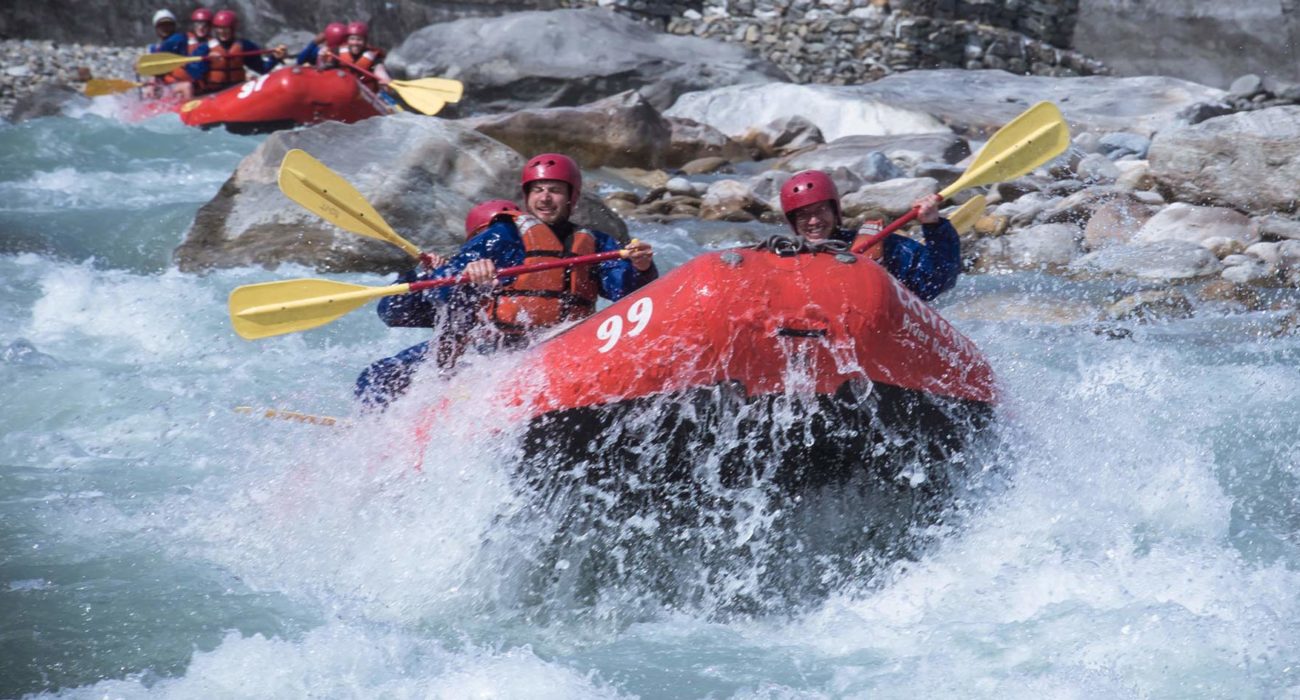
The complete guide to rafting & kayaking in Nepal: a river table (Trishuli, Seti, Bhote Koshi, Kali Gandaki, Sun Koshi, Marsyangdi, Karnali), difficulty grades, seasons, costs in euros, safety, and how to combine it with trekking.
 Articles
Nepal's Mustard Season: The Golden Fields
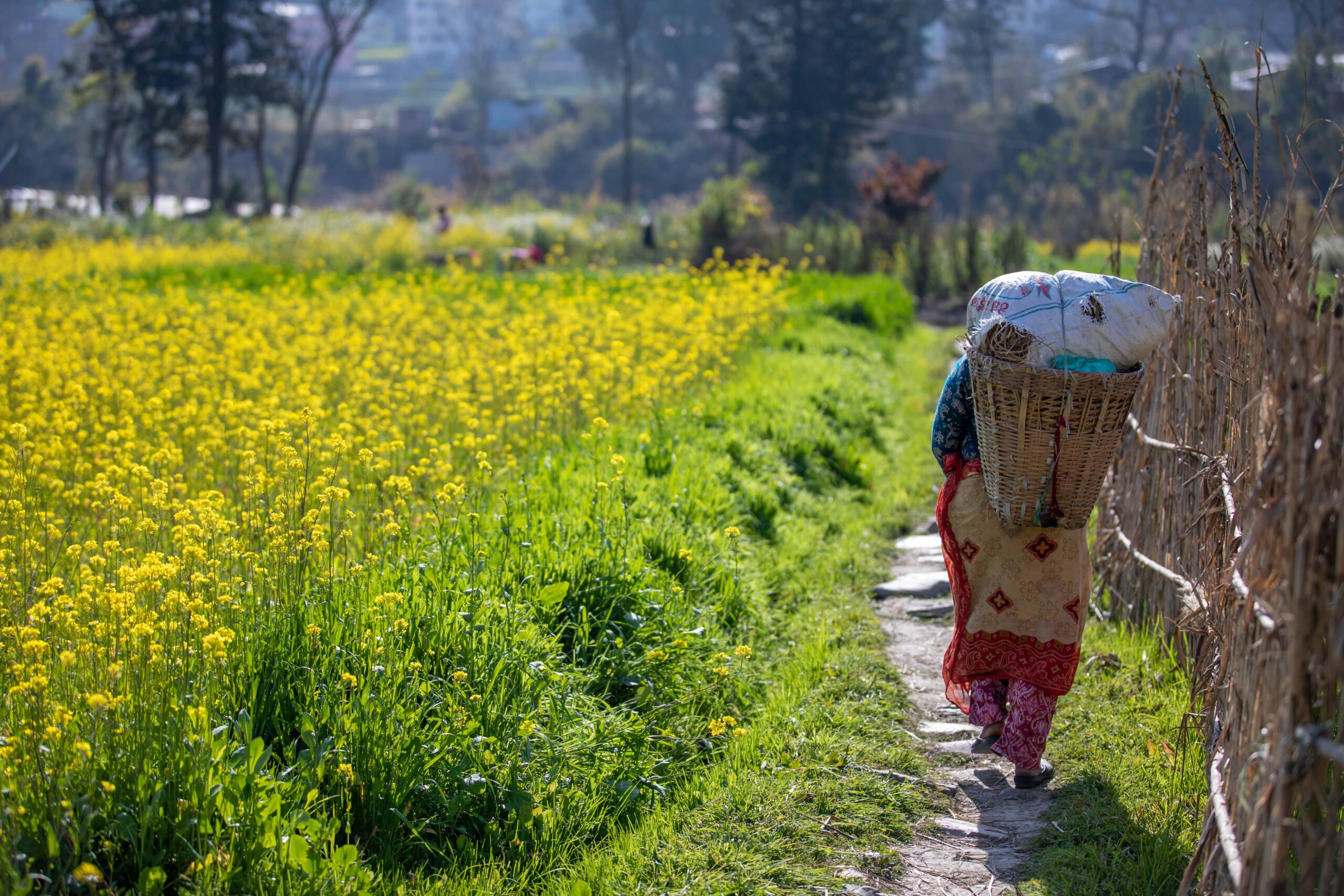
Every winter Nepal's countryside turns yellow with blooming mustard fields — when they bloom, where to see them, and why it's a dream for photography.