
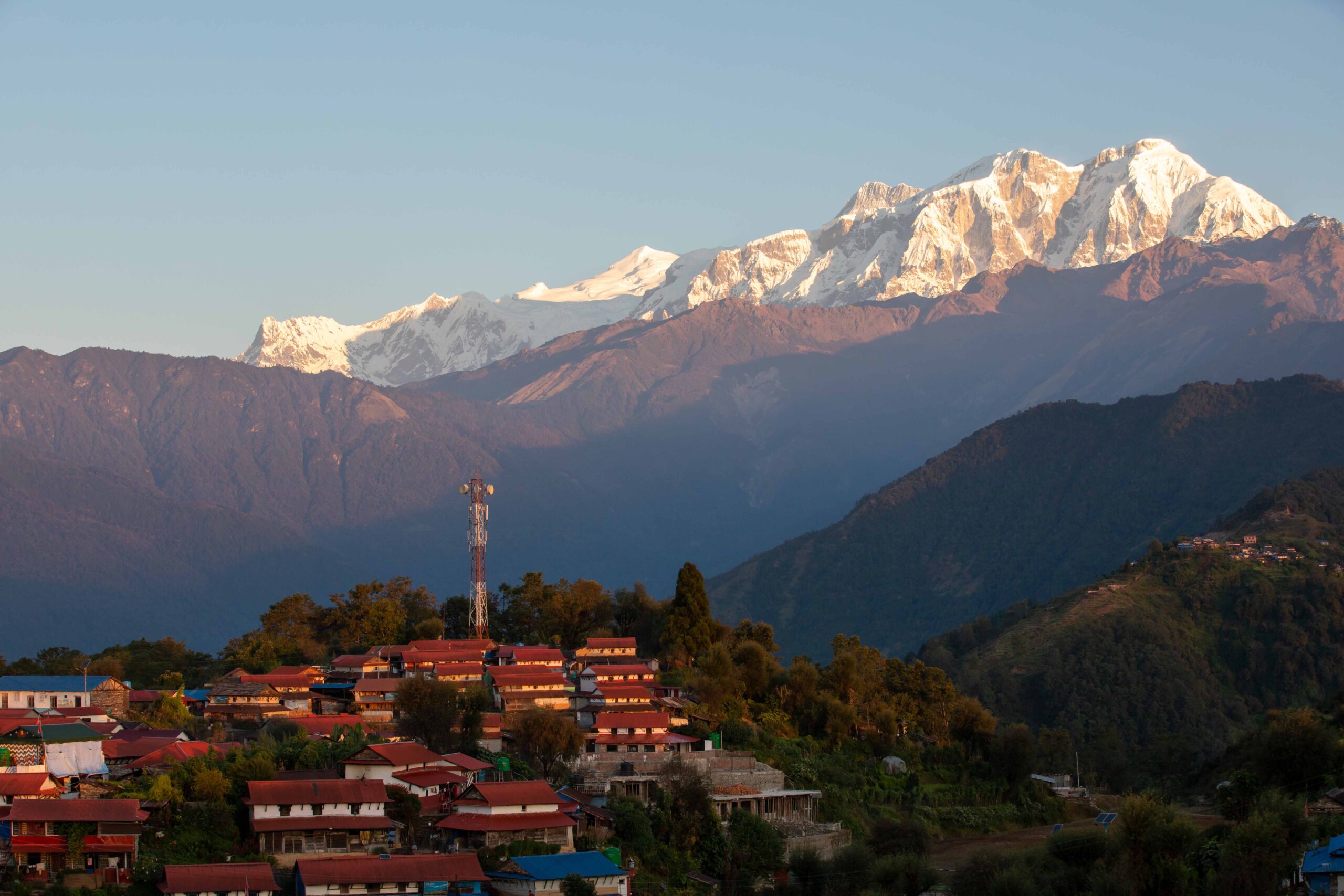
Langtang Valley Trek: The Himalayas Closest to Kathmandu
Update, 2 September 2026: after the disaster of 26 August 2026, the Langtang Valley, Gosaikunda and the road to Syabrubesi are closed until further notice. Read what applies now and which regions are open.
If you have only a handful of days but still want the real Himalayas — glaciers, yaks, Tibetan monasteries and peaks above 7,000 metres — the Langtang Valley may be the smartest choice in all of Nepal. It is the closest major trekking region to Kathmandu, needs no risky domestic flight, costs clearly less than Everest or Annapurna, and stays remarkably quiet compared to the crowded classic trails.
At the same time, Langtang carries a heavy and moving history: it was the region hit hardest by the 2015 earthquake. Trekking here today is not just a beautiful walk — it is an act of support for a community that literally rebuilt itself from scratch. This guide covers a detailed itinerary, permits, what drives the cost, seasons and everything you need to know before booking your trip from Greece.
Why Langtang is different
While trekking in the Annapurna region and the Everest Base Camp trail draw tens of thousands of trekkers a year, Langtang has kept a more authentic, village-like character. The reasons:
- No flight required: You start with a jeep straight from Kathmandu. You are not at the mercy of Lukla's weather, where flights are cancelled often.
- Fewer people: You will meet far fewer trekkers, especially off-peak, which completely changes the atmosphere in the tea houses.
- Tibetan/Tamang culture: The valley is home to the Tamang, with deep Tibetan roots — mani walls, prayer flags, monasteries and yaks.
- Lower cost: With no expensive domestic flights and a shorter duration, the budget drops noticeably.
The essentials at a glance
| Item | Detail |
|---|---|
| Duration | 7 days (classic) to 10 days (with extensions) |
| Difficulty | Moderate |
| Start point | Syabrubesi (~1,550m), 7-8 hour jeep from Kathmandu |
| Maximum sleeping altitude | Kyanjin Gompa 3,870m |
| Viewpoint summits (day hikes) | Kyanjin Ri 4,773m · Tserko Ri 4,984m |
| Permits | Langtang National Park (~€22) + TIMS (~€14) |
| Guide | Mandatory (since 2023) |
| Best season | Oct-Nov & Mar-May |
2015: The earthquake, the loss and the recovery
On 25 April 2015, the magnitude 7.8 Gorkha earthquake triggered a massive avalanche and landslide that buried the entire village of Langtang. Hundreds of lives were lost — residents, guides and foreign trekkers — and the valley was cut off for months. It was one of the worst localised tragedies of the whole disaster.
What followed is perhaps the most inspiring story in the Himalayas. The surviving Tamang rebuilt the village on a safer site, slightly above the ruins, and gradually revived the tea houses, trails and bridges. Today the route is fully operational and safe. As you pass the memorial to the victims, you will see a community that never gave up. Every euro you spend on a tea house, a guide or a porter goes directly to people who rebuilt their lives — which is why Langtang is one of the most meaningful treks you can choose.
Detailed 7-day itinerary
| Day | Route | Altitude | Hours |
|---|---|---|---|
| 1 | Kathmandu → Syabrubesi (jeep) | 1,550m | 7-8h |
| 2 | Syabrubesi → Lama Hotel | 2,480m | 6h |
| 3 | Lama Hotel → Langtang Village | 3,430m | 6h |
| 4 | Langtang Village → Kyanjin Gompa | 3,870m | 3-4h |
| 5 | Day hike: Kyanjin Ri or Tserko Ri (return) | 4,773-4,984m | 5-7h |
| 6 | Kyanjin Gompa → Lama Hotel | 2,480m | 6-7h |
| 7 | Lama Hotel → Syabrubesi → Kathmandu | 1,400m | 4h walk + jeep |
The first day is pure transfer: a long, colourful but tiring road north from Kathmandu towards the Tibetan border. From day two the real trail begins, through dense forests of rhododendron, oak and bamboo, following the Langtang Khola river. As you climb, the landscape opens up: alpine meadows, herds of yaks and the first frozen peaks.
Kyanjin Gompa (3,870m) is the destination: a small village with a historic monastery and a traditional yak-cheese factory, in the shadow of the imposing Langtang Lirung (7,227m). Day five is devoted to an acclimatised climb to one of the two viewpoints — Kyanjin Ri (4,773m) for the shorter option or Tserko Ri (4,984m) for the grand panorama. This is the climax of the trek: an entire amphitheatre of glaciers and giant peaks around you.
Extensions for 9-10 days
- Gosaikunda Lakes: Sacred alpine lakes at ~4,380m, an important pilgrimage site for Hindus and Buddhists. Adds 2-3 days and a high pass (Laurebina La ~4,610m).
- Tamang Heritage Trail: A lower, cultural route through traditional Tamang villages, with hot springs (Tatopani) and views of Tibetan Langtang. A great add-on for those who want less altitude and more contact with locals.
What you will see along the way
Langtang is not only about peaks. It is a living Tamang valley with a deep Tibetan identity, where every bend in the trail hides something:
- Langtang Lirung (7,227m): The region's highest peak, towering over Kyanjin Gompa.
- The yak-cheese factory: At Kyanjin you can taste fresh yak cheese — a tradition that began with Swiss help in the 1950s and has survived ever since.
- Mani walls & prayer flags: Stone walls carved with mantras, spinning prayer wheels and colourful flags at every pass.
- Rhododendron forests: In spring, whole hillsides turn red and pink — one of the most photogenic scenes in the Himalayas.
- Glaciers & yaks: Alpine meadows with herds of yaks beneath hanging glaciers — the signature image of the trek.
Daily life in the tea houses is simple and warm: plates of dal bhat with free refills, butter tea, conversations around the stove and sleep under a star-filled sky. That simplicity, together with Tamang hospitality, is what makes most trekkers fall in love with Langtang.
Getting there from Kathmandu
Langtang's great advantage is that you reach it by road. There are two options from Kathmandu to Syabrubesi (~117 km, 7-8 hours):
- Local bus / shared jeep: Cheap (~€8-12 per person), but slow and crowded. An authentic experience, not for sensitive stomachs.
- Private jeep: ~€100-130 total, split among the group — more comfortable, faster and flexible. The most common choice on organised treks.
The road is spectacular but rough, with switchbacks above gorges. Start early in the morning to avoid driving in the dark.
Permits (2026)
For Langtang you need two documents, which your operator can arrange easily or you can obtain at the Nepal Tourism Board office in Kathmandu:
| Permit | Cost (NPR) | Approx. in € |
|---|---|---|
| Langtang National Park Entry Permit | 3,000 | ~€22 |
| TIMS Card | 2,000 | ~€14 |
Note one crucial point: unlike Annapurna and Everest — where the TIMS card is no longer strictly checked — in Langtang the TIMS is genuinely required. In addition, since 2023 the Nepal government bans independent (solo) trekking in the national parks: you must have a licensed guide. In practice this means Langtang is always done with a guide — which increases safety anyway and supports local employment. For the full picture of permits, see our guide to trekking in Nepal.
What drives the cost
Langtang is one of the most affordable "big" treks, precisely because it needs no domestic flight — but it has no single price. The cost is shaped by the season, the size of the group (the mandatory guide is shared), the length (7 days for the classic route, up to 10 with the Gosaikunda and Tserko Ri extensions), whether you want a porter, the comfort level of the teahouses, and whether you reach Syabrubesi by shared or private jeep.
The only items known in advance are the official fees: the Langtang National Park entry permit (~€22) and the TIMS card (~€14), about €36 per person. Budget separately for the flight from Greece: there is no direct route, so plan for one stop (Istanbul, Doha, Abu Dhabi or Dubai), ~12-18 hours of travel and ~€430-800 return. For full trip planning from Greece, see our complete Nepal guide.
Tell us how many of you there will be and whether you want the Gosaikunda and Tserko Ri extensions — the group shares the mandatory guide and the jeep up to Syabrubesi. Ask us for a quote.
Altitude & safety
Langtang's big advantage is that you sleep no higher than 3,870m. The risk of altitude sickness exists — it essentially starts above 2,500m — but it is clearly lower than on the Everest Base Camp (5,364m) or Annapurna Base Camp (4,130m) treks. Even so, do not underestimate it:
- On day five, do the climb to Kyanjin/Tserko Ri and descend again to sleep ("climb high, sleep low").
- Drink plenty of water (3-4 litres/day) and do not go higher if you have a severe headache, nausea or dizziness.
- Your insurance must absolutely cover high-altitude trekking and helicopter evacuation — non-negotiable.
Best time to go
| Season | Conditions |
|---|---|
| Oct-Nov (autumn) | Ideal: clear skies, stable weather, crystal-clear views. The most popular period. |
| Mar-May (spring) | Blooming rhododendrons, warm days, a slightly hazier horizon in the afternoon. |
| Jun-Sep (monsoon) | Rain, mud, leeches, clouded peaks. Avoid. |
| Dec-Feb (winter) | Very cold, snow up high; the lower sections remain feasible with proper gear. |
For a full month-by-month and activity breakdown, see our guide to the best time to visit Nepal.
Langtang vs Annapurna vs Everest
| Langtang | Annapurna Base Camp | Everest Base Camp | |
|---|---|---|---|
| Duration | 7-10 days | 7-12 days | 12-16 days |
| Max altitude | 4,984m (viewpoint) | 4,130m | 5,364m (Kala Patthar 5,545m) |
| Domestic flight | No | No | Yes (Lukla) |
| Crowds | Low | High | Very high |
| Cost | € | €€ | €€€ |
The takeaway: if you have limited time, a smaller budget and want to avoid the crowds — without sacrificing the grandeur of the Himalayas — Langtang is the smartest "quiet alternative".
What to pack
The layering system applies: thermal base layers, fleece, a waterproof jacket, hat and gloves, well broken-in hiking boots, and a sleeping bag rated to about -10°C (cheap to rent in Thamel). Do not forget high-SPF sunscreen, sunglasses, water-purification tablets and a small first-aid kit. You need warm clothes even in summer above 3,500m.
Langtang with premium care
Langtang works perfectly as an independent, budget trek. But if you want to experience it without a single worry — with experienced Greek-speaking coordination, hand-picked lodges, a private jeep and full safety/altitude support — the premium offering from Elysian Himalaya designs the trip to your measure, with respect for the local Langtang community. It is the same route, at a different level of comfort and safety.
Whether you choose it simply or premium, Langtang gives you something rare: authentic Himalayas, a moving story of human resilience, and the sense that your journey leaves something good behind.
Gallery
Frequently asked questions
- The classic route up to Kyanjin Gompa and back takes 7 days including the two travel days to and from Kathmandu. Adding the Gosaikunda lakes or the Tamang Heritage Trail extends it to 9-10 days.
- The trailhead at Syabrubesi is about 117 km away, but the poor road makes it a 7-8 hour jeep drive. It is the closest major trekking region to the capital and needs no domestic flight.
- Yes. You need a Langtang National Park entry permit (NPR 3,000, ~€22) and a TIMS card (NPR 2,000, ~€14). Since 2023, trekking without a licensed guide is banned in the national parks, so a guide is now mandatory.
- It is moderate. You sleep no higher than 3,870m (Kyanjin Gompa), while the viewpoint summits of Kyanjin Ri (4,773m) and Tserko Ri (4,984m) are done as day hikes. Altitude-sickness risk is lower than on Everest or Annapurna Base Camp.
- Autumn (October-November) for clear skies and spring (March-May) for blooming rhododendrons. The monsoon (June-September) brings rain and leeches, while deep winter brings snow to the higher points.
- Yes. Langtang village was rebuilt on a safer site and the trails, bridges and tea houses have been running normally for years. Trekking here directly supports a community that rebuilt itself from nothing.
Keep reading
Related articles
 Activities
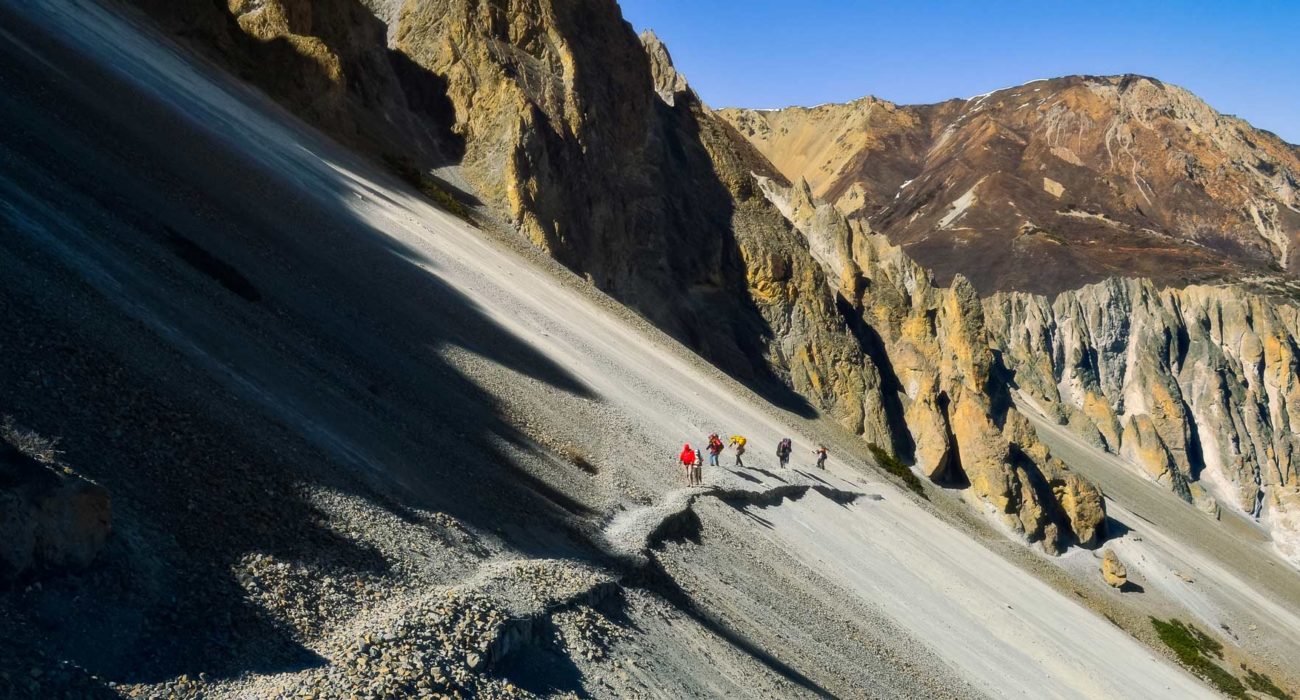
Trekking in Nepal: The Complete Hiking Guide
The definitive guide to trekking in Nepal: teahouse trekking, the main regions, a comparison of the top treks, permits, seasons and how to choose your route.
 Trekking
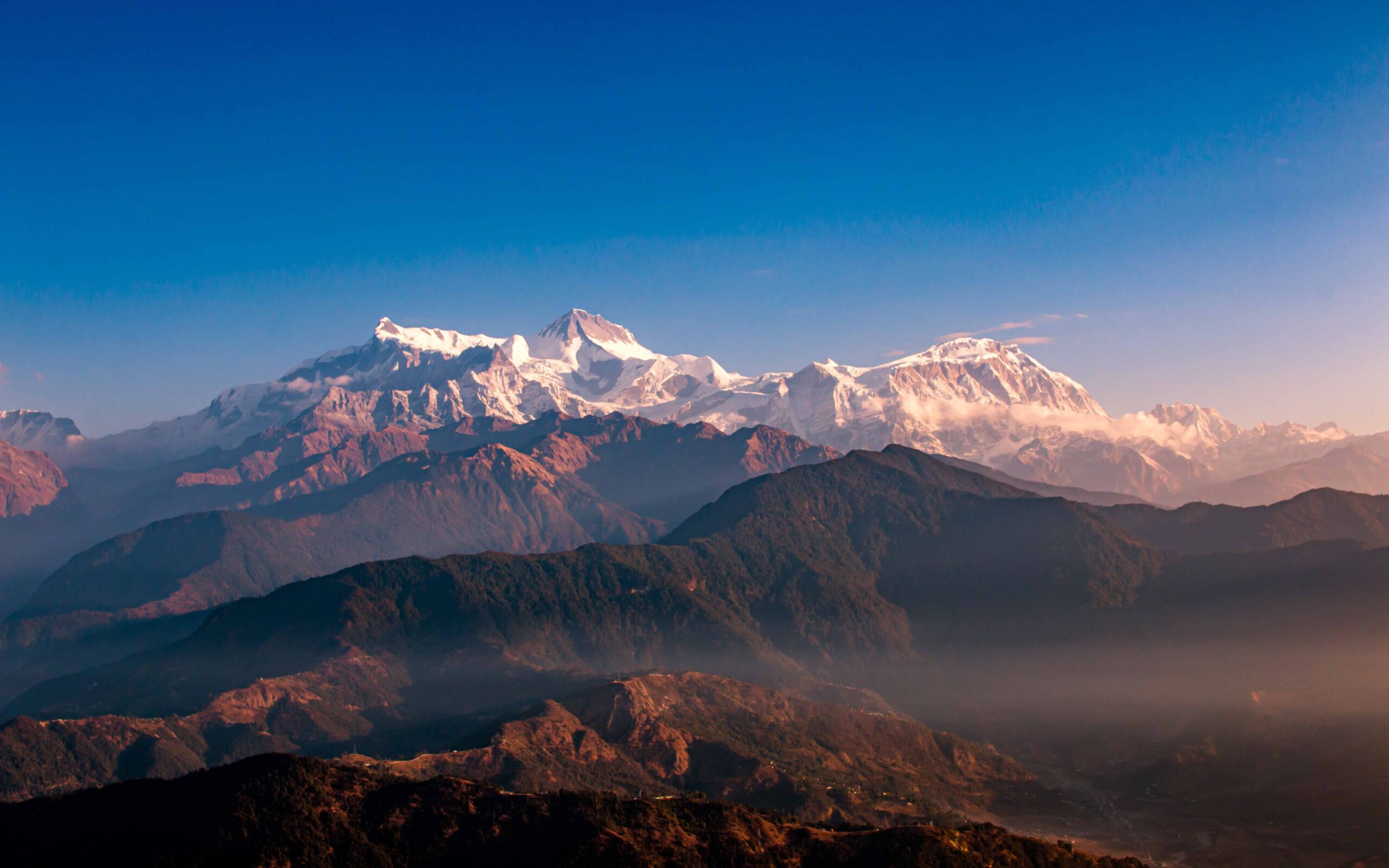
Annapurna: The Complete Trekking Guide to Nepal's Most Popular Region
The Annapurna massif, the top routes (ABC, Circuit, Poon Hill, Mardi Himal, Tilicho), the ACAP permit, seasons, sample itineraries and how to choose.
 Trekking
Annapurna Base Camp Trek (ABC): The Complete Guide
The 'amphitheatre of the gods' at 4,130m: a day-by-day itinerary, difficulty, ACAP permits, seasons and how to combine it with Poon Hill.