

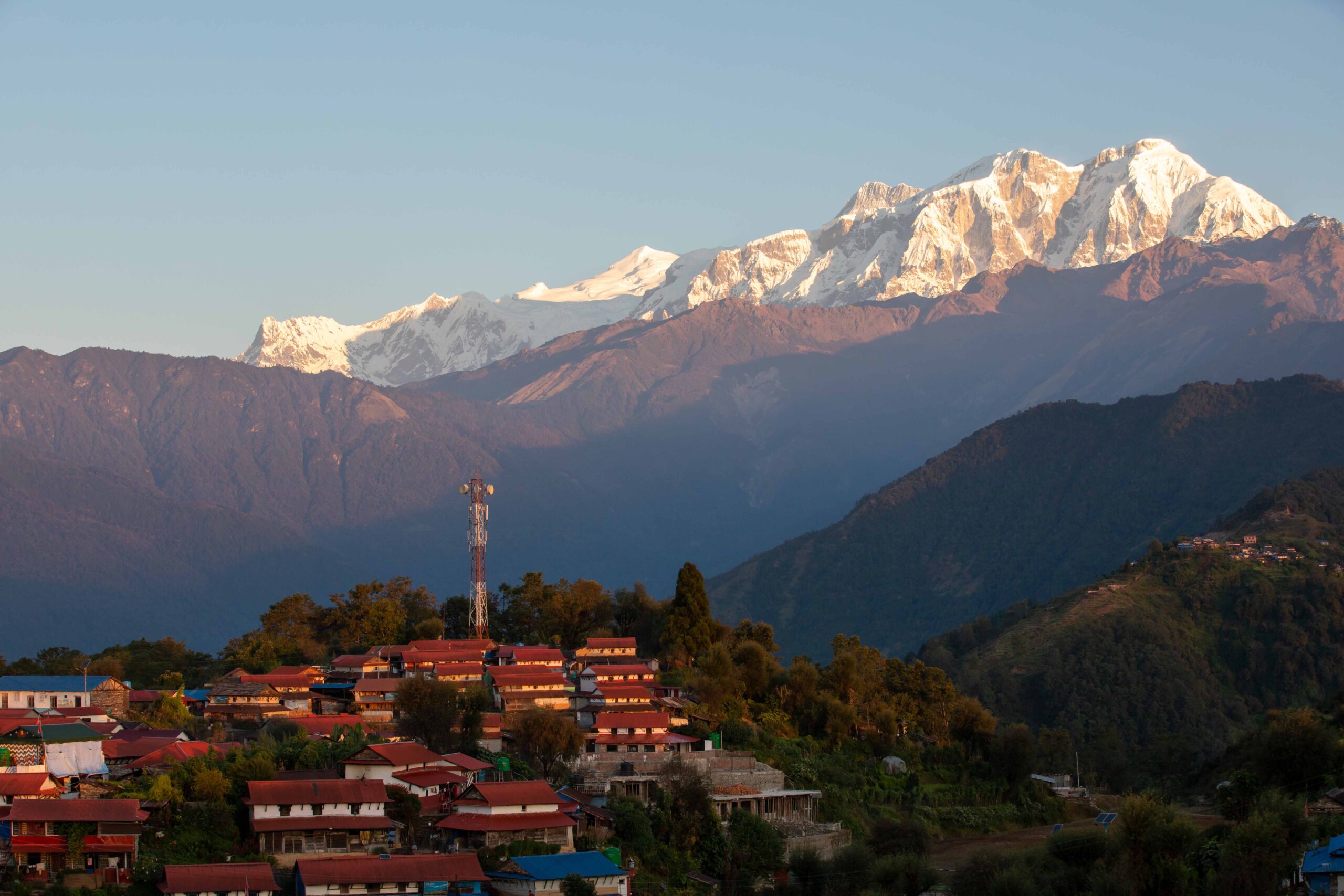
The most common question we get before any Himalayan trek is not about gear or fitness — it's about altitude sickness. And rightly so. It is the number-one reason a trek doesn't get completed, and in rare cases it can turn dangerous. The good news, though, is clear: in the vast majority of cases altitude sickness is predictable, recognisable and preventable. You don't need to be an athlete. You need to ascend slowly, listen to your body, and know what to do when something goes wrong.
This guide explains, in plain terms, what happens to your body at altitude, how to recognise the three levels of risk, the rules that keep thousands of trekkers safe every year, and the role of the drug Diamox. It's part of our practical Nepal travel guide and complements our guide to trekking in Nepal.
What altitude sickness is and why it happens
As you climb, atmospheric pressure drops. The percentage of oxygen in the air stays the same (around 21%), but because the air is "thinner", every breath brings in fewer oxygen molecules. At 3,500 m you get roughly 65% of the oxygen you would at sea level; at 5,400 m (the altitude of Everest Base Camp) about half. Your body tries to adapt — you breathe faster, your heart works harder, you produce more red blood cells. This adaptation, acclimatisation, takes time. If you ascend faster than your body can adapt, altitude sickness appears.
Meaningful risk starts above 2,500 metres and becomes serious above 3,000 m. On Nepal's classic treks you spend many days in this range: Annapurna Base Camp reaches 4,130 m, Everest Base Camp 5,364 m, and the Thorong La pass on the Annapurna Circuit 5,416 m. Age, sex and fitness make little difference — anyone can be affected. What makes the difference is your rate of ascent.
The three forms: AMS, HAPE, HACE
Altitude sickness isn't one thing but a spectrum of three conditions of increasing severity. Recognising them is the single most important thing you'll take from this guide.
| Form | What it is | Main symptoms | Severity | Action |
|---|---|---|---|---|
| AMS (Acute Mountain Sickness) |
The mild, common form. It affects 25–50% of people who ascend quickly above 3,500 m. | Headache, nausea, dizziness, insomnia, fatigue, loss of appetite. "Like a hangover". | Mild — annoying but not dangerous | Stop ascending. Rest, hydrate. Don't go higher until symptoms clear. |
| HAPE (High-Altitude Pulmonary Edema) |
Fluid building up in the lungs. Life-threatening. | Breathlessness at rest, cough (dry → pink/frothy sputum), chest tightness, extreme fatigue, blue lips/nails. | Severe — emergency | Immediate descent of at least 500–1,000 m. Oxygen. Helicopter if needed. |
| HACE (High-Altitude Cerebral Edema) |
Fluid building up in the brain. The most dangerous form. | Confusion, loss of balance (as if drunk), inability to walk a straight line, severe headache, drowsiness, hallucinations. | Critical — rapidly fatal | Descend now, even at night. Dexamethasone. Helicopter. |
The practical rule: AMS doesn't kill you — ignoring it does. HAPE and HACE almost always start as unresolved AMS that the trekker ignored while continuing to climb. A simple balance test for HACE: walk a straight line placing heel in front of toes. If you can't, descend immediately.
The golden rules of prevention
90% of prevention comes down to one thing: ascend slowly. The rules below are the same system experienced Himalayan guides have used for decades.
- "Climb high, sleep low": During the day you can climb higher, as long as you descend to sleep. Your body acclimatises based on the altitude at which you sleep, not the day's maximum.
- The 300–500 m rule: Above 3,000 m, don't increase your sleeping altitude by more than 300–500 metres per day.
- Acclimatisation day: Add a rest day every ~1,000 m of ascent or every 3–4 days. On EBC the classic stops are Namche Bazaar (3,440 m) and Dingboche (4,410 m).
- Hydration: Drink 3–4 litres of water a day. Your urine should run clear.
- No alcohol, no sleeping pills for at least the first days at altitude — they suppress breathing and mask symptoms.
- Eat carbohydrates and follow your appetite — there's a reason dal bhat every evening is every trekker's choice.
- "Bistari, bistari" pace (slowly, slowly in Nepali): a slow, steady step. If you can talk comfortably while walking, your pace is right.
Acclimatisation table
| Sleeping altitude | Max daily gain | Acclimatisation day |
|---|---|---|
| Below 2,500 m | No limit | Not needed |
| 2,500–3,000 m | up to ~600 m | Optional |
| Above 3,000 m | 300–500 m | Every ~1,000 m or 3–4 days |
Diamox (acetazolamide): when and how
Diamox is the most widely used preventive drug. It doesn't "cure" — it speeds up acclimatisation by making your breathing deeper. It doesn't replace a slow ascent rate; it supports it.
- Preventive dose: 125 mg twice daily, starting 24 hours before you reach the risk altitude (typically around 3,000–3,500 m) and continuing for 2–3 days at your maximum altitude.
- Side effects: tingling in fingers and lips, frequent urination, a metallic taste in fizzy drinks. Harmless but odd.
- Caution: it's a sulphonamide — if you're allergic to sulfa drugs, avoid it. Always consult your doctor before travelling.
Two more drugs live in every good guide's kit, but they are rescue medications, not prevention: dexamethasone (for HACE) and nifedipine (for HAPE). They're given to buy time during descent, not to keep climbing. Diamox is cheap in Kathmandu pharmacies (a few euros), but it's safer to get it at home on prescription so you know you tolerate it.
The single most important rule: when to descend
If you remember only one thing from this whole guide, let it be this: descent is the only definitive cure. No drug, no oxygen replaces losing altitude.
- Persistent mild symptoms (AMS): Don't go higher. Stay at the same altitude until you feel well.
- Worsening despite staying put: Descend 300–500 m and reassess.
- Any sign of HAPE or HACE: Descend immediately, at least 500–1,000 m, regardless of the hour. Don't wait for morning.
Lodges at high altitude often have an oxygen bottle and, in some, a hyperbaric (Gamow) bag that simulates a lower altitude. These are bridges to descent — not substitutes for it. A pulse oximeter (cheap, clips onto a finger) is a valuable tool: resting SpO2 readings below ~80% at altitude, together with symptoms, are a serious warning.
Insurance and helicopter rescue
This is not optional. Your Nepal travel insurance must explicitly cover three things: (1) trekking to your route's maximum altitude (many policies stop at 3,000 or 4,000 m — for EBC you need cover to 5,500 m or even 6,000 m), (2) helicopter evacuation, and (3) medical repatriation.
Why does it matter? A Himalayan helicopter rescue typically costs 4,000–10,000 USD — and more in difficult cases. Without insurance, the helicopter won't take off until payment is secured. With the right cover, a single phone call is enough. Read the fine print on the altitude limit carefully; it's the most common gap in cheap policies.
Altitude-sickness risk by trek
Not every trek carries the same risk. The table below helps you choose according to your experience. See also our guide to the best time to travel to Nepal, since weather affects safety at altitude too.
| Trek | Max altitude | Duration | Risk | Note |
|---|---|---|---|---|
| Poon Hill / Ghorepani | 3,210 m | 4–5 days | Low | Ideal for a first time in the Himalayas |
| Langtang Valley | 3,870 m (Tserko Ri 4,985 m) | 7–10 days | Moderate | Close to Kathmandu, beautiful valley |
| Annapurna Base Camp | 4,130 m | 7–12 days | Moderate | Gradual ascent; lower risk than EBC |
| Manaslu Circuit | 5,106 m (Larke La) | 14–18 days | High | Remote, restricted permit |
| Everest Base Camp | 5,364 m (Kala Patthar 5,545 m) | 12–16 days | High | Acclimatisation days at Namche & Dingboche |
| Annapurna Circuit | 5,416 m (Thorong La) | 12–18 days | High | The Thorong La pass is the critical point |
If it's your first time at high altitude, ABC or Poon Hill is an excellent start: you gain acclimatisation experience before attempting the "big ones" above 5,000 m.
Checklist before and during the trek
- Plan an itinerary with built-in acclimatisation days — don't "push" the schedule.
- Insurance covering altitude + helicopter, checked line by line.
- Pulse oximeter and a small medical kit (painkillers, Diamox if your doctor approves).
- Learn to recognise AMS / HAPE / HACE — and brief your trekking companions.
- Drink water, eat, sleep lower than the day's maximum.
- At the first serious symptom: descend. No summit is worth your life.
How we handle it on a guided trip
Acclimatisation isn't luck — it's planning. On our organised trips, itineraries include the right acclimatisation days from the outset, our guides are trained to recognise symptoms, they check the group's SpO2 daily, and they follow a clear descent protocol. For those who want the highest level of support — a private guide, a more comfortable pace, a contingency plan and priority on helicopter evacuation — Elysian Himalaya offers premium versions of the classic treks, where altitude safety is engineered down to the last detail.
Altitude sickness shouldn't frighten you — it should make you respect the mountain. With a slow pace, proper acclimatisation and the readiness to descend when needed, the Himalayas are one of the safest and most rewarding journeys you can make in your life.
Gallery
Frequently asked questions
- Meaningful risk starts above 2,500 m and rises sharply above 3,000 m. Below that, altitude sickness is rare. On Nepal's classic treks (EBC, ABC, Circuit) you spend many days above 3,000 m.
- The mild form (AMS) is unpleasant but harmless if you react correctly. The severe forms (HAPE, HACE) can become fatal within hours if ignored. With a sensible ascent rate and immediate descent at the first serious symptom, the risk is very low.
- Diamox (acetazolamide) aids prevention but is not mandatory. Many take it prophylactically (125 mg twice daily) on treks above 3,500 m or when the ascent is steep. Discuss it with your doctor before you travel — it does not replace proper acclimatisation.
- Less than you'd think. Altitude sickness strikes athletes and the unfit alike — in fact very fit people often ascend too fast and are at greater risk. What matters is your ascent rate and your genetic response, not how many kilometres you run.
- A Himalayan helicopter rescue typically costs 4,000–10,000 USD or more. You need travel insurance that explicitly covers trekking to your route's altitude (e.g. up to 5,500 m) and helicopter evacuation. Without it, you pay out of pocket.
Keep reading
Related articles
 Articles
The biggest help you can give Nepal is to visit
On 26 August 2026 a piece of mountain turned into water and took villages, bridges and more than a thousand lives with it. I have lived here for fifteen years. Here is what happened, what is open, how you can help today, and why your trip in October is the biggest help of all.
 Info
InfoWhat Is the Climate Like in Nepal?
Everything about Nepal's climate — four seasons, three climate zones, temperatures by region and when the sky is clear for the Himalayas.
 Info
InfoThe Best Time to Visit Nepal
When should you travel to Nepal? A decision guide by activity — trekking, safari, culture — with a table, crowds, prices and festivals.