
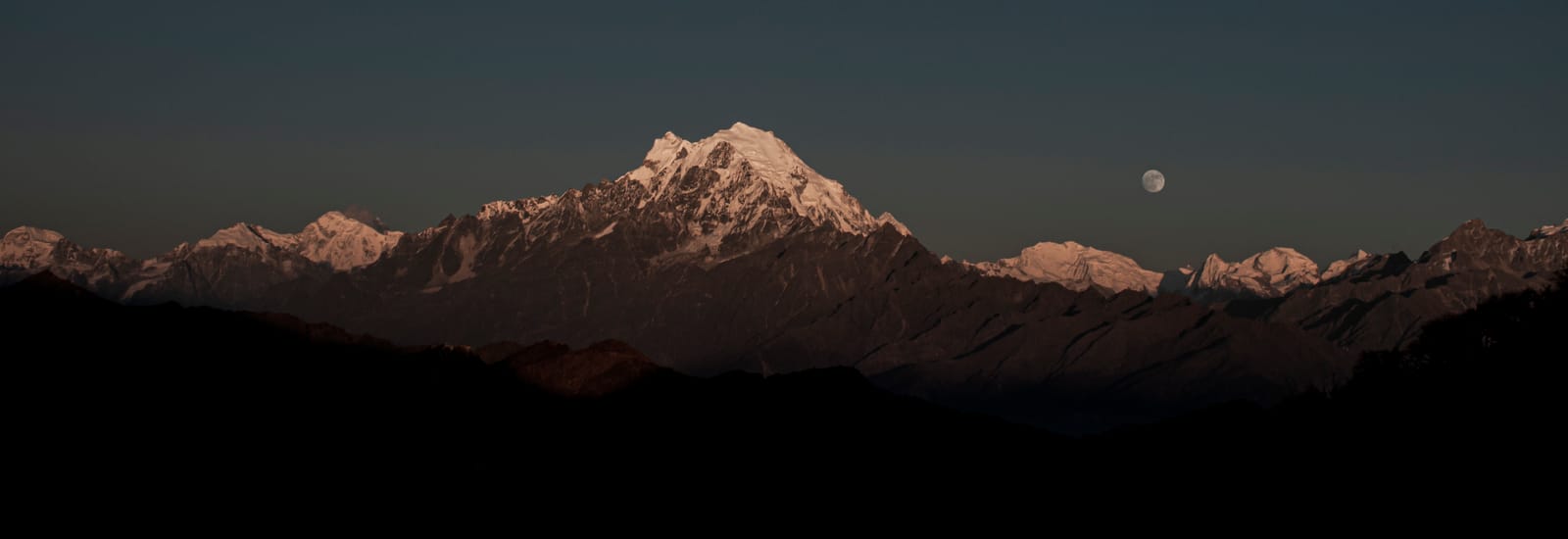
On 26 August 2026, a little before nine in the morning, a piece of Langtang Lirung mountain left its place. Ice and rock blocked a river, the river became a lake, and when the dam broke, the whole lake came down through the Bhote Koshi and Trishuli valleys. Villages, bridges, the road to Tibet, the customs post, hydropower plants: all of it, in a few minutes.
I have lived in Nepal for fifteen years. I have been through the 2015 earthquake and dozens of monsoons. What happened in Rasuwa I have never seen before, and neither have the Nepalis. That is why I am writing this article. Not to describe the disaster to you; the news bulletins did that. I am writing it to tell you something that may sound strange in the middle of the mourning: the biggest help you can give Nepal is to come. I will explain why, with numbers and not with slogans. I will tell you exactly what is open, what is closed, and how you can help starting today.
Last updated: 16 October 2026. The Kathmandu–Pokhara road has been open again since 17 September, Langtang is gradually reopening, and on 11 October a new, separate flood hit Manaslu. This article is updated as the situation develops.
What exactly happened on 26 August 2026
The Rasuwa district lies north of Kathmandu, on the border with Tibet. It is the gateway to the Langtang Valley and to the Rasuwagadhi–Kerung crossing, through which thousands of pilgrims travel to Mount Kailash every year.
According to the geologists who analysed the seismic data, an enormous mass of ice and rock broke away from the Langtang Lirung glacier (summit 7,234 m) and fell into the bed of the Lhende Khola river. The mass blocked the river, and water gathered behind the makeshift dam. When the dam gave way, the water, the mud and the boulders came down like a wall through the narrow Bhote Koshi valley and continued into the Trishuli. Timure, Rasuwagadhi and Syabrubesi, the village where every Langtang trek begins, were hit first. The destruction carried on downstream, into the Nuwakot, Dhading, Gorkha, Tanahun and Chitwan districts. On the other side of the border, the Gyirong customs post disappeared.
On ERT, the Greek public broadcaster, the following day, I put it as simply as I could: “An entire mountain left, it turned into water and it took everything”.
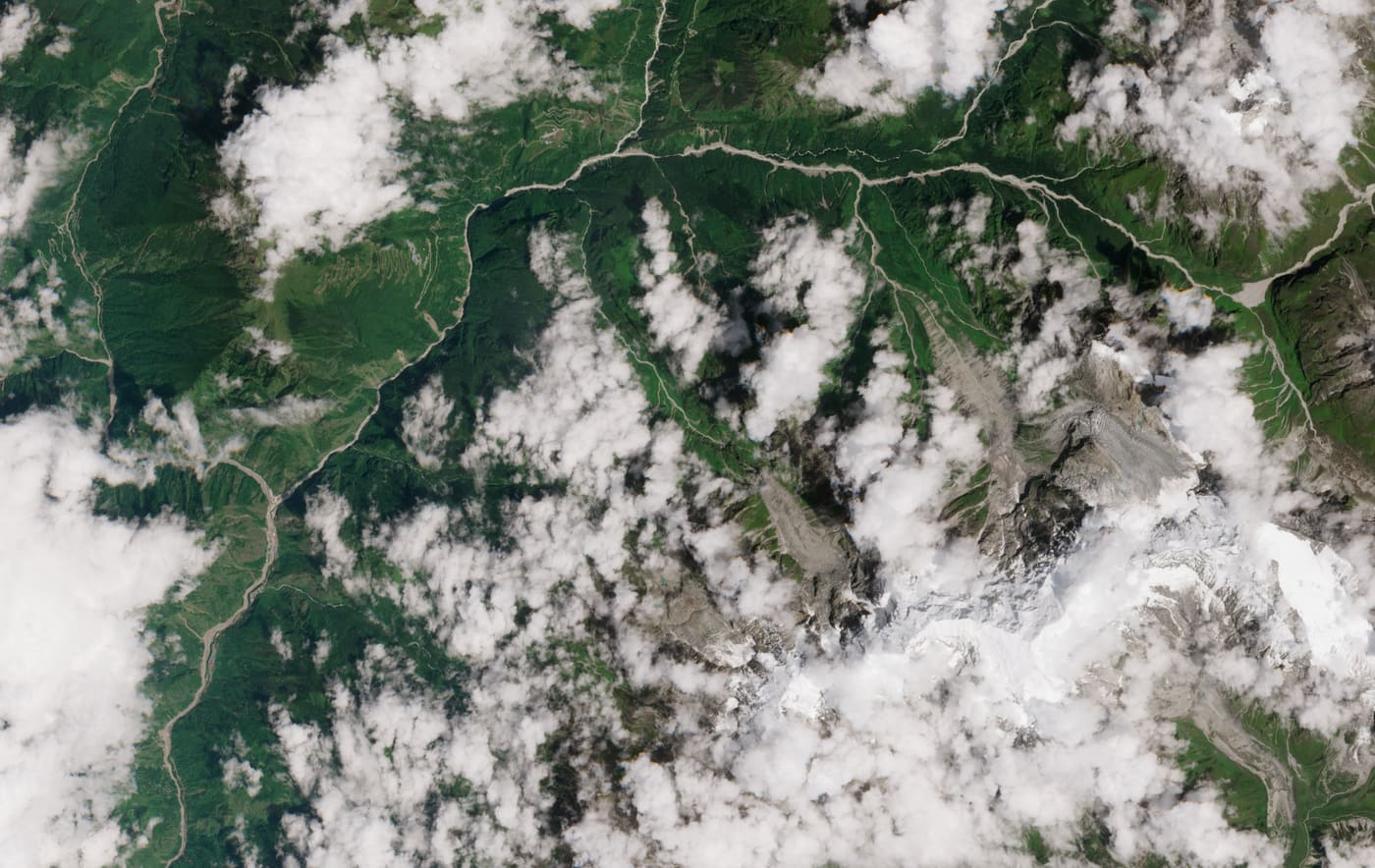 24 August 2026
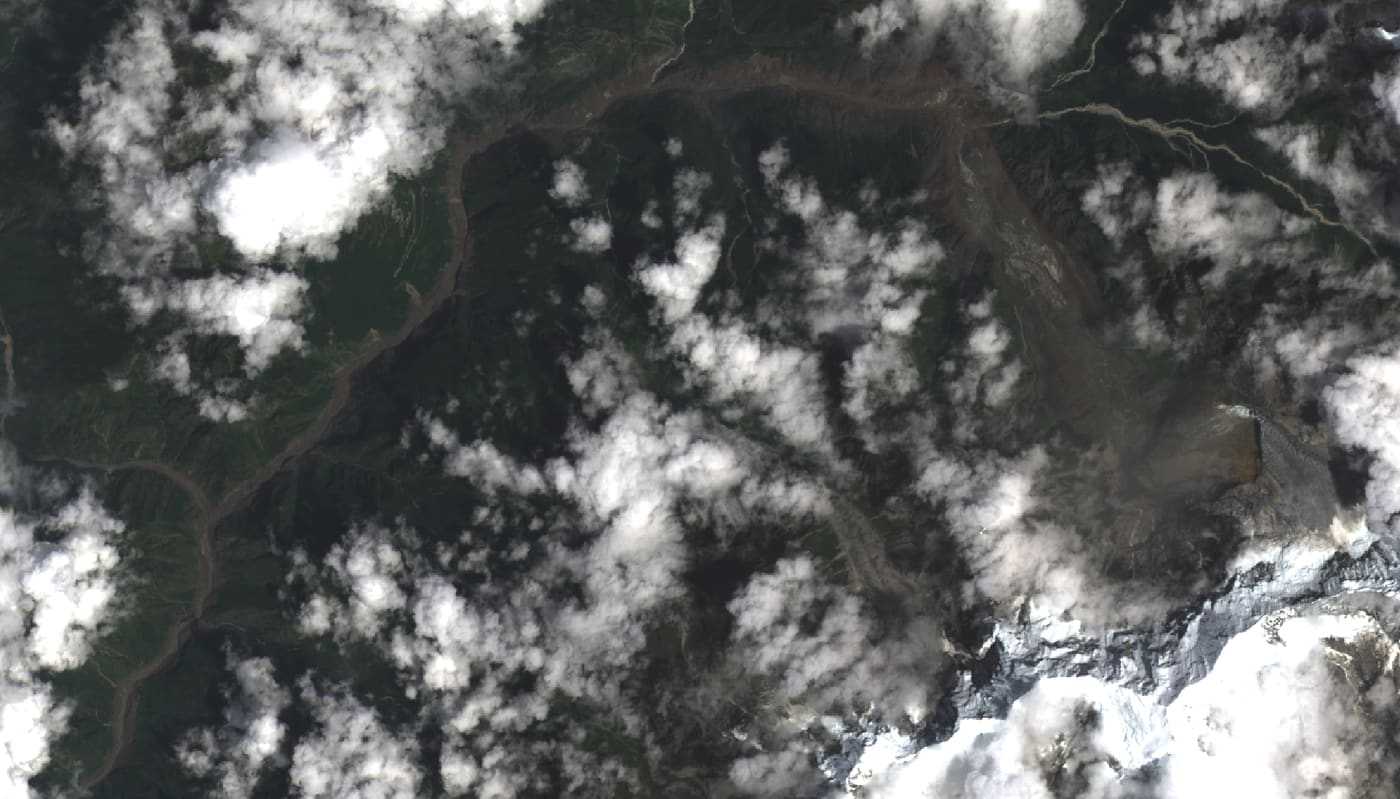 26 August 2026
The numbers, as they stand today
- More than 1,400 people have died and more than 5,200 remain missing in Nepal, according to the NDRRMA (Kathmandu Post, 15 October). The consolidated toll based on official announcements stood at 1,454 dead and 5,285 missing on 4 October, and UNICEF counts at least 84 children among the dead. DNA has been taken from more than 1,300 bodies. Since 9 October the NDRRMA has been formally registering the missing, so that they can be declared dead and their families can receive compensation of 200,000 rupees. The figures differ from one agency to another and remain provisional.
- Among the missing are 636 foreign nationals according to government figures (15 October), most of them pilgrims travelling towards Kailash. They are now being verified through the embassies. The most recent consular confirmation available to this article is dated 2 September; at that point, as far as I know, there was no Greek or Cypriot on the list of the missing. The list is updated constantly.
- Around 10,000 households need immediate assistance, according to the World Health Organization. Three health centres were completely destroyed and one hospital partly so.
- The government declared 15 municipalities disaster zones for three months and has mobilised more than 21,000 soldiers, police officers and rescuers.
- 55 kilometres of road, 33 motorable bridges and 68 suspension bridges have been completely destroyed, 7,570 houses are gone, and 18 schools and 7 health facilities are damaged or destroyed, according to the official NDRRMA tally (4 September). The only road to Rasuwagadhi and Tibet no longer exists.
- On 11 October a separate flood hit the Budhi Gandaki in Gorkha, the Manaslu valley. An ice and rock landslide high on the mountain briefly blocked the river. Five people are missing, more than 200 homes and several bridges were swept away, and the army airlifted more than 300 people to safety, foreign trekkers among them. No deaths have been reported.
What I saw from Pokhara
Pokhara, where I live with my family, is about 100 kilometres from the place where it happened. Not one drop of rain fell here beyond the usual monsoon. Phewa Lake was calm, the shops in Lakeside were open, the domestic flights left on time. And yet, from nine in the morning my phone did not stop ringing: friends from Greece, relatives of travellers, journalists, our Embassy in New Delhi.
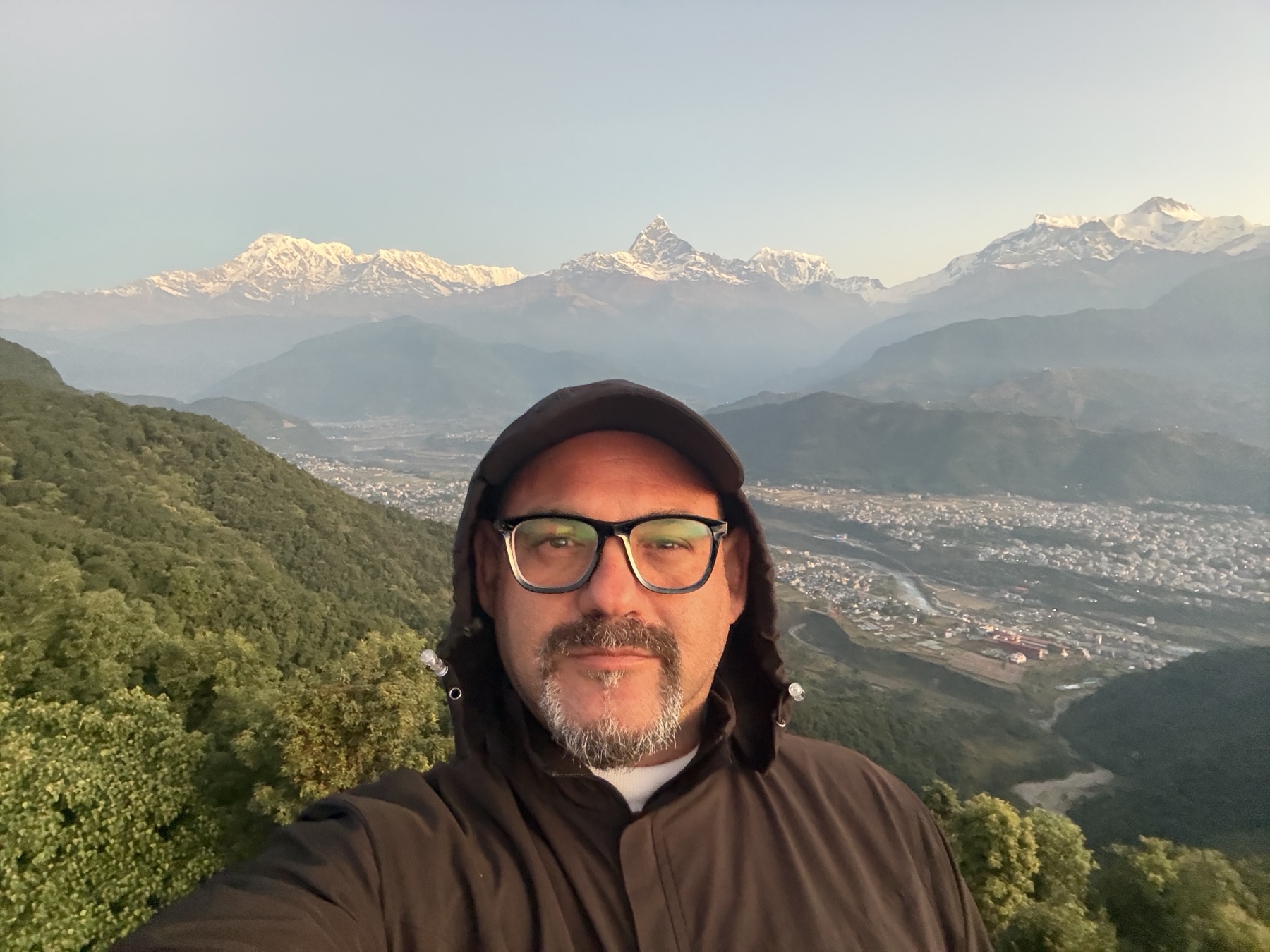
That same evening, around ten o’clock, I was talking to Newsbomb with my eyes on the news coming out of Rasuwa: “The torrent has now started, little by little, to calm down. It is about 22:00 here in Nepal and we can see the water level beginning to drop”. The next day, on ERT, I tried to explain why this is not just another monsoon flood: “An enormous disaster has happened. People have not yet realised what has taken place”. “Nepal is used to small-scale landslides. A hillside goes, it takes five houses, a bit of a village. This is an unprecedented phenomenon”. And about the road to the border: “The only road you could take was destroyed, it no longer exists”. And I said it and I believe it: this could set the country “20 years back”.
What frightens me more than the images is the invisible part. I said it on ERT: “It is not only that many people will be lost, it is also a terrible economic disaster for this land”. Tourism is 6.6% of the country's economy, and autumn is the season the whole mountain world lives off: the guides, the porters, the families who run a four-room lodge, the jeep drivers, the women who sell apples along the trail. The former head of the Nepal Tourism Board has already warned that the blow to tourism will last at least six to seven months. That is, the entire season.
“We see the mountains here, we live off them”. I said it and I meant it. And because I see them every morning from my window, I know that Nepal did not end on 26 August.
Why I say the biggest help is to come
After the 2015 earthquake a mistake was made that I am afraid will be repeated now. People abroad saw the images, cancelled their trips, and Nepal lost almost a third of its visitors in the year it needed them most. The donations came, and they were precious. But donations run out. A guide who is working, a lodge that has guests, a porter who gets paid, do not need charity. They need work.
Think about where the money from a trip goes. Hotels, guides, porters, food, transport, permits. It does not go into a fund. It goes straight into the hands of people who live in villages, and from there into their schools, their pharmacies, their shops. A group that comes in October is a winter for several families.
And there is something else, which cannot be measured. When you come to a country that is grieving, you tell it that you have not forgotten it. Nepalis remember that. They remember it for decades.
I am not asking you to go to Rasuwa. Rasuwa is closed, and rightly so. I am asking you not to cancel Everest, Annapurna, Pokhara or Chitwan because you saw an image from a valley that lies tens or hundreds of kilometres away from where you will actually set foot.
What is open and what is closed — 16 October 2026
| Region | Status |
|---|---|
| Kathmandu, Pokhara, Chitwan National Park | Open. Hotels, monuments, safaris and restaurants are operating normally. |
| Everest region (Base Camp, Gokyo) | Open. Trails, lodges and flights to Lukla are operating normally. |
| Annapurna region (Base Camp, Circuit, Poon Hill) | Open. Thorong La reopened after the early-October snow and the Circuit is filling up again, with 150–200 trekkers a day at Dharapani. The road to Manang is damaged near Chame, but the trail is passable. |
| Manaslu Circuit, Tsum Valley | Damaged since 11 October. The Budhi Gandaki flood swept away bridges and sections of trail between Machhakhola and Jagat and at Salleri. More than 100 foreign trekkers were temporarily stranded. MCAP has suspended Tsum Valley until further notice. The section from Philim towards Larke Pass is reported open. Do not book Manaslu before asking. |
| Domestic flights | Normal. Late-night flights have been added for Dashain. |
| Kathmandu–Pokhara road (Prithvi Highway) | Open, with care. Two-way traffic resumed at Krishnabhir on 17 September, on a new track higher up the slope. On 9 October a new section subsided at Galaundi (Gajuri), because the Trishuli had undercut its base in the August flood. The road reopened within two days, with overnight closures for repairs. During Dashain traffic is several times heavier than usual. Avoid driving at night and call Traffic Police on 103 before you set off. |
| Langtang Valley, Gosaikunda | Gradually reopening, not yet normal. Since 11 October a Bailey bridge at Betrawati has reconnected Rasuwa and Nuwakot by road. The bridge at Syabrubesi is not yet in place. Residents have repaired the Langtang trail, and local agencies are starting the trek from Thulo Syabru, by jeep via Dhunche. I have not found an official reopening announcement. Go only with a local agency and ask before you book. |
| Banks of the Bhote Koshi and Trishuli in Rasuwa | Disaster zone. Reconstruction is ongoing. Not a destination. |
| Land crossings to Tibet (Rasuwagadhi, Tatopani) | Closed. Only Korala in Mustang is working, and only for freight, not for tourist crossings. I have found no newer official information. |
Sources: the NDRRMA, the Department of Roads, MCAP, the Kathmandu Post, The Himalayan Times and on-the-ground updates, checked 16 October. Before you travel, ask me. I know which road opened yesterday.
How to travel responsibly in Nepal right now
- Do not go to the banks of the Bhote Koshi and the Trishuli. They are still a disaster zone and you get in the way of the crews. For Langtang and Gosaikunda, go only with a local agency that knows what the road is like that week.
- If you had planned Langtang or Manaslu, ask before you go, and if necessary switch to Annapurna or Everest. The guide who lost their work there does not lose it if you take them with you.
- Kathmandu–Pokhara: flight or road, both are working. The Prithvi Highway is open, but some stretches keep subsiding, and during Dashain traffic is several times heavier. The flight is 25 minutes. If you go by road, travel by day and call 103 before you set off.
- Get travel insurance with helicopter and high-altitude cover. Always, not only now.
- Work with a local agency and a licensed guide. It has been mandatory since 2023, and now it is a safety matter too: the guides know which trails have changed.
- October and November are the best time of the year: the monsoon ends, the sky clears, the trails dry out. Flights from Athens are still reasonably priced.
How you can help today, from Greece
If you cannot travel, or you want to do something now, give money and not things. A parcel of clothes costs more to get here than it is worth. And give only to official organisations. In the first 72 hours after any disaster the internet fills up with fake appeals.
- Prime Minister's Disaster Relief Fund: the official fund of the government of Nepal. By law, the money goes only to rescue, medical care, relief and reconstruction, not to administrative costs. The accounts are audited every year.
- Nepal Red Cross Society: on the ground from the first hour, in the evacuations, the search and the shelters.
- IFRC and CARE: international organisations with an active mission in the affected areas.
If you want your help to reach closer to the people, write to me. I will tell you what I know first-hand.
How you can help in October
Book your trip. Nepal is waiting for you this autumn with the clearest sky of the year. If you would like us to plan it together, with local guides and with money that stays here, send me a message or look at the ready-made itineraries. For high-end journeys with private coordination, there is Elysian Himalaya. And if you do not book with us, book with any Nepali agency at all. The point is not who takes you. The point is that you come.
My interviews and the videos
Since 26 August I have spoken to a number of Greek media outlets. I am leaving them here for anyone who wants to hear the story from the beginning.
- ERT News, 27 Aug: “An entire mountain left, it turned into water and it took everything”
- CNN Greece, 26 Aug (interview on Alpha TV): “Here they are talking about thousands of dead, there is no Greek on the list”
- Proto Thema, 26 Aug: “What happened was terrifying”
- Newsbomb, 26 Aug: “A dam broke, like an iceberg, villages and towns were destroyed”
- in.gr, 27 Aug
- Efimerida ton Syntakton, 27 Aug
- VoiceNews (video): “We are talking about thousands of dead”
- SKAI, September 2025 (video): on the Gen Z unrest in Nepal, one year earlier
- Meet Your Host: From Berklee to the Himalayas (video): who I am and how I ended up here
Sources
Update of 16 October:
- Kathmandu Post, 15 Oct: NDRRMA figures on the dead and missing, and how the missing will be verified
- Wikipedia: 2026 Nepal–Tibet floods, consolidated toll based on official announcements (4 Oct)
- UN News / UNICEF, 9 Oct: six weeks on, 84 children among the dead
- Kathmandu Post, 17 Sep: Krishnabhir reopens to two-way traffic
- Nepal Press, 17 Sep: two-way traffic resumes at Krishnabhir after 18 days
- Kathmandu Post, 1 Oct: roads reopen; Manang and Mustang links still cut
- Kathmandu Post, 10 Oct: Galaundi subsidence, Dashain travel and late-night flights
- Kathmandu Post, 12 Oct: overnight closure at Galaudi for repairs
- The Himalayan Times, 16 Oct: the Dashain exodus and the damaged highways
- Kathmandu Post, 11 Oct: Bailey bridge at Betrawati restores the Rasuwa–Nuwakot road link
- Meroauto, 11 Oct: the Betrawati Bailey bridge comes into operation
- Sagarmatha TV (in Nepali): residents repair the Langtang trail themselves
- Local trekking agency, 8 Oct: Langtang now starts from Thulo Syabru (agency update, not an official source)
- The Himalayan Times, 11 Oct: five missing after the Budhi Gandaki flood (NDRRMA)
- The Himalayan Times, 13 Oct: NDRRMA technical assessment of the Gorkha flood
- Al Jazeera, 13 Oct: more than 100 foreign trekkers stranded on the Manaslu trail
- The Tourism Times, 12 Oct: MCAP suspends Tsum Valley, Manaslu trail damaged
- Kathmandu Post, 14 Oct: the flood cuts off northern Gorkha and disrupts the Manaslu season
- Explorersweb, 13 Oct: new flash floods disrupt trekking routes; Thorong La reopens
- IANS / The Himalayan Times, 12 Oct: the Annapurna Circuit rebounds, 150–200 trekkers a day at Dharapani
Original sources, 26 August – 5 September:
- Kathmandu Post, 5 Sep: the Nepal Police tally on Saturday morning
- Khabarhub, 5 Sep: Nepal Police update on the dead, the missing and foreign nationals
- Kathmandu Post, 4 Sep: NDRRMA tally of the dead, the missing and infrastructure damage
- Radio Nepal, 3 Sep: official toll update
- Kathmandu Post, 4 Sep: the Department of Roads begins cutting the temporary track at Krishnabhir
- The Himalayan Times, 4 Sep: 350-metre track at Krishnabhir, 7 to 10 day estimate
- Kathmandu Post, 3 Sep: new track above the collapsed Krishnabhir section
- Radio Nepal, 2 Sep: Prime Minister Balendra Shah promises Krishnabhir reopening within September
- U.S. Embassy Kathmandu, 2 Sep: Prithvi Highway blocked at Krishnabhir, Rasuwa road closed, Tribhuvan airport open
- OnlineKhabar, 28 Aug: alternative route to Dhunche for light four-wheel-drive vehicles only
- Nepal News, 31 Aug: Prithvi Highway closure and Nepal Police advice against non-essential travel
- Wikipedia: 2026 Nepal floods, consolidated toll based on the announcements of the authorities (5 Sep)
- World Health Organization, Nepal: 2026 Rasuwa flash floods
- Ministry of Home Affairs of Nepal: official appeal for assistance
- Kathmandu Post, 28 Aug: Nepal tourism faces another setback
- Kathmandu Post, 27 Aug: How people can help
- The Longest Way Home: Nepal floods 2026, what travellers need to know (4 Sep)
Photographs: Dimitris Giannopoulos / Nepal.gr, unless otherwise stated. Hero photo, the Langtang range with Langtang Lirung: Bibek010, Wikimedia Commons, CC BY-SA 4.0. Satellite images: ESA, Copernicus Sentinel-2 (CC BY 4.0) and USGS, Landsat 9 (public domain), via Wikimedia Commons.
Gallery
Frequently asked questions
- Yes, for most of the country. Kathmandu, Pokhara, Chitwan and the Everest and Annapurna regions are operating normally, and the Kathmandu–Pokhara road is open. Take care with the banks of the Trishuli and Bhote Koshi, with Langtang, which is gradually reopening, and with Manaslu, which was hit by a new flood on 11 October. Ask before you book any of those.
- The banks of the Bhote Koshi and Trishuli in Rasuwa remain a disaster zone, and the road to Rasuwagadhi and Tibet has not been restored. Langtang is gradually reopening from Thulo Syabru, with no official announcement yet. On Manaslu, the Tsum Valley is closed and parts of the trail are damaged after the flood of 11 October. This information is accurate as of 16 October 2026.
- No. Everest and Annapurna are in different mountain ranges, many tens of kilometres away from Rasuwa. The trails, the lodges and the flights to Lukla and Pokhara are operating normally, and Thorong La reopened after the early-October snow. Manaslu, however, was affected by a separate Budhi Gandaki flood on 11 October.
- Yes. Tribhuvan International Airport and the domestic flights to Pokhara, Lukla, Bharatpur and the rest of the airports are running without interruption.
- By air in 25 minutes, or by road. The Prithvi Highway is open: two-way traffic resumed at Krishnabhir on 17 September. On 9 October a new section subsided at Galaundi; it reopened within two days, with overnight closures for repairs. Traffic is several times heavier than usual during Dashain, so avoid driving at night and call Traffic Police on 103 before you set off.
- To the official Prime Minister's Disaster Relief Fund of the government of Nepal, to the Nepal Red Cross Society, to the IFRC and to CARE. Give money rather than goods, and only through their official pages. In the first days after any disaster, fake appeals circulate.
- Ask your agency first. Since 11 October a Bailey bridge at Betrawati has reconnected Rasuwa by road, residents have repaired the trail, and local agencies are starting the trek from Thulo Syabru instead of Syabrubesi. I have not found an official reopening announcement, so go only with a local agency. If you want certainty, Annapurna and Everest are operating normally.
- As far as I know, no. The most recent consular confirmation available to this article is dated 2 September 2026; at that point there was no Greek or Cypriot on the list of the missing. The list is updated constantly. If you are in Nepal and need help, or you have relatives there, contact us on Viber +30 697 461 9301 or on WhatsApp +977 982 516 5928.
Keep reading
Related articles
 Info
InfoWhat Is the Climate Like in Nepal?
Everything about Nepal's climate — four seasons, three climate zones, temperatures by region and when the sky is clear for the Himalayas.
 Info
InfoThe Best Time to Visit Nepal
When should you travel to Nepal? A decision guide by activity — trekking, safari, culture — with a table, crowds, prices and festivals.
 Travel
Nepal – On Top of the World | 10 Days, 8 Nights
Our 10-day / 8-night group tour of Nepal — Kathmandu, Chitwan and Pokhara — with a Greek-speaking host and a full day-by-day itinerary.