

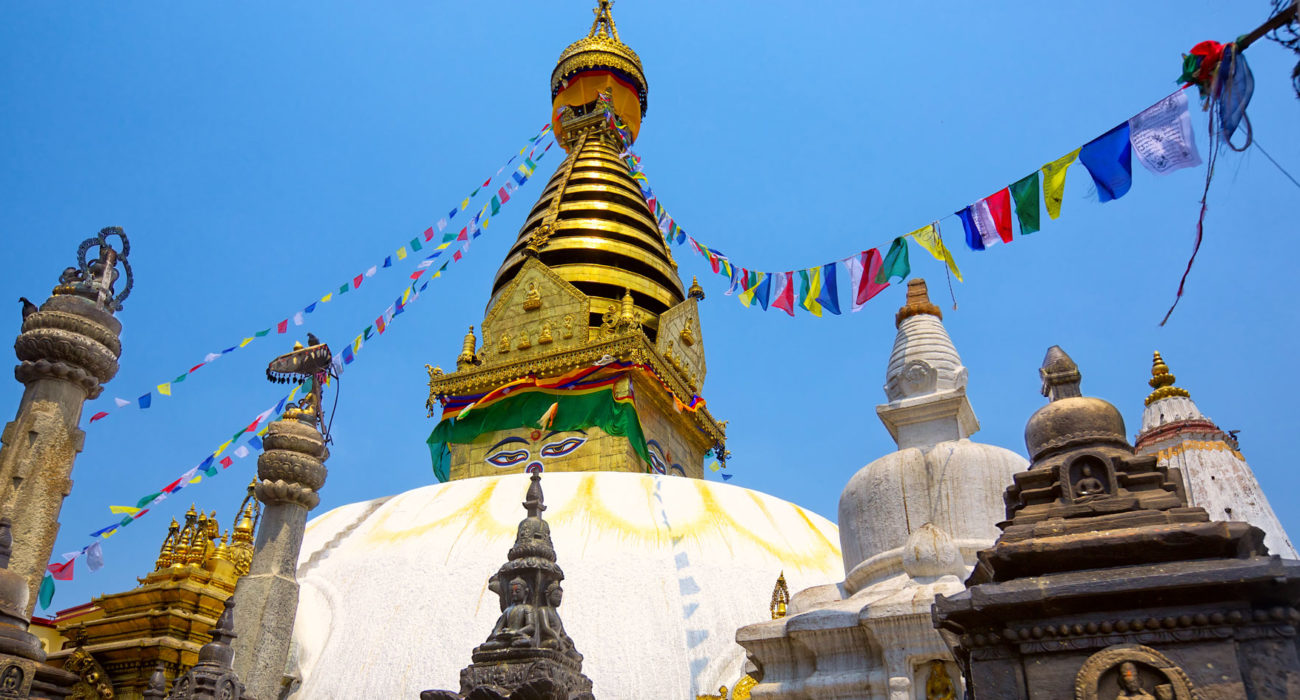
The first real step towards Nepal is not taken on the Himalayan trails — it is taken on your phone, the moment you open a flight search engine and see that there is no direct flight from Athens to Kathmandu. Don't worry: this is entirely normal. No carrier connects the two cities directly, so the trip is always made with one stop at a major hub — typically in the Persian Gulf or Istanbul.
The good news is that this single connection often makes the ticket cheaper and more comfortable than you might expect. In this guide you will find, with real 2026 figures, which airlines fly the route, how long the trip takes, what it costs in euros by season, when to book for the best fare, the baggage rules, and what to expect when you land at Kathmandu airport. If you are just starting to plan, read alongside the complete Nepal travel guide.
Is there a direct Athens – Kathmandu flight?
No, and there never has been. The distance (~6,000 km as the crow flies), the size of the market, and Kathmandu's peculiar mountain airport all make a non-stop connection uneconomical. In practice this means you have to change planes once — and here you have plenty of good options. The Gulf carriers (Qatar, Emirates, Etihad, Gulf Air) and Turkish Airlines use their vast hubs as a "bridge" between Europe and Asia, with convenient connections onward to Nepal.
One note: from time to time stranger 2-stop routings appear (e.g. via Delhi or Abu Dhabi + another city). They are almost always more tiring and rarely cheaper, so the rule is simple: aim for a single connection.
The main options: airlines & hubs
Five carriers essentially share all the Athens–Kathmandu traffic. All fly daily or near-daily from Athens ("Eleftherios Venizelos") to their hub, and connect onward to Kathmandu from there.
| Airline | Hub (stop) | Typical duration* | Comment |
|---|---|---|---|
| Qatar Airways | Doha (DOH) | ~13–17 hours | Often the best price/comfort balance; award-winning hub |
| Emirates | Dubai (DXB) | ~13–18 hours | Many flights to KTM, generous baggage |
| Etihad | Abu Dhabi (AUH) | ~14–18 hours | Competitive fares, good product |
| Turkish Airlines | Istanbul (IST) | ~13–16 hours | Short first leg (~1.5h); the second ~7.5h |
| Gulf Air | Bahrain (BAH) | ~15–19 hours | Often a cheap option, lower frequency |
*Total travel time depends decisively on the length of the layover. A "good" 2–3 hour connection gives the shorter times; a long 6–10 hour wait pushes the total past 20 hours.
In practice, travellers from Greece often pick Qatar or Turkish: the former for its quality and smart connections via Doha, the latter because the first Athens–Istanbul leg is just 1.5 hours and psychologically "breaks up" the journey.
How long does the trip take?
The pure flight time (in the air) Athens → hub → Kathmandu is roughly 9 to 10 hours in total. Anything added on top of that is the wait at the transit airport. That is why the total travel time typically falls between 12 and 18 hours:
- Best case (~12–13 hours): a short 1.5–2.5 hour connection, no delays.
- Typical case (~14–17 hours): a 3–5 hour layover — enough for a meal and a stretch.
- "Long" ticket (18–24 hours): a big wait, often the cheapest fare. A good choice if you don't mind sleeping in the lounge.
A useful detail: the second flight (hub → Kathmandu) almost always arrives in Kathmandu early morning or midday, so the aircraft catches the clear Himalayan morning air before the afternoon clouds. If you sit by the window (left side, the A seats, coming from the west) you may see Himalayan peaks — a first taste of what you are travelling to experience.
How much does the ticket cost (in euros)?
A round-trip economy ticket usually sits in the range of €430 to €800. The big difference comes from the season and how early you book. Here is what to expect:
| Period | Demand | Indicative price (return, economy) |
|---|---|---|
| June–August (monsoon) | Low | €430–550 |
| January–February (winter) | Low/medium | €450–600 |
| March–May (spring, rhododendrons) | High | €600–780 |
| October–November (trekking peak) | Very high | €650–850+ |
| Holidays (Christmas/Easter) | High | €700–850+ |
These figures assume a reasonable booking lead time before departure. If you catch an off-season deal you may find under €430; leave the booking to the last minute in peak season and you can easily exceed €900. The ticket is the trip's biggest fixed cost — once you land, Nepal becomes remarkably affordable, as we explain in the guide to planning the trip.
When to book
The key rule for Nepal: book earlier than you would for a typical European destination, because seats to Kathmandu are limited and fill up fast in peak season.
- Ideal window: 2 to 4 months before departure. This almost always gives the best price/choice balance.
- For autumn (Oct–Nov): book from summer — ideally July-August. It is the most sought-after period and prices only climb as it approaches.
- Booking day: Tuesdays and Wednesdays tend to have lower fares than the weekend.
- Flexibility: if you can shift your departure by 1–2 days, you often save tens of euros. Use the "flexible dates" feature of search engines.
- Price alerts: set alerts (Google Flights, Skyscanner) 3–5 months ahead and book when the price drops to the low end of the range.
Choosing your period is not only about the ticket price but also about what you'll see: read up on the best time to visit Nepal before you lock in dates.
How to get to Athens (and from the regions)
All international connections to Nepal depart from Athens "Eleftherios Venizelos" airport (ATH). If you start from Thessaloniki or another city:
- Qatar, Emirates and Turkish offer a single through-ticket with a domestic/feeder flight (e.g. from Thessaloniki via the hub). That way your bags go straight through to Kathmandu and you don't check in again.
- Alternatively, take a cheap Aegean/Sky Express flight to Athens and continue — but then mind the connection time and the fact that on separate tickets your bags do not transfer automatically.
The most carefree option is a single end-to-end ticket: one booking, one airline responsible for the whole journey.
Baggage: what you are entitled to
The Gulf carriers and Turkish are generous compared with the low-cost airlines you may be used to in Europe:
- Checked baggage: typically 30 kg in economy (Qatar, Emirates, Etihad, Turkish). Gulf Air often 30 kg too. Always confirm on your booking.
- Cabin baggage: usually 7 kg + one small personal bag.
- Trekking gear: 30 kg is comfortably enough for boots, a sleeping bag and clothing. See what you actually need in the Nepal packing list guide.
Crucial warning for anyone trekking: the domestic flights within Nepal — e.g. Kathmandu → Lukla for Everest Base Camp, or to Pokhara — have a very strict limit, usually 15 kg total (10 checked + 5 hand). Take a smaller trekking bag and leave whatever you don't need in your hotel's storage in Kathmandu — all good hotels offer this free of charge.
Kathmandu airport (Tribhuvan / KTM)
You will land at Tribhuvan International Airport (KTM), the capital's only international airport, built at ~1,340 metres in the Kathmandu Valley. It is small, old and often chaotic — part of the experience. Here is what to expect, in order:
- Visa on Arrival: as a Greek citizen you get your visa on the spot. First fill in the form at one of the kiosks, pay at the cashier (in USD cash: $30 for 15 days, $50 for 30, $125 for 90) and then pass through passport control. Have cash dollars ready and a passport photo just in case.
- Baggage claim: few belts, patience required. Bags sometimes take a while.
- SIM / money: in the arrivals hall there are ATMs and stalls for local SIMs (Ncell / NTC). Many people get their first SIM here.
- Taxi into town: Thamel (the tourist heart of Kathmandu) is ~6 km / 20–40 minutes away with traffic. A prepaid taxi costs about NPR 700–1,000 (~€5–7). Many hotels offer a free pickup if you ask in advance.
Note: Nepal now also has two newer international airports — Pokhara International and Gautam Buddha in Bhairahawa — but their international traffic remains limited. For a trip from Greece, the gateway is in practice always Kathmandu. Once you are there, the guide to the capital Kathmandu helps you with your first steps.
Practical tips for travellers from Greece
- Passport valid 6+ months: it must be valid for at least 6 months beyond your entry date, otherwise you won't be granted a visa.
- Dollars for the visa: don't rely on a card — have USD cash in hand for the visa-on-arrival cashier.
- Leave "air" in the connection: for an international connection, prefer at least 2–3 hours. Very tight connections (under 90 minutes) are a risk if the first flight is delayed.
- Jet lag: Nepal is +3:45 hours ahead of Greece (yes, the 45 minutes!). The small difference means minimal jet lag — you arrive almost ready for action.
- Travel insurance: if you plan to trek, insurance with helicopter-evacuation cover is essential — see why in the guide to altitude sickness.
The flight is the first piece of a journey that will stay with you for life. If you'd rather not deal with connections, transfers, permits and logistics at all — and take off knowing everything is already set up with Greek-language support and private coordination in the Himalaya — see the premium partnership Elysian Himalaya. You book the ticket; from landing onwards, the team takes over the trip. For the next page of your planning, continue with the Himalaya trekking guide.
Gallery
Frequently asked questions
- No. There is not, and there never has been, a direct Athens–Kathmandu flight. Every route has at least one stop, usually at a Gulf hub (Doha, Abu Dhabi, Dubai) or Istanbul with Turkish Airlines.
- With one stop, total travel time is typically 12–18 hours, depending on the connection. Pure flight time is around 9–10 hours; the rest is the wait at the transit airport.
- A round-trip economy ticket usually ranges from €430 to €800, depending on the season. The cheapest fares (€430–550) appear off-peak, while during the trekking peak (Oct–Nov) and holidays it reaches or exceeds €800.
- The most convenient are Qatar Airways (via Doha), Emirates (Dubai), Etihad (Abu Dhabi), Turkish Airlines (Istanbul) and Gulf Air (Bahrain). All offer one stop with a single connection.
- The best fares are usually found when booking 2–4 months ahead, ideally on a Tuesday or Wednesday. For the peak autumn season, book from summer; monsoon tickets (Jun–Aug) are consistently the cheapest.
- In economy, Qatar, Emirates, Etihad and Turkish usually allow 30 kg checked + 7 kg cabin. Note: domestic flights within Nepal (e.g. to Lukla) have a strict 15 kg total limit.
- At Tribhuvan International Airport (code KTM), the capital's only international airport. That is also where you get your visa on arrival at the kiosks before passport control.
Keep reading
Related articles
 Articles
The biggest help you can give Nepal is to visit
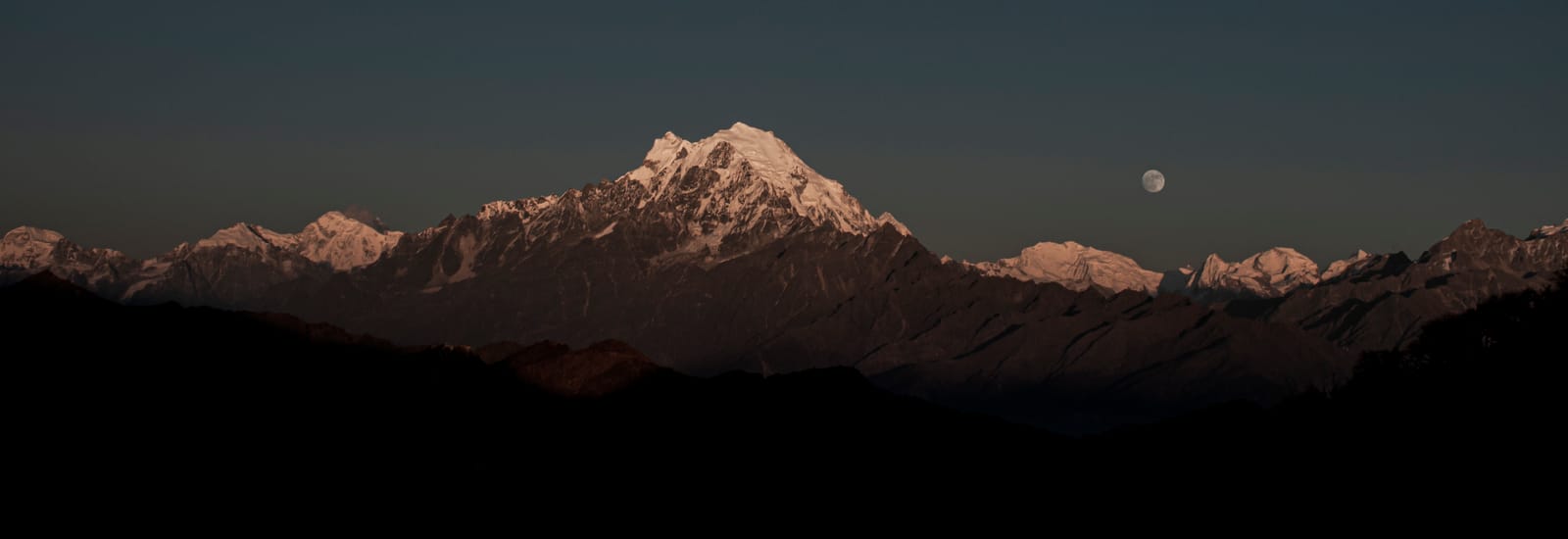
On 26 August 2026 a piece of mountain turned into water and took villages, bridges and more than a thousand lives with it. I have lived here for fifteen years. Here is what happened, what is open, how you can help today, and why your trip in October is the biggest help of all.
 Info
InfoWhat Is the Climate Like in Nepal?
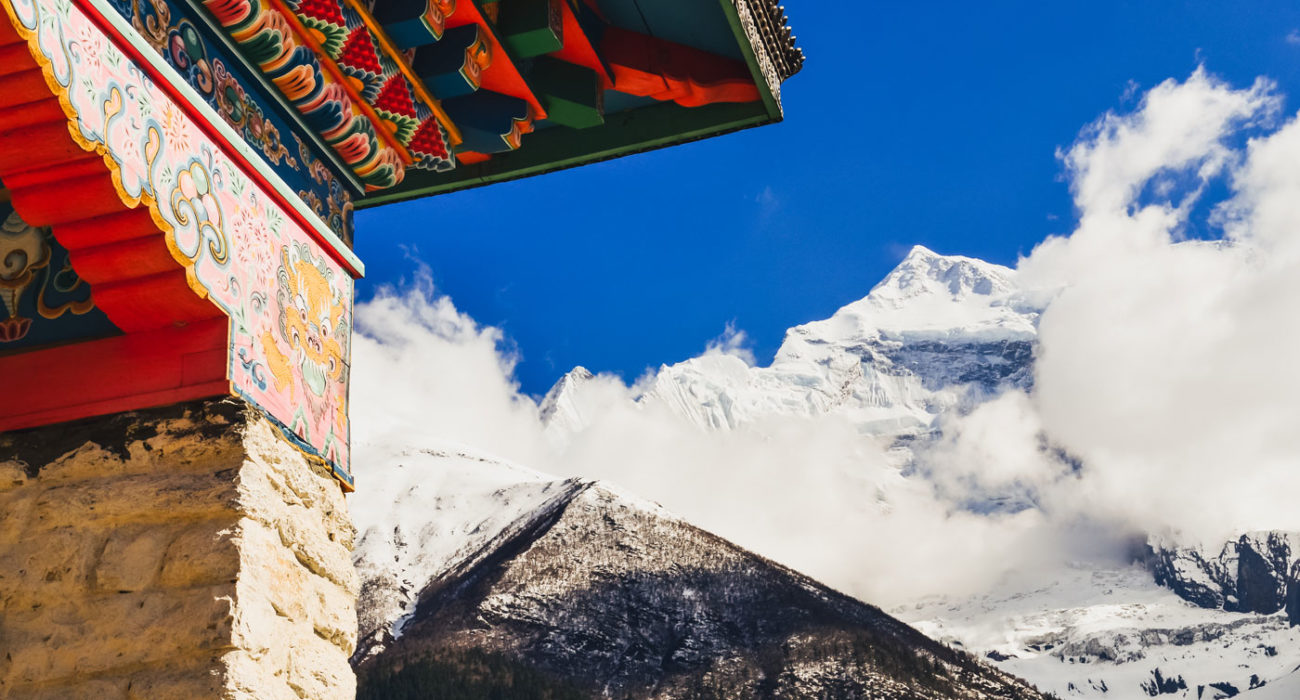
Everything about Nepal's climate — four seasons, three climate zones, temperatures by region and when the sky is clear for the Himalayas.
 Info
InfoThe Best Time to Visit Nepal
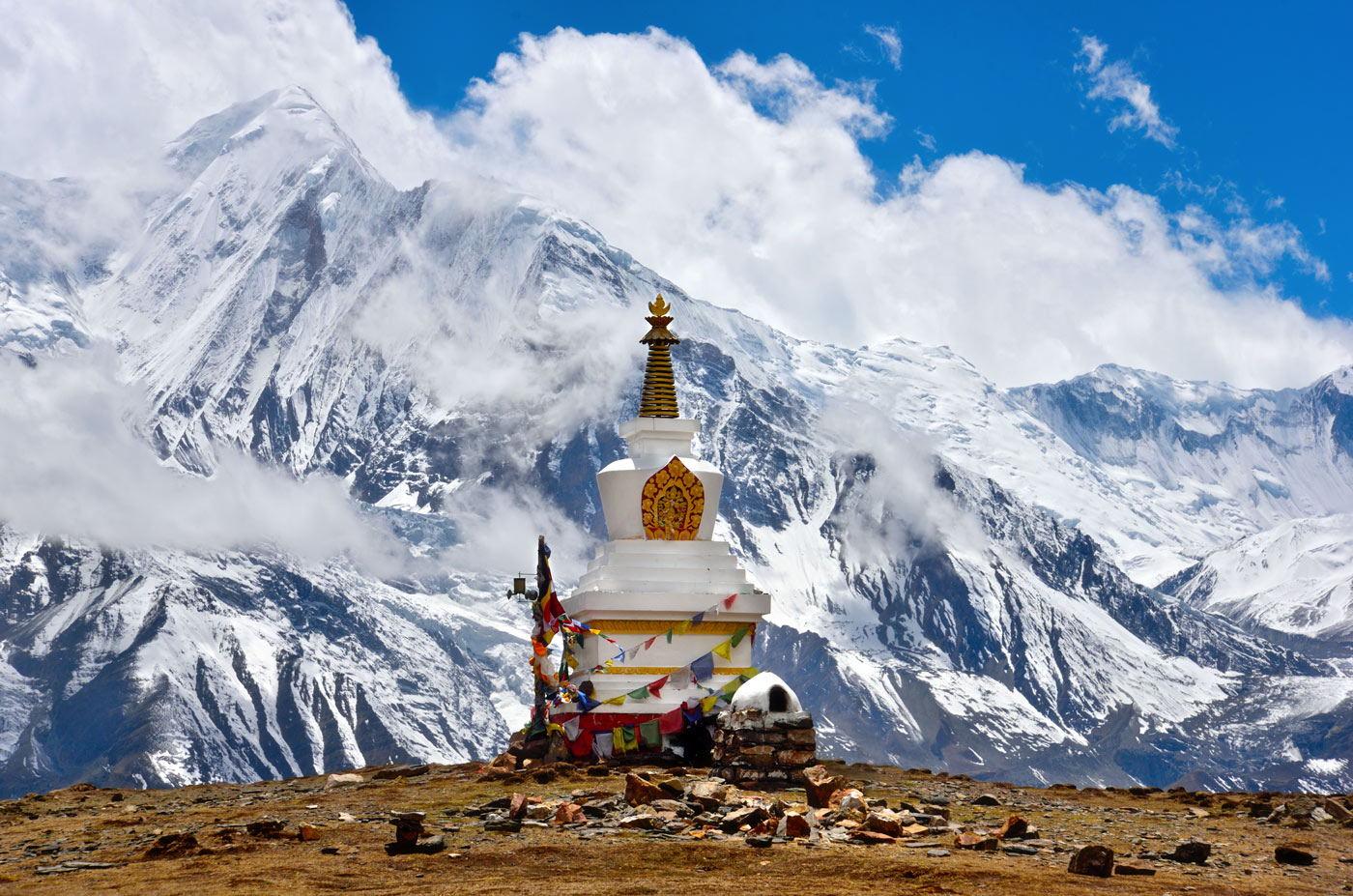
When should you travel to Nepal? A decision guide by activity — trekking, safari, culture — with a table, crowds, prices and festivals.