
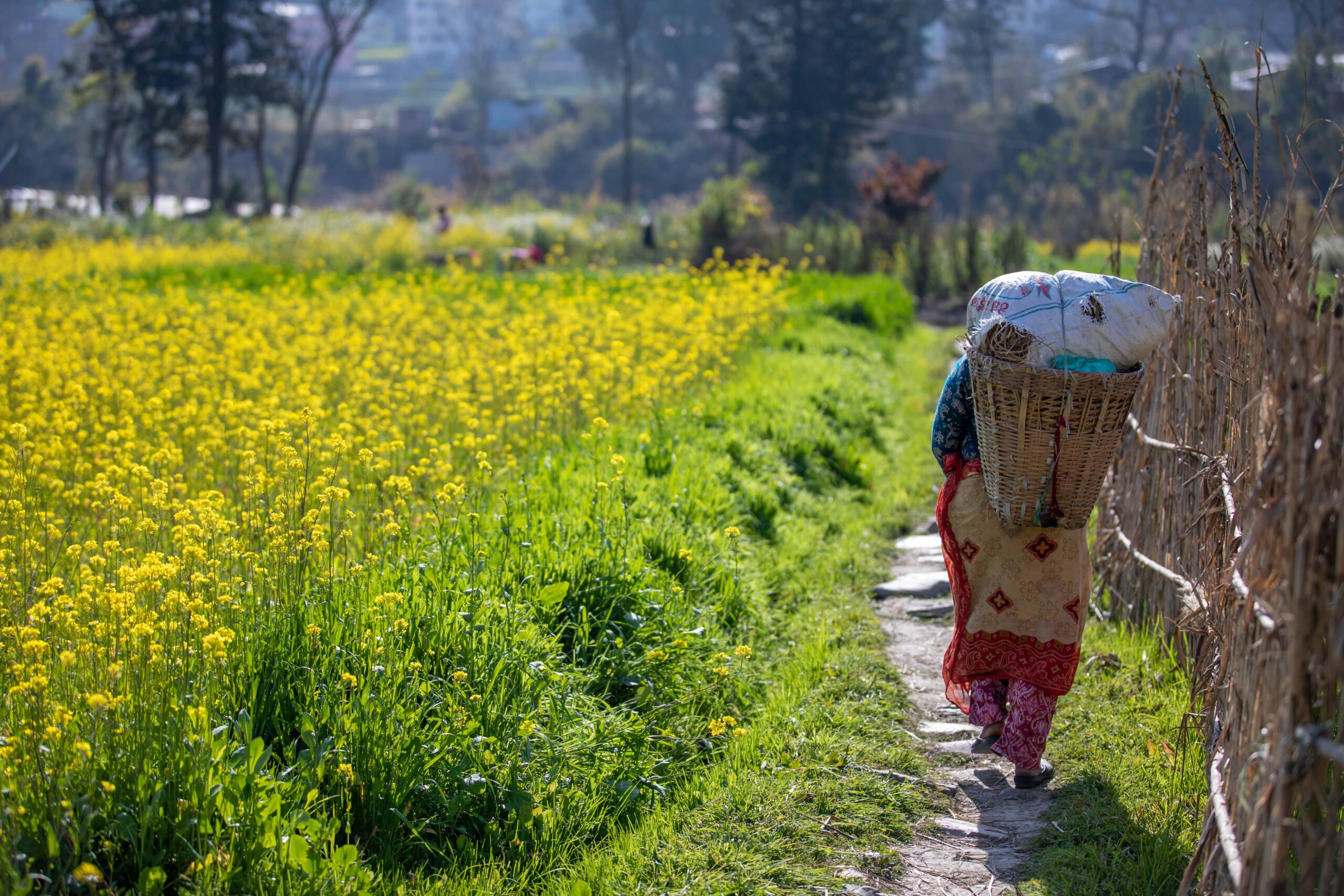
There's a season in Nepal that few travellers know about — and yet it's one of the most photogenic of the whole year. Somewhere between Christmas and the end of winter, the countryside turns entirely yellow: vast fields of blooming mustard spread across hills and plains, backed by the snow-capped peaks of the Himalayas. This is "mustard season", a quiet, almost secret spectacle that deserves a place on the radar of anyone who loves photography and the stillness of winter.
What the "golden fields" are
Mustard — "sarson" in local terms — isn't grown here for decoration. It's one of Nepal's most important winter crops, yielding the seeds pressed into the country's beloved mustard oil. When the plant flowers, whole fields fill with tiny, vivid yellow blossoms that, side by side, look like one continuous golden carpet. Walk among them and the horizon dissolves into a sea of yellow that rustles in the breeze and smells faintly sweet.
The sight is humble and grand at once: this isn't a ticketed park or attraction, but the everyday farming life of Nepal which, for a few weeks a year, becomes strikingly beautiful.
When it blooms: the winter window
Mustard is usually sown in October–November, after the rice harvest, and blooms through winter — roughly from late December to February, peaking most years in January. The bloom, though, is fleeting: it lasts only a few weeks before the flowers fade and the field turns to ripening its seeds. Exact dates shift with altitude and the year's weather, so if you're chasing the fields at their best, aim for the second half of January.
This window coincides with Nepal's winter period, which we describe in detail in our guides to the climate in Nepal and to the best time to travel.
Where to see them: regions & timing
The yellow fields appear all over the country, from the plains to the mid-hills. Three main zones are where you'll find them most easily:
| Region | Altitude | Ideal window | What you'll see |
|---|---|---|---|
| Kathmandu Valley & outskirts (Bhaktapur, Panauti, villages beyond the city) | ~1,300 m | Jan – mid-Feb | Terraced fields beside Newar villages and temples — easily reached from the capital |
| Mid-hills (Pokhara valley, Bandipur, Gorkha, Tanahun) | 800 – 1,500 m | Late Dec – Jan | Mustard terraces tumbling down hillsides, with the Annapurna Himalayas behind |
| Terai / Chitwan (southern plains) | 100 – 300 m | Dec – Jan | The largest, flattest, most continuous stretches of yellow — dreamlike for panoramas |
In the Kathmandu Valley you'll find pockets of fields even half an hour outside the city, perfect for a morning excursion. Around Pokhara and the picturesque hill villages, the yellow pairs with mountain views. And in Chitwan National Park and the surrounding plains, the expanses are so vast that mustard becomes an entire landscape — an ideal break between two safaris.
Why winter is the perfect backdrop
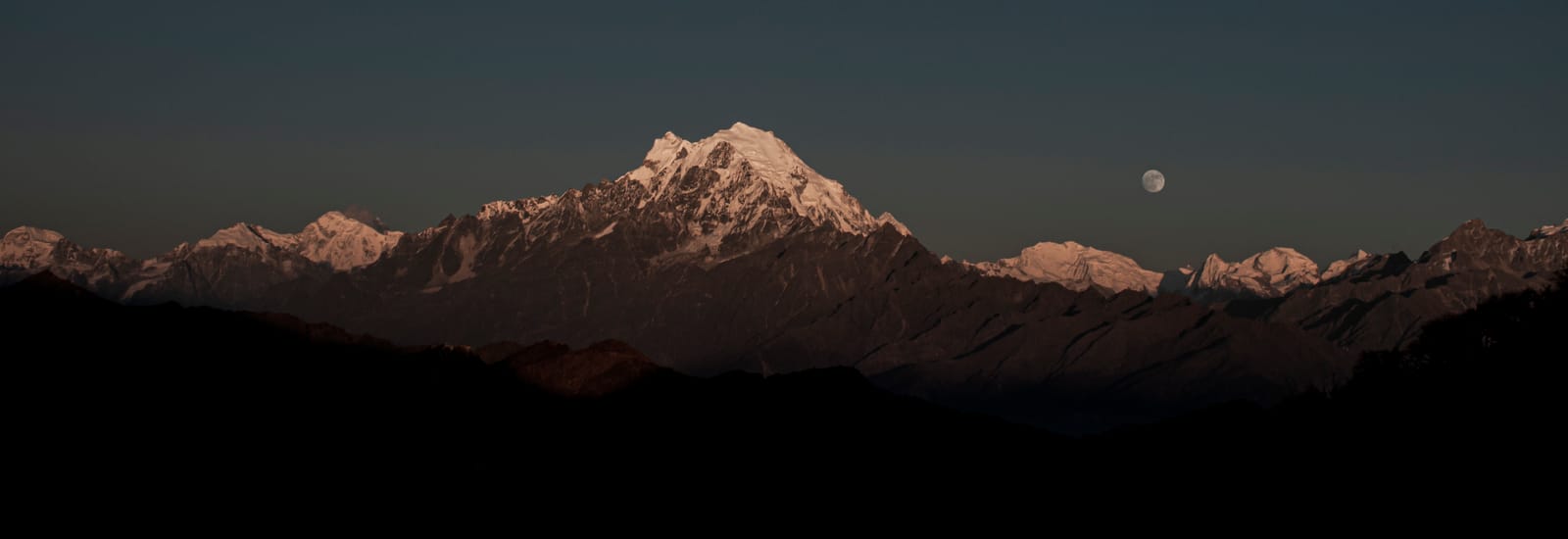
The magic isn't only the flowers; it's the light around them. Nepal's winter brings clean, dry air and superb visibility, the monsoon and summer haze a distant memory. The sky clears, distant peaks reveal themselves sharp on the horizon, and the vivid yellow of the fields locks together with the white of the snow-capped Himalayas in a contrast you rarely see elsewhere. It's the same period that makes winter ideal for cultural travel and safaris, without the heat and humidity of the other seasons.
Photography tips for the yellow fields
- Chase the golden hour. Early morning or late afternoon, the low, warm light makes the yellow glow and casts soft shadows between the rows of plants.
- Put the peaks in the frame. The strongest image is a yellow field in the foreground with snow-capped peaks behind — look for angles where the two meet.
- Get the camera low. A shot close to the ground, through the flowers, adds depth and lets the yellow flood the frame.
- Add human scale. A farmer's silhouette, a child, or a path through the field gives the landscape size and life.
- Respect the people. These are active crops on private land; don't trample the plants, and ask permission before photographing faces — see our guide to Nepal's etiquette.
Beyond the spectacle: mustard oil in Nepali life
It's worth remembering that these fields don't exist for Instagram — they exist to feed the country. From mustard seeds comes mustard oil, the staple cooking oil in countless Nepali kitchens. It's the oil that fries the onions for a dal bhat, that binds the fiery pickles (achar), and that, with its distinctively pungent aroma, defines the flavour of the local cuisine. Beyond food, it's traditionally used for massage, for hair, even in devotional lamps. So what you photograph in January becomes, a few months later, the oil that scents every village.
How to fit it into a winter trip
Mustard isn't a reason to travel on its own — it's the cherry on top of a wonderful winter itinerary. Winter is already ideal for the Kathmandu Valley and its monuments, for safaris in Chitwan, and for relaxed days in Pokhara. The yellow fields simply slot in almost everywhere between these stops, turning every drive into a photo stop. For the full picture, see our Nepal travel guide.
With Dimitris
The lovely thing about mustard season is that you won't find it in any standard guidebook — you only find it if you know where and when to look. This is where it helps to have someone with a Greek eye and a team on the ground: to take you to the right village in the right week, out to the fields at golden hour, and to weave the yellow landscapes together with culture and mountains. For those who want that curated, photographic winter experience — with timing, a private pace and hand-picked stays — Elysian Himalaya designs premium journeys with room for exactly these small, unrepeatable moments. Because sometimes the most unforgettable image of Nepal isn't an 8,000-metre peak, but a simple yellow field glowing beneath it.
Frequently asked questions
- Mustard is usually sown in October–November and blooms through winter, roughly from late December to February, peaking most years in January. The bloom lasts only a few weeks, so for the fields at their best aim for the second half of January.
- In the Kathmandu Valley and its outskirts (Bhaktapur, Panauti, villages beyond the city), in the mid-hills around Pokhara, Bandipur and Gorkha, and across the Terai plains near Chitwan, where you'll find the largest unbroken stretches.
- Excellent. Winter brings clean, dry air and superb visibility, so the vivid yellow of the fields locks together with the snow-capped Himalayan peaks in the distance. The golden hour, early morning or late afternoon, gives the warmest light and the strongest contrast.
- These very fields aren't decorative: they're grown for their seeds, which are pressed into mustard oil, a staple cooking oil across Nepal. What you photograph in winter becomes, a few months later, the oil frying the food and scenting every kitchen.
Keep reading
Related articles
 Articles
The biggest help you can give Nepal is to visit
On 26 August 2026 a piece of mountain turned into water and took villages, bridges and more than a thousand lives with it. I have lived here for fifteen years. Here is what happened, what is open, how you can help today, and why your trip in October is the biggest help of all.
 Activities
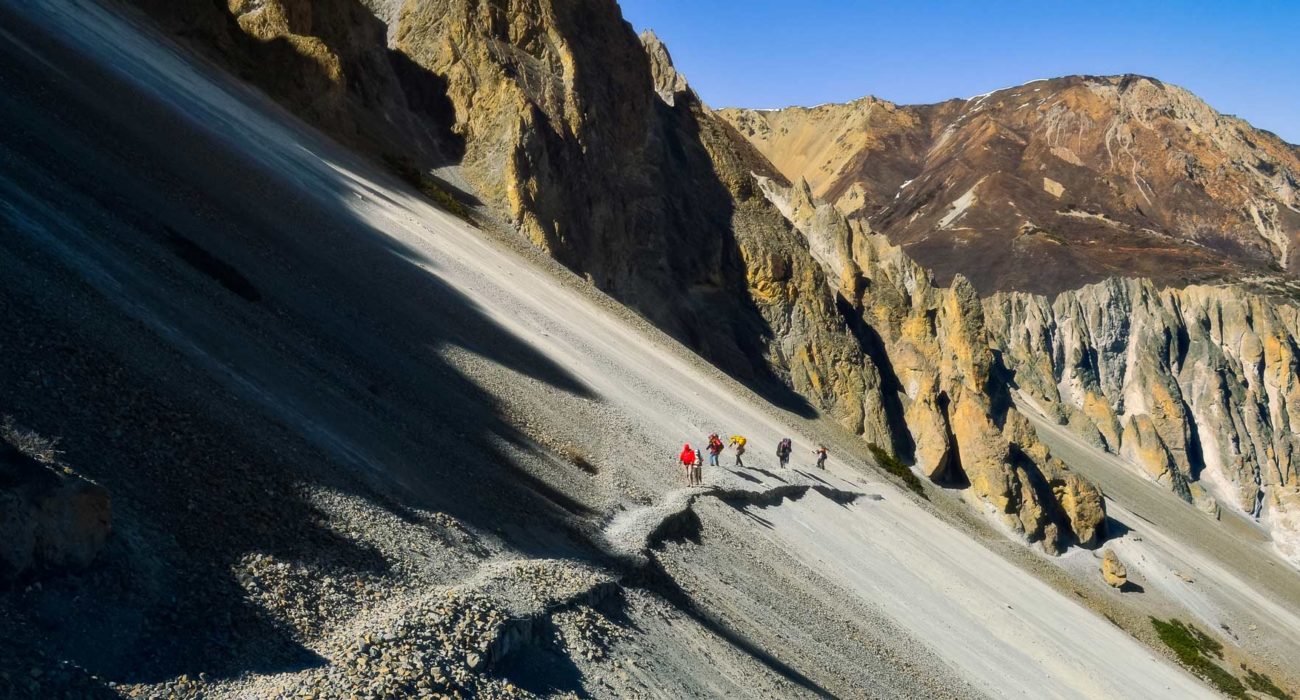
Trekking in Nepal: The Complete Hiking Guide
The definitive guide to trekking in Nepal: teahouse trekking, the main regions, a comparison of the top treks, permits, seasons and how to choose your route.
 Activities
Rafting & Kayaking in Nepal
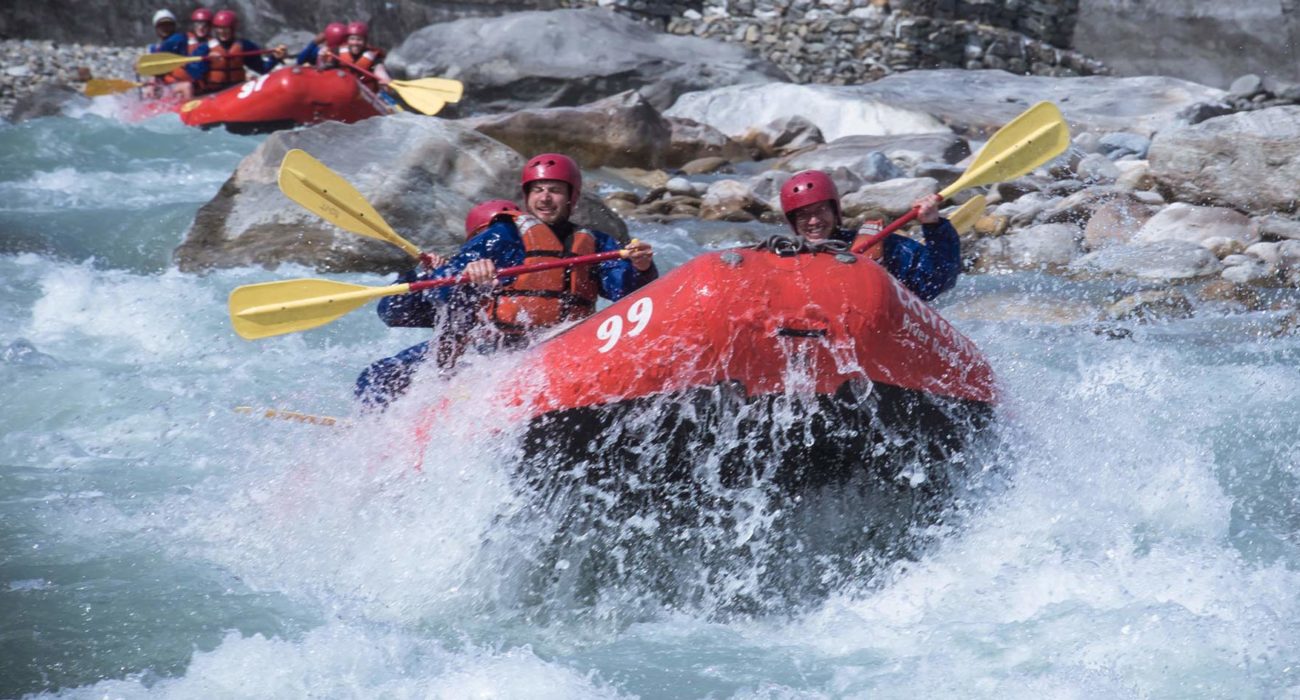
The complete guide to rafting & kayaking in Nepal: a river table (Trishuli, Seti, Bhote Koshi, Kali Gandaki, Sun Koshi, Marsyangdi, Karnali), difficulty grades, seasons, costs in euros, safety, and how to combine it with trekking.