

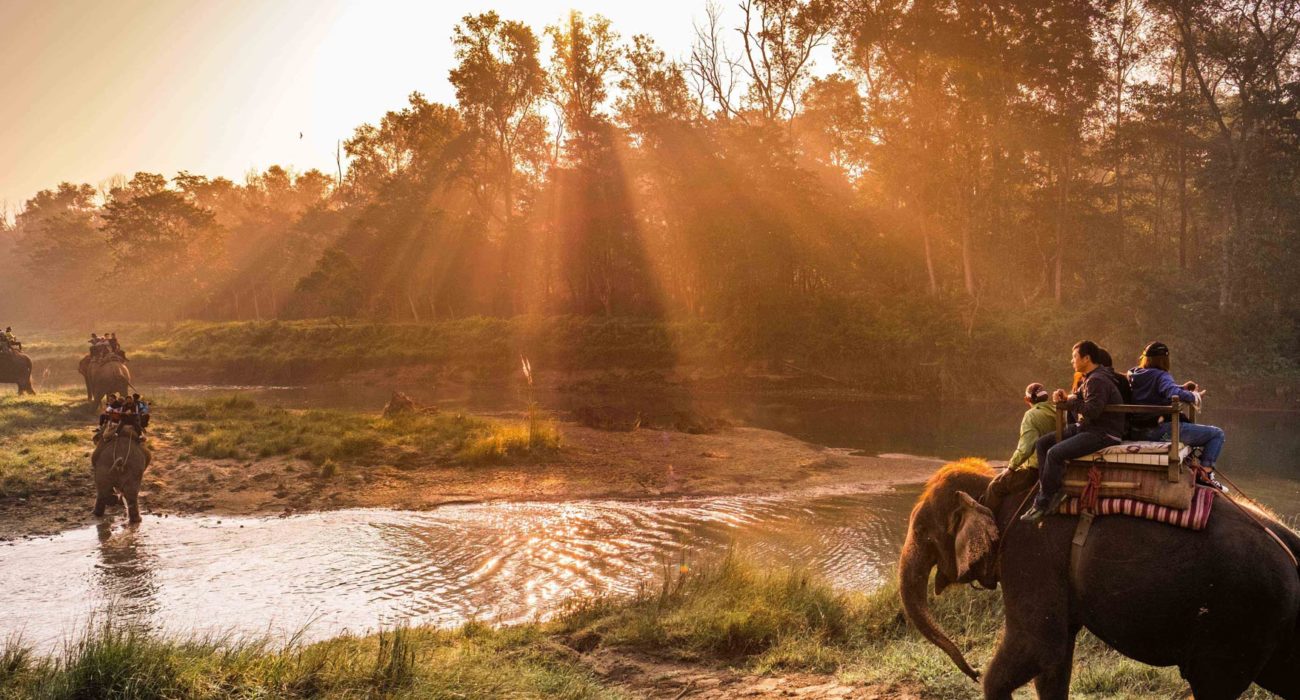
If the Himalayas are one soul of Nepal, the jungle is the other. In the south of the country, where the mountains give way to the subtropical plain of the Terai, lies Chitwan National Park — Nepal's first national park (1973) and a UNESCO World Heritage site since 1984. Here you don't climb; you sink in. In dense sal forests, in tall elephant-grass meadows and along rivers where crocodiles bask on the banks, live some of Asia's rarest animals: the one-horned rhino, the Bengal tiger and wild elephants. It's the most unexpected side of a trip to Nepal — and often the favourite of those who didn't see it coming.
This guide covers it all: what animals you'll see and when, which safaris are now the ethical choice (and which we avoid), how much tickets cost, how to get there from Kathmandu or Pokhara, where to stay from budget to luxury, and what an evening of Tharu culture offers. It's part of our overall Nepal travel guide.
Where it is & why it's special
Chitwan lies in the Terai valley, southwest of Kathmandu, at an altitude of just 100–200 metres — a completely different world from the cold, high Himalayas. It spreads across 953 square kilometres of subtropical forest, rivers and wetlands, with the village of Sauraha, on the bank of the Rapti river, as its main gateway. Its creation in 1973 was a turning point: it transformed a royal hunting ground into a wildlife sanctuary and saved the one-horned rhino from extinction. Today the park is home to around 700 rhinos — the largest population outside India — and more than 120 Bengal tigers, one of Asia's most successful conservation stories.
The wildlife: what you'll see
Chitwan is one of the best places in Asia to watch large mammals in their natural habitat. The rhino is almost guaranteed; the tiger is for the lucky. Here's what the jungle holds:
| Species | Chance of seeing it | Where & when |
|---|---|---|
| One-horned rhino | Very high | Meadows & riverbanks; often from a canoe too |
| Bengal tiger | Low (the lucky ones) | Dry season, low grass (Mar–May) |
| Wild elephant | Moderate | Forests & fringes, mainly winter |
| Gharial & mugger crocodile | High | Banks of the Rapti & Narayani, by canoe |
| Deer (chital, sambar, hog deer) | Very high | Everywhere, on every safari |
| Sloth bear, leopard, gaur | Low | Deeper in the forest, by chance |
| Birds (500+ species) | Very high | Wetlands & forests; peak Dec–Feb |
A special treat for bird lovers: Chitwan records more than 500 species — from the giant stork to the colourful kingfishers and the rare Bengal florican. In the rivers, with a little luck, you may also spot the Ganges river dolphin, one of the few freshwater dolphins in the world. The two crocodiles you'll meet are the long-snouted, fish-eating gharial and the bulkier mugger.
When to go: the dry season
The best time for Chitwan is the dry season, October to March. The weather is mild and dry, the trails firm and the animals gather around water — ideal viewing conditions. The months of December–February are peak for birds, though mornings are foggy and cold.
A useful detail: every winter (around January–February) locals cut the tall elephant grass. So from March to May, visibility inside the jungle is the best of the year — the likeliest window to see a tiger, even though the heat rises noticeably. By contrast, the monsoon (June–September) brings rain, mud, tall grass and difficult trails; several lodges close. For the big picture, see our guide to the best time to travel to Nepal.
The safaris: the ethical choices
This calls for an honest conversation. For decades, Chitwan's trademark was the elephant-back safari. Today, though, international opinion — and our own recommendation — has changed: elephants used for rides often endure harsh training and live in chains. That's why we actively discourage the elephant-back safari. The good news is that the alternatives are just as thrilling — if not more so:
| Safari type | Duration | Indicative cost | Ethical note |
|---|---|---|---|
| Jeep safari | 3 hours – full day | ~$25–45 / person | ✅ Recommended — covers a large area |
| Canoe safari (Rapti river) | 1–2 hours | ~$15–25 / person | ✅ Quiet, ideal for crocodiles & birds |
| Walking / jungle safari | 2 hours – full day | ~$20–35 / person | ✅ The rawest experience — always with a licensed guide |
| Elephant breeding centre | ~1 hour | ~$2–5 entry | ✅ Ethical contact with elephants, no riding |
| — | — | ❌ Discouraged — animal-welfare issue |
Jeep safari: the most popular option. An open 4×4 takes you deep into the park, to places walking can't reach — ideal for rhinos, deer and, with luck, a tiger. A full-day safari reaches the gharial crocodile breeding centre at Kasara and Bishazari Tal lake.
Canoe safari: at dawn, in a hollowed-out wooden canoe (dugout), you glide silently down the Rapti river. It's the best way to see gharial and mugger crocodiles basking and dozens of birds along the bank. It usually pairs with a short walk on the way back.
Walking safari: for the bolder. With one or two trained guides, you walk through the jungle — the adrenaline is real. Always choose a licensed guide and listen carefully to the safety briefing (what to do if you meet a rhino or a bear).
The elephant breeding centre
Near Sauraha, at Khorsor, sits the government Elephant Breeding Centre. Here you see mothers with their calves and learn about conserving the species — a gentle, ethical alternative to a ride. Likewise, the gharial crocodile centre at Kasara breeds and releases into the wild this rare, long-snouted crocodile threatened with extinction.
Evenings with the Tharu
Chitwan isn't only about animals. It's also the homeland of the Tharu, the indigenous people of the Terai, who learned to live beside the jungle and developed a natural resistance to malaria. Almost every lodge stages a Tharu cultural show in the evening, crowned by the famous stick dance (Tharu stick dance): men in a circle rhythmically strike wooden sticks in a dance that goes back centuries. A walk through a Tharu village, with its distinctive mud houses, completes the picture. It's an authentic taste of the culture you'll find across the country — see our guide to Nepal's culture and customs.
How to get to Chitwan
Chitwan sits conveniently between Kathmandu and Pokhara — which is why it slots so naturally into itineraries.
- From Kathmandu: tourist bus ~5–6 hours (~$8–15), a scenic route beside the Trishuli river. Alternatively, a 25-minute flight to Bharatpur airport (~$90–120) plus a 30-minute drive to Sauraha.
- From Pokhara: tourist bus ~4–5 hours (~$8–15). An ideal stop between Pokhara and Kathmandu.
- Private car: more comfortable and flexible, ~$70–120 depending on the starting point.
Tickets & permits
To enter the park you need a daily entry permit. Indicatively (prices change, confirm on the spot):
- Foreign visitor entry: ~2,000 NPR (~14€) per day, plus 13% VAT.
- The permit is issued at the park office in Sauraha; most lodges arrange it for you along with the safaris.
- Safaris, guide and transport are charged separately — which is why most lodges offer 2–3 day "all-in" packages.
In practice, a 2-night / 3-day package rolls the lodging, food, permit, jeep and canoe safari and a Tharu evening into one price. What that comes to depends on the category of the lodge, the season and how many activities you put in. Ask us for a quote for Chitwan and we will send you options.
Where to stay: from budget to luxury
Most people stay in Sauraha, with dozens of options for every budget. A few select properties sit inside the park's buffer zone.
| Category | Price / night | What to expect |
|---|---|---|
| Budget | ~$10–25 | Simple guesthouses in Sauraha, clean rooms, safari packages |
| Mid-range | ~$40–90 | Comfortable lodges with a garden, pool, organised activities |
| Luxury / jungle resort | $150–400+ | Upscale resorts or eco-lodges, private guides, all-inclusive experience |
Practical tips
- Neutral-coloured clothes (khaki, beige) — bright colours disturb the animals.
- Sunscreen, hat, insect repellent; in winter a warm layer for the cold, foggy morning safaris.
- Binoculars and a zoom lens make a huge difference.
- Allow at least 2 nights — one day isn't enough for luck to work with the tiger.
- Respect your guide's safety rules; the jungle is real, not a theme park.
Where it fits in your trip — with Dimitris
Chitwan slots perfectly between the culture of Kathmandu and the adventure of Pokhara — which is why in our group tour it's days 4 and 5: transfer from Kathmandu, a full day of rhino and canoe safari, a Tharu evening, and the next day we continue to Pokhara. Combine the park with a stop at nearby Lumbini, the birthplace of the Buddha, and you have a complete "lowland" axis of Nepal.
On our organised trips we always choose the ethical forms of safari and work with local guides who know the jungle like the back of their hand. For a more private, premium experience — an eco-lodge inside the park, a private naturalist, timing your trip with the best tiger season — Elysian Himalaya designs tailor-made journeys in Chitwan and across Nepal. Whether you come with a backpack or with full support, the Chitwan jungle will stay with you forever.
Gallery
Frequently asked questions
- You'll almost certainly see a one-horned rhino on any safari — there are around 700 in the park. The Bengal tiger is harder; your odds rise in the dry season (March–May), when the grasses have been cut and visibility is at its best all year. Allow 2 nights for luck to work.
- Elephant-back safaris are now discouraged worldwide, as they're linked to harsh training and poor animal welfare. Choose a jeep safari, a canoe safari on the Rapti river and a walking safari with a licensed guide — and visit the elephant breeding centre for ethical contact without a ride.
- The ideal length is 2 nights / 3 days. One day isn't enough to combine a jeep and a canoe safari, the elephant centre and a Tharu evening — and it leaves you a margin of luck to spot more wildlife.
- From Kathmandu by tourist bus in 5–6 hours (~$8–15) or by a 25-minute flight to Bharatpur (~$90–120) plus a 30-minute drive. From Pokhara by bus in 4–5 hours (~$8–15). Chitwan sits conveniently between the two cities.
- The daily entry permit for foreign visitors is indicatively ~2,000 NPR (~14€) plus 13% VAT. Safaris, guide and transport are charged separately, which is why most lodges bundle them into 2–3 day all-in packages. What such a package costs depends on the category of the lodge, the season and how many safaris are included — tell us what you have in mind and we will send you a quote through our contact page.
Keep reading
Related articles
 Destinations
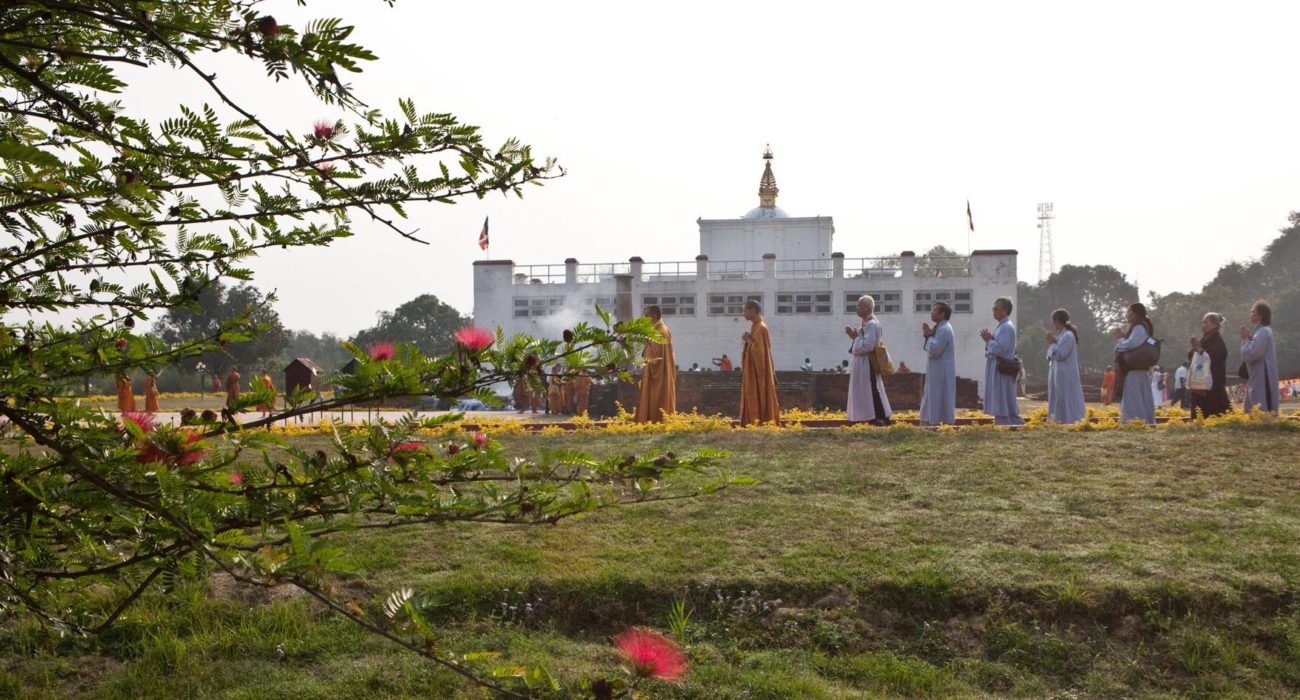
Lumbini, the Birthplace of Buddha
Discover the birthplace of Buddha — the Maya Devi temple, the Ashoka pillar, the international monasteries and everything to see at this sacred site in southern Nepal.
 Destinations
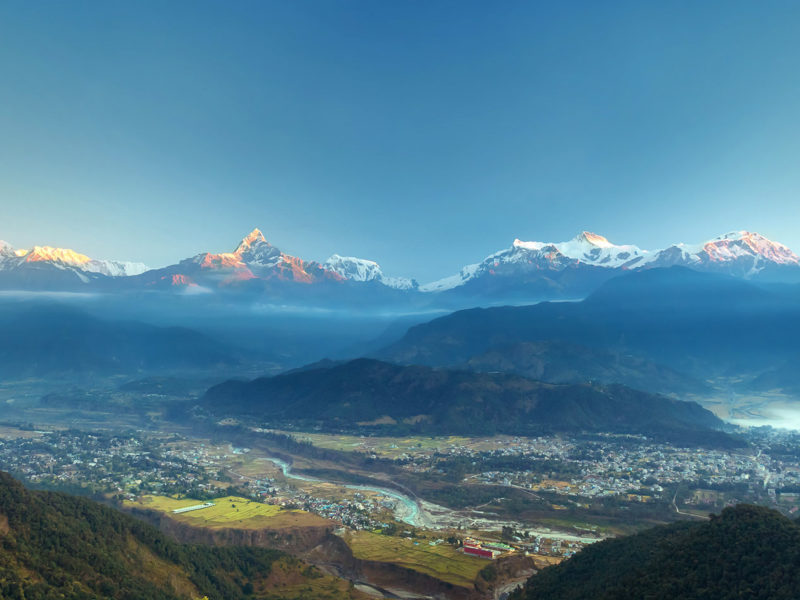
Pokhara, Nepal's Adventure Capital
Pokhara is Nepal's number-one destination for adventure & leisure: Fewa Lake, Lakeside, Sarangkot, paragliding, zipline and the gateway to Annapurna trekking — a full guide with costs in euros and a 3-day plan.
 Destinations
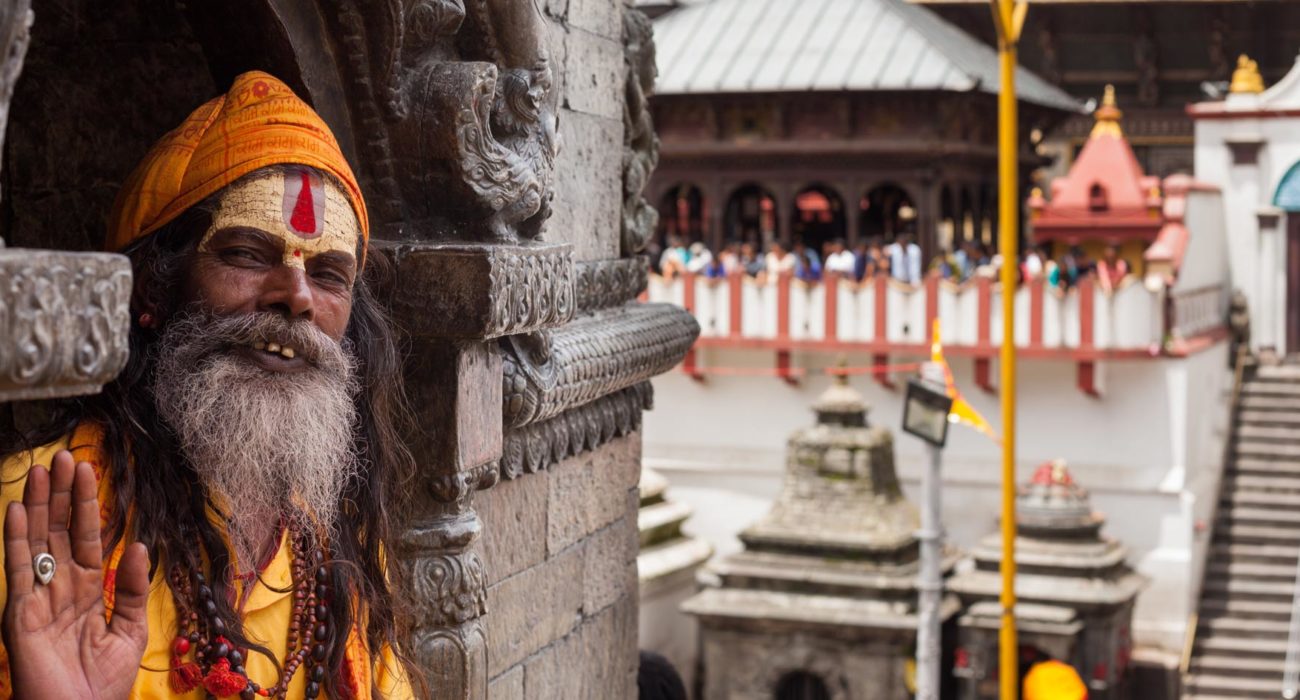
Kathmandu, the Capital of Nepal
Kathmandu is a living museum — 7 UNESCO sites, ancient Newari architecture, Hindu temples, Buddhist stupas and the living goddess Kumari.