
If Nepal has a heart, it beats in Kathmandu. The capital isn't just the stop where you land and set off — it's a living museum under an open sky, where the ancient architecture of the Newar, Hindu temples, Buddhist stupas and the scents of incense, momo and dust all share the same street. Within a few square kilometres, the Kathmandu Valley gathers seven UNESCO World Heritage sites — one of the densest cultural cores in all of Asia.
For a traveller from Greece, Kathmandu is the gateway to almost every Nepali adventure: here you get your visa, here you arrange the trek, from here you leave for Pokhara and the Himalayas. But it's worth giving it two or three days in its own right — because the city itself is one of the most captivating destinations of the trip. This guide is part of our overall Nepal travel guide and takes you step by step through everything worth seeing.
How to get there: flights Athens → Kathmandu
There is no direct flight from Athens to Kathmandu. You'll fly with one stop — the most convenient connections are Turkish Airlines via Istanbul, Qatar Airways via Doha, or Emirates/Etihad via Dubai and Abu Dhabi. Pure flying time is roughly 11–13 hours; with the stop, total travel time reaches ~12–18 hours, and a round-trip ticket usually runs 430€–800€. Booking 2–3 months ahead and avoiding the autumn peak gets you the best fares — see the detailed guide to Athens–Kathmandu flights.
You'll land at Tribhuvan International Airport (KTM), the city's only international airport, just a few kilometres from the centre. There you also get your visa on arrival (30/50/125 USD for 15/30/90 days) — carry US dollars in cash. From the airport, a taxi to the Thamel district costs indicatively 500–800 rupees (~4€–6€).
The 7 UNESCO sites of the Kathmandu Valley
In 1979 UNESCO inscribed the Kathmandu Valley as a World Heritage Site, with seven distinct monument zones. Three are the royal squares (Durbar Squares) of Kathmandu, Patan and Bhaktapur; two are the great Buddhist stupas (Swayambhunath and Boudhanath); and two are the Hindu temples (Pashupatinath and Changu Narayan). Here's a quick overview, with indicative entry fees for foreign visitors:
| Monument | Area | Entry (indicative) | What you'll see |
|---|---|---|---|
| Kathmandu Durbar Square | Central Kathmandu | ~1,000 NPR (~7€) | Hanuman Dhoka palace, Kumari Ghar, pagoda temples |
| Patan Durbar Square | Patan / Lalitpur | ~1,000 NPR (~7€) | Krishna Mandir, Patan Museum, metalwork |
| Bhaktapur Durbar Square | Bhaktapur | ~1,800 NPR (~13€) | 55-Window Palace, Nyatapola, medieval city |
| Swayambhunath | Hill to the west | ~200 NPR (~1.5€) | Stupa, Buddha eyes, monkeys, panoramic view |
| Boudhanath | NE Kathmandu | ~400 NPR (~3€) | One of the largest stupas, Tibetan "kora" |
| Pashupatinath | Bagmati riverbank | ~1,000 NPR (~7€) | Shiva temple, ghats, cremations, sadhus |
| Changu Narayan | Hill near Bhaktapur | ~300 NPR (~2€) | The valley's oldest temple, dedicated to Vishnu |
Kathmandu Durbar Square (Hanuman Dhoka)
The heart of the old city: a maze-like square of pagodas, shrines and the old royal palace Hanuman Dhoka, where Nepal's kings were crowned. Here too stand the Kumari Ghar, the "house of the living goddess", the Taleju temple and the rebuilt Kasthamandap — the wooden structure that, according to tradition, gave the city its name (Kaṣṭha = wood, Maṇḍapa = pavilion). The square is open all day, but the ticket booth operates indicatively ~07:00–19:00. Go early in the morning, before the traffic wakes up.
Patan Durbar Square
Just to the south, across the Bagmati river, the sister city of Patan (officially Lalitpur, "the city of beauty") holds perhaps the most elegant of the three squares. It's the historic centre of the Newar craftspeople — this is where Nepali metalwork and Buddhist iconography were born. Don't miss the stone Krishna Mandir and the Patan Museum, one of the finest museums in Asia, housed inside the old palace. The inner courtyards (bahal) with their Buddhist monasteries are a world of their own.
Hours / Entry: ~07:00–19:00; ticket ~1,000 NPR (~7€, indicative).
Bhaktapur Durbar Square
If you want to feel what the valley was like centuries ago, Bhaktapur is the answer: the best-preserved medieval city in Nepal, where cars all but disappear and time slows down. The ticket (~1,800 NPR, the priciest of the seven) covers the whole old city — and it's justified. You'll see the 55-Window Palace, the Golden Gate, the five-tiered Nyatapola pagoda (the tallest in Nepal) and the famous potters' square. Try the local juju dhau, the "king curd" of Bhaktapur.
Hours / Entry: ~07:00–19:00; ticket ~1,800 NPR (~13€, indicative).
Swayambhunath — the "Monkey Temple"
On a hill to the west of the city, at the top of 365 steps, stands Swayambhunath — one of the oldest shrines in the valley, dating back some ~2,000 years. The white stupa, with its famous Buddha eyes gazing out to all four directions, is wrapped in prayer flags and wheels. It owes its nickname, the "Monkey Temple", to the troops of macaques that live there — keep a firm hold on your belongings and your food. From the top unfolds the best panoramic view of all Kathmandu.
Hours / Entry: the hill is essentially accessible from sunrise to sunset (the sanctum keeps its own hours); ticket ~200 NPR (~1.5€, indicative).
Boudhanath — the great stupa
To the northeast, Boudhanath is one of the largest stupas in the world and the heart of Nepal's Tibetan Buddhist community. The huge white dome, designed as a mandala, is ringed by monasteries (gompa) and rooftop cafés. The best time is sunset: hundreds of worshippers make the sacred circuit (kora) around it — always clockwise — lighting butter lamps and whispering the mantra "Om Mani Padme Hum". It's one of the most magical moments you'll experience in the city.
Hours / Entry: the precinct is essentially accessible from sunrise to sunset (the sanctum keeps its own hours); ticket ~400 NPR (~3€, indicative).
Pashupatinath
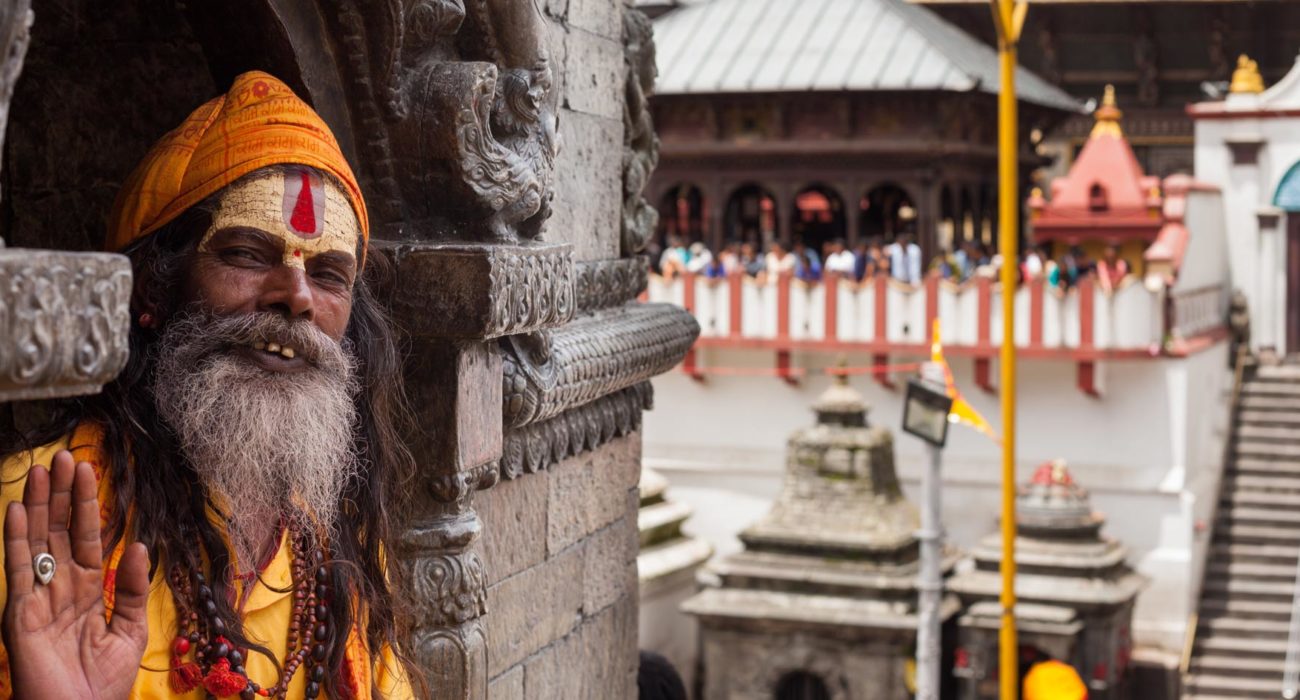
Nepal's holiest Hindu temple, dedicated to Shiva, spreads along the banks of the sacred Bagmati river. The main sanctum admits only Hindus; everyone else admires it from the opposite bank. There, on the river ghats, the public cremations take place — a powerful, profound scene that calls for silence, respect and no photographs. You'll also meet the sadhus, the ascetics with painted faces. The temple's great moment is the Maha Shivaratri festival, when thousands of pilgrims flood it.
Hours / Entry: the outer areas are essentially accessible from sunrise to sunset (the main sanctum, Hindus only, keeps its own hours); ticket ~1,000 NPR (~7€, indicative).
Changu Narayan
The least-known — and therefore quietest — of the seven. On a green hill near Bhaktapur, Changu Narayan is considered the oldest temple still in use in the entire valley, dedicated to Vishnu (Narayan). Its stone carvings date back to the 4th–5th century and are a treasure for anyone who loves art history. It combines perfectly with a trip to Bhaktapur or a sunset at nearby Nagarkot.
Hours / Entry: daylight hours (roughly sunrise to sunset); ticket ~300 NPR (~2€, indicative).
Kumari — the living goddess
Perhaps the most striking custom in all of Nepal lives inside Kathmandu's Durbar Square: the Kumari, the living goddess. She is a young girl, usually chosen from the Newar Shakya caste through strict criteria, considered the earthly incarnation of the goddess Taleju (Durga). She lives in the Kumari Ghar, the historic "house of the goddess", and appears briefly at her carved wooden window, silently blessing visitors. Photographing her is forbidden — simply stand in the courtyard and wait. She leaves her house only for a handful of festivals, chief among them Indra Jatra, where she is paraded on a wooden chariot. She remains a goddess until adolescence, when a new Kumari is appointed. More on this and other customs in our guide to Nepali culture and etiquette.
Thamel: your base in the city
Thamel is the tourist heart of Kathmandu — a tangle of narrow alleys packed with hotels, restaurants, bars, gear shops and trekking agencies. Here you'll sleep your first night, rent or buy mountain equipment and book your route. Accommodation is remarkably affordable:
| Type of accommodation | Cost/night (indicative) |
|---|---|
| Dorm in a hostel | 4€–8€ |
| Simple guesthouse (double) | 10€–18€ |
| Mid-range 3★ hotel with breakfast | 25€–45€ |
| Boutique / 4–5★ | 60€–150€+ |
Practical tip: in Thamel haggling is normal, but keep it polite and light. For gear (a down jacket, sleeping bag, poles) renting works out far cheaper than buying if you only need it for one trek.
Newari cuisine & momo
Kathmandu is as much for eating as for seeing. The most famous dish is momo — Nepali dumplings filled with buffalo, chicken or vegetables, steamed or fried, with a spicy sauce — and they cost just 2€–3€ a portion. Alongside them, the national dal bhat (rice, lentils, vegetables, with free refills) at 2€–5€ keeps you full for hours.
The real surprise, though, is the cuisine of the Newar, the valley's indigenous inhabitants — one of the richest in the region. Try samay baji (a platter of beaten rice, grilled meat and local accompaniments), chatamari (the "Newari pizza" made from rice flour), choila (marinated grilled buffalo) and bara (a lentil pancake). Remember that beef isn't served — the cow is sacred; you'll find buff (buffalo), chicken and goat instead.
Kathmandu in 2 days
Have two days before heading for the mountains? This plan covers all seven major sites without rushing:
| Time | Day 1 | Day 2 |
|---|---|---|
| Morning | Kathmandu Durbar Square & Kumari Ghar | Patan Durbar Square & Patan Museum |
| Midday | Swayambhunath (Monkey Temple) | Pashupatinath & the Bagmati banks |
| Afternoon / Evening | Boudhanath for the sunset kora, Newari dinner | Bhaktapur (or Nagarkot for a Himalayan sunset) |
Day trips from Kathmandu
The valley offers easy half-day or full-day escapes:
- Bhaktapur & Patan: the two other royal cities, each with its own Durbar Square — half a day or a full day each.
- Nagarkot: a village at ~2,100 m, ~30 km to the east, famous for the sunrise over the Himalayas. On a clear sky you can even make out the Everest range in the distance. Many stay overnight to catch the dawn.
- Changu Narayan: the ancient temple pairs perfectly with Nagarkot or Bhaktapur.
And of course, Kathmandu is the launch point for the great destinations: Pokhara and the Annapurna treks, Chitwan National Park with its rhinos, and Lumbini, the birthplace of the Buddha.
The 2015 earthquake & the reconstruction
On 25 April 2015, a magnitude 7.8 earthquake (the Gorkha earthquake) struck Nepal, leaving nearly 9,000 dead and enormous damage across the Kathmandu Valley. Many historic structures suffered severe harm — temples in the Durbar Squares, the Kasthamandap, parts of Swayambhunath — and the iconic Dharahara tower collapsed. We mention this chapter not to discourage you but for honesty: what you'll see today is largely restored. After years of painstaking work with traditional materials and techniques, most monuments stand again and are open to visitors, and the Dharahara has been rebuilt. Some works continue — part of the city's living, evolving story.
Practical tips
- Money: keep US dollars in cash for the visa and rupees (NPR) for daily spending — monument tickets and taxis want cash. Reference rate 2026: ~145 NPR / €.
- SIM & internet: grab a local SIM on arrival (1€–5€ + a data plan 5€–15€/30 days). The providers are Ncell and NTC.
- Getting around: taxis are cheap but you haggle the fare (or ask for the meter); the Pathao/InDrive app helps. In the alleys of the old city, your feet are the best transport.
- When to go: autumn (Oct–Nov) and spring (Mar–May) have the clearest skies. In winter the air pollution rises — a mask doesn't hurt.
- Respect: remove your shoes at shrines, dress modestly, walk clockwise around stupas and ask permission before photographing faces.
With Dimitris — and Elysian Himalaya
Kathmandu truly reveals itself when you have someone to explain what you're seeing: which deity dwells in which temple, why they light the lamp, what the mantra on the wheel says. On our organised trips we build that bridge — local guides who open the doors of the city with respect, not as spectacle. For those who want a more personal, premium experience — a private tour of the three Durbar Squares, hand-picked stays, airport transfer and coordination for the next leg of the journey — Elysian Himalaya is our premium partnership, with a Greek by your side and a team on the ground. Same team, same phone, a higher tier.
Kathmandu isn't just a capital — it's an experience that leaves its mark on every traveller's soul. Give it time, walk its alleys without hurry, and the city will repay you with images you won't forget.
Gallery
Frequently asked questions
- Two to three full days is ideal. With two days you cover the essentials — the three Durbar Squares, Swayambhunath, Boudhanath and Pashupatinath. With a third day you add a quiet trip to Bhaktapur or a Himalayan sunset from Nagarkot. Most travellers spend 2–3 days before heading off to Pokhara or their trek.
- The three royal Durbar Squares (Kathmandu, Patan, Bhaktapur), the two great Buddhist stupas (Swayambhunath and Boudhanath) and the two Hindu temples (Pashupatinath and Changu Narayan). All seven lie in or around the Kathmandu Valley and were inscribed as World Heritage in 1979.
- Yes, Kathmandu is safe even for solo female travellers. The usual big-city precautions apply — watch your wallet in the busy alleys of Thamel. The biggest real 'hazard' is the traffic and the winter air pollution, not crime.
- Indicative foreign-visitor fees: Kathmandu Durbar Square ~1,000 NPR (~7€), Patan ~1,000 NPR (~7€), Bhaktapur ~1,800 NPR (~13€), Swayambhunath ~200 NPR (~1.5€), Boudhanath ~400 NPR (~3€), Pashupatinath ~1,000 NPR (~7€), Changu Narayan ~300 NPR (~2€). Prices change from time to time — keep cash in rupees.
- Yes, with a little luck. The Kumari briefly appears at the window of the Kumari Ghar, in Kathmandu's Durbar Square, silently blessing visitors a few times a day. Photographing her is forbidden — simply stand in the courtyard, wait, and you may see her. She leaves her house only for a handful of festivals, chief among them Indra Jatra.
- Yes. The April 2015 earthquake (magnitude 7.8) caused serious damage to temples and palaces in the valley, and the historic Dharahara tower collapsed. After years of restoration using traditional techniques, most monuments have been rebuilt and are open again — some work still continues.
Keep reading
Related articles
 Destinations
Lumbini, the Birthplace of Buddha
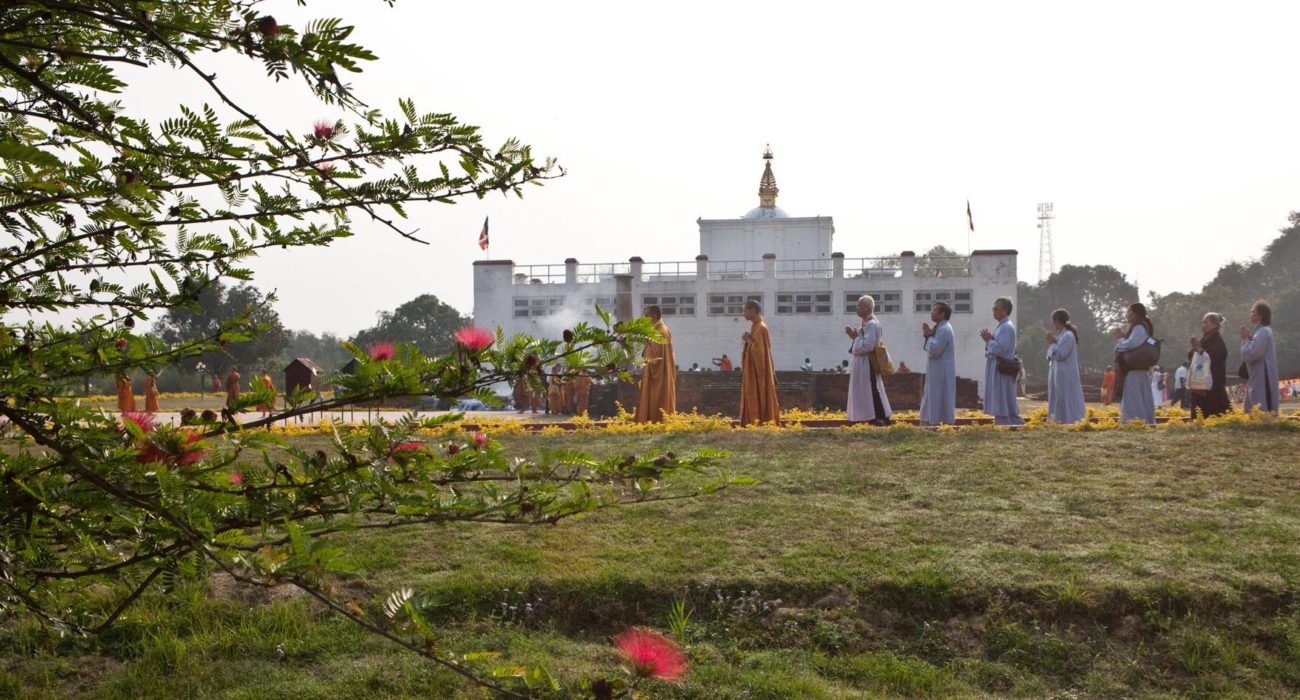
Discover the birthplace of Buddha — the Maya Devi temple, the Ashoka pillar, the international monasteries and everything to see at this sacred site in southern Nepal.
 Destinations
Chitwan National Park
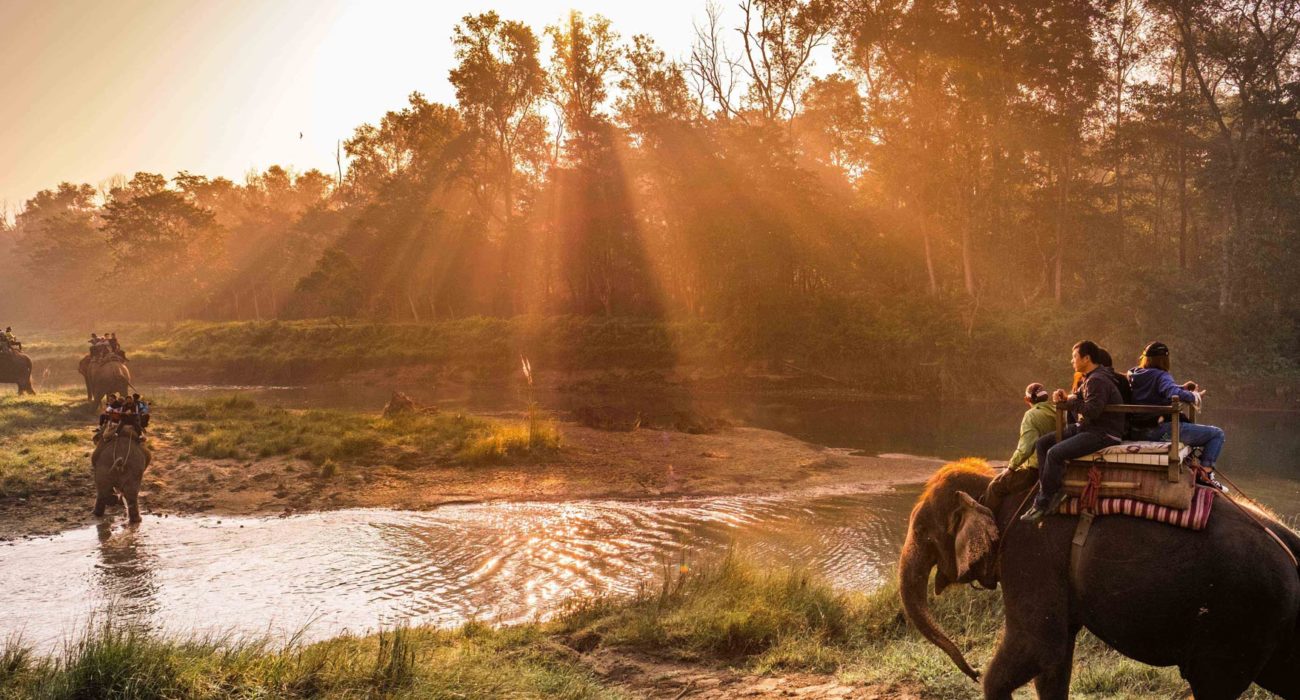
Safaris, tigers and rhinos in Nepal's first national park — a UNESCO World Heritage site in the jungle of the Terai.
 Destinations
Pokhara, Nepal's Adventure Capital
Pokhara is Nepal's number-one destination for adventure & leisure: Fewa Lake, Lakeside, Sarangkot, paragliding, zipline and the gateway to Annapurna trekking — a full guide with costs in euros and a 3-day plan.