
Every year someone writes to say, "I want to do a meditation retreat in Nepal," and when I ask what exactly they have in mind, the answers have almost nothing in common. One wants ten days of total silence, another a week of yoga with mountain views, another just a few quiet morning hours in a monastery between two treks. All of it gets called a "retreat," but these are very different things.
Nepal suits meditation naturally, and not for romantic reasons. It is the birthplace of the Buddha, with living Buddhist and Hindu traditions, monasteries, centres with decades of history and a landscape that helps you slow down. At the same time the offer is huge and uneven: there are serious centres, and there are packages that use the word "spiritual" as a wrapper.
This guide is about choosing: how to tell the four main kinds of experience apart, what silence and duration really mean, what to expect from yourself, and which questions to ask an organiser. You won't find prices here. Cost depends on the type, the length and the accommodation, and where you need a number I will point you to ask.
Four different things with the same name
Before comparing programmes, work out which of four categories they belong to. Confusion between them is the most common reason people leave disappointed: not because the retreat was bad, but because it was something other than what they expected.
The table below is a simplification, but it helps you see where you stand. The next sections unpack each one.
| Type | Structure | Silence | Suits |
|---|---|---|---|
| Vipassana (centre) | Strict schedule, usually around ten days | Usually complete | Those who want deep, demanding inner work |
| Monastery stay | You follow the community's rhythm, very simply | Depends on the monastery | Those seeking authenticity and simplicity |
| Yoga / meditation retreat | Mixed programme, social, comfortable | Rarely complete | Beginners and anyone wanting a gentle start |
| Private experience | Designed around you, with a teacher or guide | As much as you set | Those with limited time or specific needs |
Vipassana: what it is and isn't
Vipassana is a method of observing body and mind, rooted in Buddhist tradition. In Nepal you will find centres from different lineages, each with its own rules. The centre in Lumbini's Monastic Zone, for example, follows the Mahasi Sayadaw tradition. I wrote more in the guide to Lumbini, the birthplace of the Buddha.
The classic programme is silent, with very early rising, alternating sitting and walking meditation, and plain meals. It is not a holiday and not therapy. It is a method many find valuable and some find exhausting. At many centres participation runs on donation rather than a fixed fee, but this differs from centre to centre and you should confirm it.
Registration is usually required in advance and places are limited, especially in good seasons. Don't assume you can add a ten-day course at the last minute of your trip.
Monastery stays: simplicity without guaranteed comfort
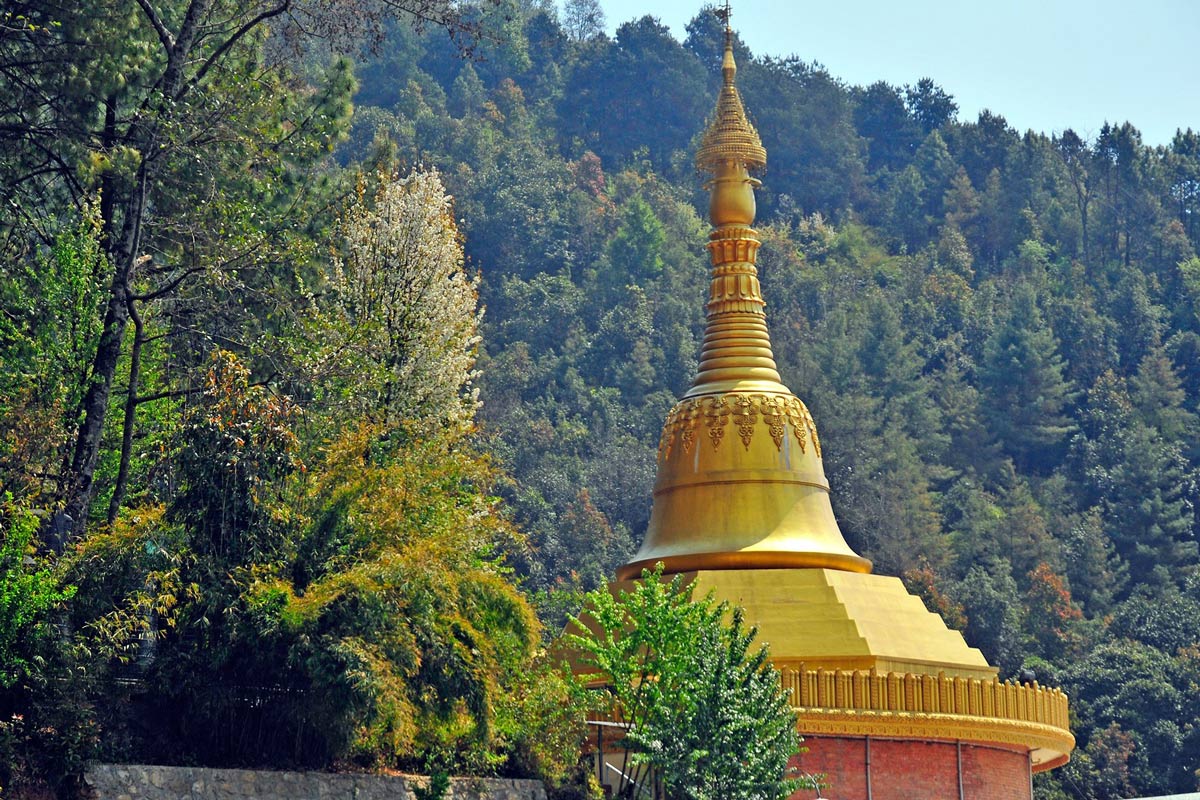
Several monasteries, in Lumbini, in the Kathmandu Valley and elsewhere, accept visitors for a few days. You live near the community, wake early, eat simply and join morning meditation or prayer. For many people this is the most authentic version, because it wasn't built for tourists.
That also means there may be no structured teaching in English. You can be essentially a guest in a place living its own life. Ask plainly what is included, whether there is a teacher for beginners, what rules apply for dress, phones and schedules, and whether the stay works on donation or a set contribution.
Respect here is substance, not decoration. See also the guide to customs and etiquette in Nepal: shoes off, modest dress, ask before any photograph.
Yoga and meditation retreats: the gentler start
These are the retreats you usually see at guesthouses with views, around Pokhara, Kathmandu or the valley slopes. They combine yoga, guided meditation, good food and time in nature. They are easier for beginners, more comfortable and often have a group atmosphere.
The critical question is what stands behind the programme. A good retreat has a teacher with clear training and lineage, a realistic schedule and room for rest. A weak one has big promises ("transformation," "healing"), a packed schedule of excursions and hardly any real practice.
If this is your first contact with meditation, this category is often the most honest choice. You don't need to prove anything with ten days of silence to gain something meaningful.
Private experiences: when they're worth it
A private experience means a programme built for you or a small group: a teacher or monk who meets you, accommodation you choose, a pace that adapts to your tiredness. It suits people with only a few days, families or couples with different needs, or those who want to place meditation inside a wider trip without sacrificing it.
The trade-off is that you depend heavily on the organiser: whether they truly know the people and places, not just a contact list. On-the-ground knowledge makes the difference here, because a good intermediary knows which monastery welcomes visitors and how to approach it respectfully.
If you want something like this woven into a wider plan, Elysian Himalaya is our premium team for tailored journeys. It isn't necessary, it's one of the options.
Silence and duration: the two big decisions
Complete silence is what frightens and what attracts. In practice it means no conversation, often no eye contact, no phone, no reading or writing. Some experience it as relief, others as pressure. If you have never done even a quiet weekend, ten days is a big leap.
Duration should match your experience, not how ambitious you feel. A trial of a few days in a gentle setting shows whether you like the practice before you commit to something long. There is also a practical point: if a programme has a fixed length and doesn't allow leaving early, you need to know that from the start.
Think about the travel around the retreat too. Don't place it right after a fifteen-hour flight or before a hard trek. Leave adjustment days before and after, especially if you are coming from Greece and need time to recover.
Expectations: what you will really feel
The most common misunderstanding is that meditation will bring peace from day one. Usually it first brings boredom, back pain, unexpected thoughts and sometimes strong emotions. That doesn't mean something is wrong. It is often part of the process, which is why serious teachers describe it openly.
Don't chase experiences. A good retreat doesn't promise enlightenment or that it will solve your problems. If it advertises like that, that's a red flag. The word that should worry you is "guaranteed."
One last thing: Nepal is not a neutral backdrop. There are sounds, bells, dogs, sometimes power cuts and cold mornings. Anyone expecting the perfect hush of a temple in a film will be disappointed. Whoever can accept reality often finds it is the best teaching.
Health: what to consider before booking
Meditation isn't harmless for everyone. For people with a history of panic attacks, depression, trauma or other mental health difficulties, an intensive silent programme can be too heavy. I'm not diagnosing or instructing you: consult your doctor or therapist before anything intensive, and tell the organiser clearly what you need.
Think about the body too. Hours of sitting aren't a given for someone with back or knee problems. Ask whether chairs, cushions and posture changes are allowed. If you take medication or have a chronic condition, inform them early and read the participation terms.
Practically, the region matters as well. Travel health, altitude, insurance and vaccines are covered in the Nepal travel guide. For official entry requirements and medical advice, confirm with the relevant authorities and a travel-medicine doctor.
How to vet an organiser
A serious organiser answers clearly and without pressure. Ask who teaches and with what training, what exactly is included, what the daily schedule is, what the cancellation terms are, what the accommodation and food are like, and what happens if you fall ill. If they dodge specifics, go elsewhere.
Check independent sources: recent reviews, conversations with past participants, official websites of the centres. Be wary of glossy marketing, pressure to book immediately and promises of cure or "unlocking." Also confirm what changes: dates, availability, registration rules and the way payment or donation works.
To be realistic: details change and I can't guarantee a centre's current data. So always ask for written confirmation before you commit.
Cost, planning and my own take
I don't write prices because there isn't one. Cost rises with comfort of accommodation, group size, length, privacy, the teacher and transfers. It falls when you choose plain donation-based centres or monastery stays. It is worth paying more for a good teacher, safe quiet lodging and solid organisation, not decorative luxury. If you need a number for a specific plan, the price is shaped per trip: Ask us for a quote.
From what I see on the ground, the most common mistake is picking the toughest programme to prove something. The people who come out better are usually those who chose something proportionate to where they are and gave themselves time before and after. A quiet first step gives you more than a programme you abandon halfway.
If you don't know where to start, tell me how many days you have, what experience you have and what you are looking for. Together we find the right size of experience and fit it into the rest of the trip.
Frequently asked questions
- A Vipassana centre is usually strict, silent and focused on one method of observation. A yoga retreat is gentler, more social and mixes movement, meditation and rest. If you are a beginner, the second is usually the more realistic starting point.
- It depends on the type. Intensive silent programmes suit people who already have some practice, while gentle yoga or meditation retreats and short monastery stays also welcome beginners. Always read each centre's participation requirements before you decide.
- For Vipassana centres, registration is usually made in advance and places are limited. Some monasteries may be flexible, but it is not guaranteed. Get in touch early and ask for written confirmation of availability, dates and rules before you arrange flights and transfers.
- Not necessarily. Anyone with a history of mental health difficulties, trauma or severe anxiety should speak to a doctor or therapist before an intensive programme. Also tell the organiser about health issues so they can honestly say whether the programme suits you.
- Ask who teaches and with what training, what is included, what the schedule is, what cancellation terms apply and what happens if you fall ill. Check independent reviews and avoid anyone who promises guaranteed results or pressures you to book immediately.
- If you haven't done intensive practice before, start with a few days in a gentle setting instead of a long silent programme. That shows you how your mind and body respond, and you can decide later whether you want something more demanding.
- The price varies widely by type: some centres and monasteries run on donation, while organised retreats or private experiences are priced per trip. If you want a specific plan, you can write to us: [Ask us for a quote](/en/contact/).
- Leave adjustment days after the flight and before a trek or other demanding activity. Lumbini or a monastery in the Kathmandu Valley often fits a route that already passes through. Confirm schedules and dates before you book anything.
Keep reading
Related articles
 Activities
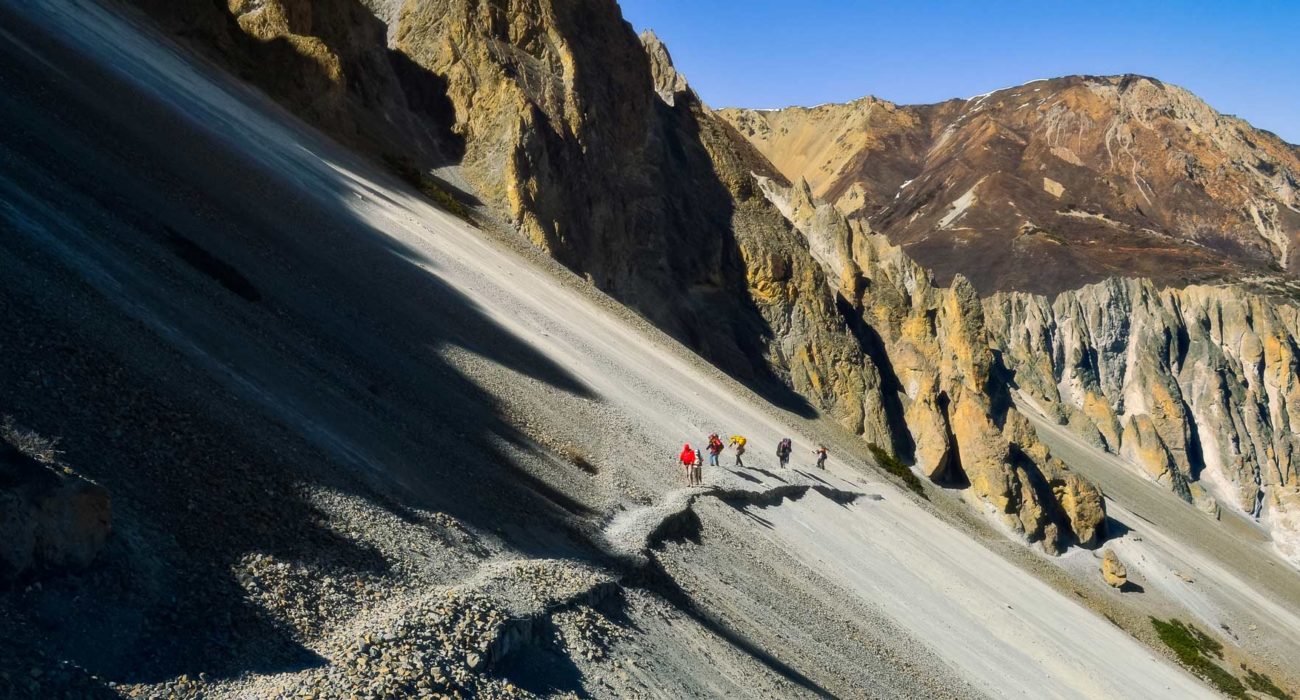
Trekking in Nepal: The Complete Hiking Guide
The definitive guide to trekking in Nepal: teahouse trekking, the main regions, a comparison of the top treks, permits, seasons and how to choose your route.
 Activities
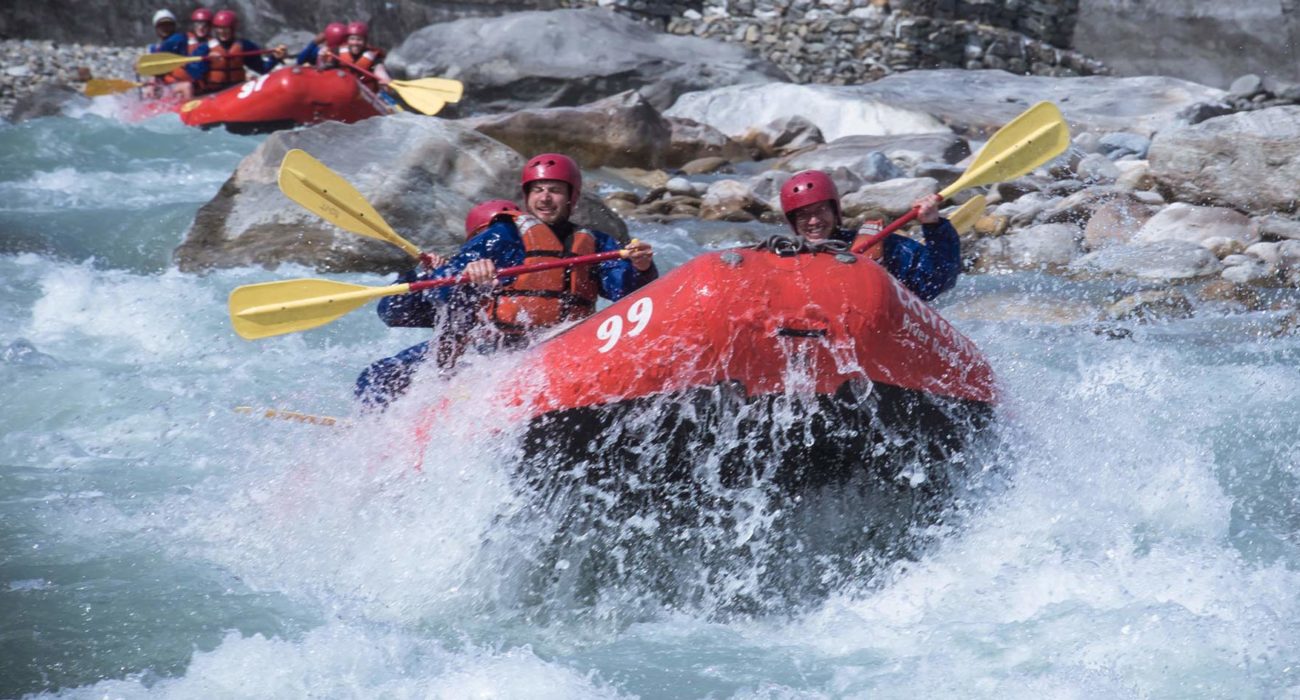
Rafting & Kayaking in Nepal
The complete guide to rafting & kayaking in Nepal: a river table (Trishuli, Seti, Bhote Koshi, Kali Gandaki, Sun Koshi, Marsyangdi, Karnali), difficulty grades, seasons, costs in euros, safety, and how to combine it with trekking.
 Activities
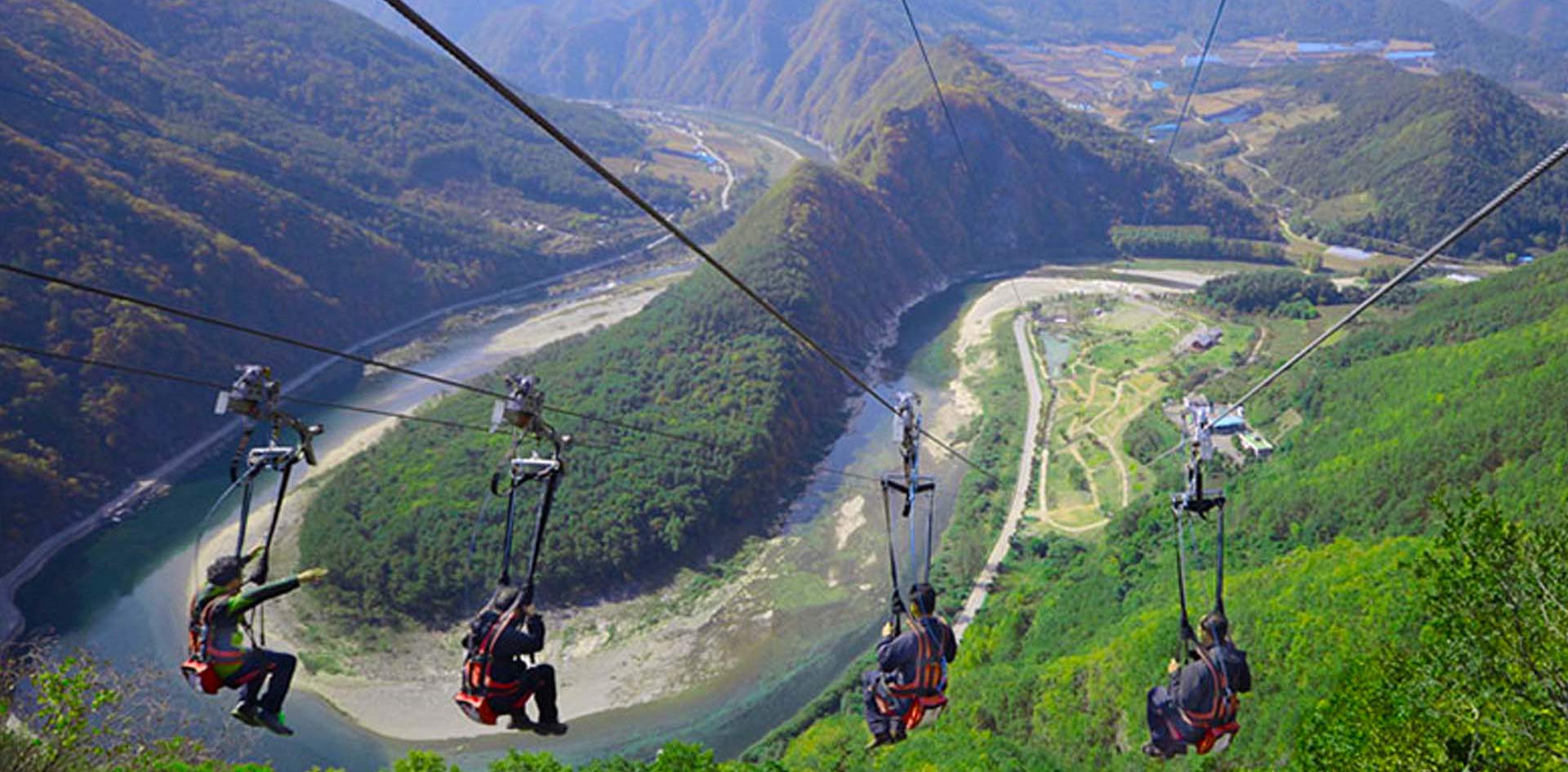
Ziplining in Pokhara: Nepal's Most Intense Adventure
A 1.8 km, 600 m-drop zipline over Pokhara at up to 120 km/h — specs, cost, booking, safety, best season and how it pairs with paragliding.