
Since 26 August, barely a day goes by without someone asking me the same question: "I want to help Nepal, what should I do?" The question is sincere, and the need behind it is real. The answer, though, is not always the one people expect.
As of 5 September 2026: Rasuwa district and the banks of the Trishuli and Bhote Koshi remain a disaster zone, entry prohibited. The Langtang Valley and Gosaikunda remain closed, with the road to Syabrubesi no longer existing. Kathmandu, Pokhara, Chitwan, Everest, Annapurna and Manaslu are all operating normally (for Manaslu, always ask your agency about the access road before you book). I keep the full, up-to-date picture — what has reopened, what is still closed, what changed since yesterday — alive in our article on the August 2026 floods. This piece is not that one; it is about something harder to pin down: what it actually means, in practice, to help a grieving country the right way.
Because there is a right way and a wrong way. And I know that because I have watched both play out, over fifteen years here.
Where the money from a trip actually goes
When you book a trip to Nepal, your money does not disappear into some faceless account. It passes through the hands of specific people, with names and families: the guide who walks the trail with you, the porter who carries your bag, the family who runs the four- or six-room lodge, the jeep driver who takes you to the trailhead, the owner of the small restaurant in the village, the woman selling apples or tea at a table on the path.
That is not a figure of speech. It is literally how the mountain economy of Nepal works: there are no hotel chains at Annapurna Base Camp. Most lodges are family businesses, built stone by stone, that depend mainly on the autumn and spring seasons — the two stretches of the year that bring the most people to the trails.
In the fifteen years I have lived in Pokhara, I have been through more than one winter without tourists — after an earthquake, during a pandemic, amid political unrest — enough to know the difference between a village that is working and a village that is waiting. It is not an abstract difference. It is whether a child stays in school this year or does not.
Why a busy season fills the gap a donation leaves behind
Donations are valuable, especially in the first weeks: they pay for rescue, medical care, makeshift shelter, food. But a donation is, by definition, a one-off. It is given, it is spent, it ends. Sustainable tourism does not work that way.
A group arriving in October is not a one-time boost. It is work for the whole length of the trip, and usually again next month, with the next group. Autumn is the season the whole mountain world lives on — not only Rasuwa, but Everest, Annapurna and Manaslu, all regions open right now (for Manaslu, always with the question of the access road to the trailhead, worth asking your agency about before you book). A good season here means income reaching dozens of households every week, not a single distribution.
We have seen this before, after the 2015 earthquake: when people abroad saw the images and cancelled their trips en masse, the hit to tourism lasted far longer than the earthquake itself. The donations helped with rebuilding, but guides and lodges waited a long time for guests who were not coming.
What it means not to become a disaster tourist
There is an opposite tendency too, smaller but real: people who want to see the disaster up close. To go to Rasuwa "to understand", to photograph the ruins, to share the experience. That is not help. It is the opposite of help.
Rasuwa district and the banks of the Trishuli and Bhote Koshi are a disaster zone, entry explicitly prohibited. The Langtang Valley and Gosaikunda remain closed — the road to Syabrubesi no longer exists. They are not closed because there is nothing to see. They are closed because rescue crews are still working there, people are still missing, and any extra presence — even well-meaning — gets in the way rather than helping.
The same goes for photography. We do not photograph grief, we do not photograph people at their moment of loss, we do not share disaster images for engagement. And whenever a local authority asks for something specific — avoiding a route, avoiding non-essential long-distance travel, as Nepal Police has requested for the road toward Pokhara — you respect it, without arguing the point. The judgment call there is not yours to make. It is theirs.
If you want to understand how respect works here day to day, beyond the crisis, our guide to Nepali culture and customs explains the basics, from how you greet people to how you photograph them respectfully.
What's open today, and where the live update lives
The practical question I hear most is where you can actually go. The short answer: Kathmandu, Pokhara, Chitwan National Park, the Everest region and the Annapurna region are all operating normally — trails, lodges, flights, everything in place. The Manaslu Circuit trail is open too, but ask your agency about the access road before you book. A disaster zone, entry prohibited, still covers Rasuwa district and the banks of the Trishuli and Bhote Koshi. The Langtang Valley and Gosaikunda also remain closed.
That is the picture as of 5 September 2026. It will change — some sections will reopen, some timelines will shift. The situation changes often, which is why I am not laying it out in full detail here. I keep it current, with sources and dates, in our article on the floods, and that is what to check before you book anything — not a piece like this one, which is about principles rather than schedules.
The point I want to leave clear is this: the places currently receiving tourists are genuinely open, not "technically" open. This is not a comforting fiction to save the season. Everest and Annapurna sit in other mountain ranges, many tens of kilometres from Rasuwa. Manaslu sits on a different river system, the Budhi Gandaki. It is geography, not wishful thinking.
Choose a local agency and a local guide
Not all agencies are equal, either in price or in footprint. A trip booked through a huge international platform passes through several intermediaries before it reaches the guide and the lodge. A trip booked directly with a local agency in Kathmandu or Pokhara, or through a Greek contact who works consistently with specific people on the ground, lands faster and more fully where it needs to.
The same goes for the guide. Since 2023 a licensed guide has been mandatory on many routes, and right now that is more than a formality: guides know which trails have changed, which bridges are missing, what is true today rather than a month ago. A good local guide is both safety for you and income for a family.
Before you book, ask simple questions: who your guide will be, where they live, whether they work regularly with the agency or are hired one-off, which lodges you will stay at and whether they are family-run businesses from the area. An agency that answers these comfortably is usually the right one.
If you need the bigger picture of the trip — visas, flights, seasons — our complete Nepal travel guide covers the basics before you even get into the detail of who to choose.
Fewer places, more days in each
A trip that rushes from point to point leaves little money at each stop. A trip with fewer destinations but more days at each leaves more: two or three nights at the same lodge instead of one, an extra meal at the same restaurant, an extra day with the same guide and the same porter.
That does not mean seeing less of Nepal. It means choosing, this year, a slightly slower pace: instead of five destinations in ten days, three destinations with room to breathe. Pokhara, Annapurna or Everest, and Chitwan, with time to sit in a tea house, ask the owner how the season is going, buy a little more from the shop next to your lodge.
This matters particularly this year, because trekkers who would have gone to Langtang this year will be looking at other routes. If that demand is absorbed by a few big spots with rushed stopovers, it changes little for local economies. If it spreads over more days and smaller stops along the way, it reaches further.
Buy from small producers, not only from your hotel
What you pay your hotel or your local agency is the biggest share, but not the only one. In the Thamel market, in the Lakeside shops in Pokhara, in the small stores of mountain villages, there is a real difference between a mass-imported souvenir and something made by a local hand: a woollen wrap from a local workshop, honey or spices from a nearby farmer, handmade jewellery from a women's cooperative.
On the mountain trails this becomes even more concrete: the apple or the tea you buy at a roadside table is income that goes straight to a household, with no middleman at all. The same goes for a meal at a small family restaurant instead of a chain with the same menu in every city in the world.
You do not need a plan or research to do this. Whenever you have a choice between something big and anonymous and something small and local, pick the second. In Nepal, that choice is almost always available.
If you'd already booked a trip to an area that's now closed
If your trip included Langtang or the areas around Rasuwa, the first instinct is often to cancel the whole thing. That is understandable, but it is usually not necessary. The alternatives — Annapurna, Everest, Manaslu — are open and ready (for Manaslu, ask about the access road first), and your trip, reshaped, still delivers what it always delivered: work for people who need it.
The most important step, where possible, is to keep the same guide and the same local agency, just on a different route. A guide who lost their work in Langtang does not lose it if you take them along to Annapurna instead. It is something you can simply ask for when you contact your agency.
Langtang will reopen, but the road to Syabrubesi no longer exists and restoring it will take months. Until then, the best help for that specific area is not to add extra strain, and the best help for the people who worked there is to find them work elsewhere.
Donations have their place, through the right channels
Nothing here means donating is the wrong choice. Especially in the first weeks after a disaster of this scale, it is help that reaches where it is needed immediately: rescue, medical care, makeshift shelter. Travel and donation are not alternatives — they are complementary, on different timelines.
If you want to donate, the one thing that genuinely needs care is the channel: only official organisations, never appeals that spring up suddenly on social media in the days right after a disaster. Official channels currently open include the Prime Minister's Disaster Relief Fund, the Nepal Red Cross Society, the IFRC and CARE. I keep the links to them current in our article on the floods.
A donation covers the emergency and the rebuilding. A season of visitors brings back steady work. Neither cancels out the other.
What travelling responsibly actually costs
A fair question is whether travelling in the way that helps most also costs more. The answer is more nuanced than a simple yes or no. A small, local agency is not necessarily pricier than a big platform — often it is the opposite, because it cuts out layers of middlemen. What actually drives cost up is different: the season, the size of the group, the comfort level of your accommodation, whether you want a private guide instead of a group programme.
Because every trip is different, and because I do not want to hand you a number that will have changed by the time you read this, the price is shaped per trip, depending on the days, the route and the comfort level you are after. Tell me what you have in mind and ask us for a quote.
Nepal does not need more pity. It needs more people setting foot on the trails that are open, staying in lodges that are waiting for guests, leaving behind what a trip always leaves behind: work, income, and proof that someone out there has not forgotten.
Keep reading
Related articles
 Articles
The biggest help you can give Nepal is to visit
On 26 August 2026 a piece of mountain turned into water and took villages, bridges and more than a thousand lives with it. I have lived here for fifteen years. Here is what happened, what is open, how you can help today, and why your trip in October is the biggest help of all.
 Articles
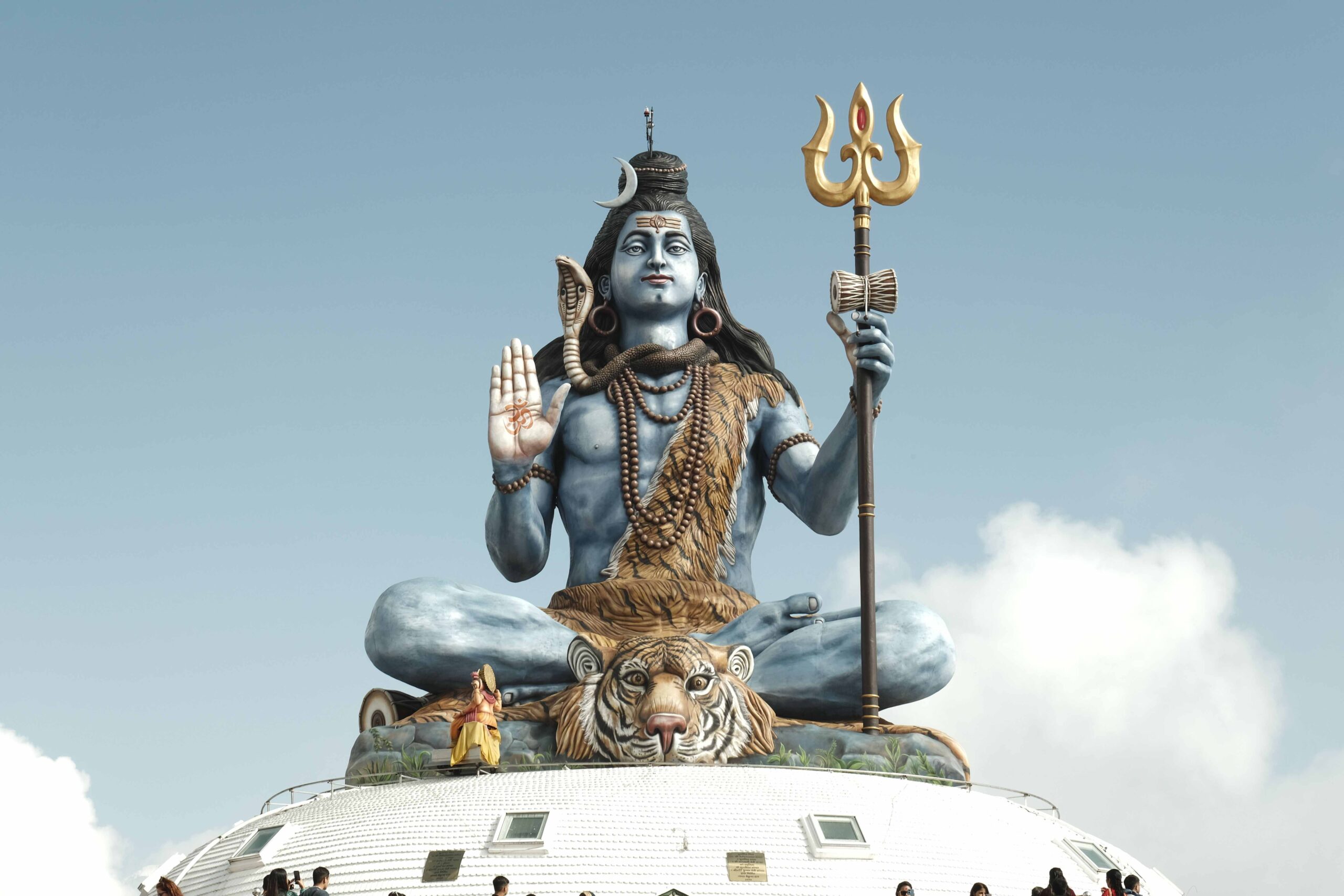
Shivaratri in Nepal: The Great Night of Shiva
Maha Shivaratri at Pashupatinath temple: ash-covered sadhus, all-night fires, chanting and up to a million pilgrims. When it happens and how to experience it respectfully as a traveller.
 Articles
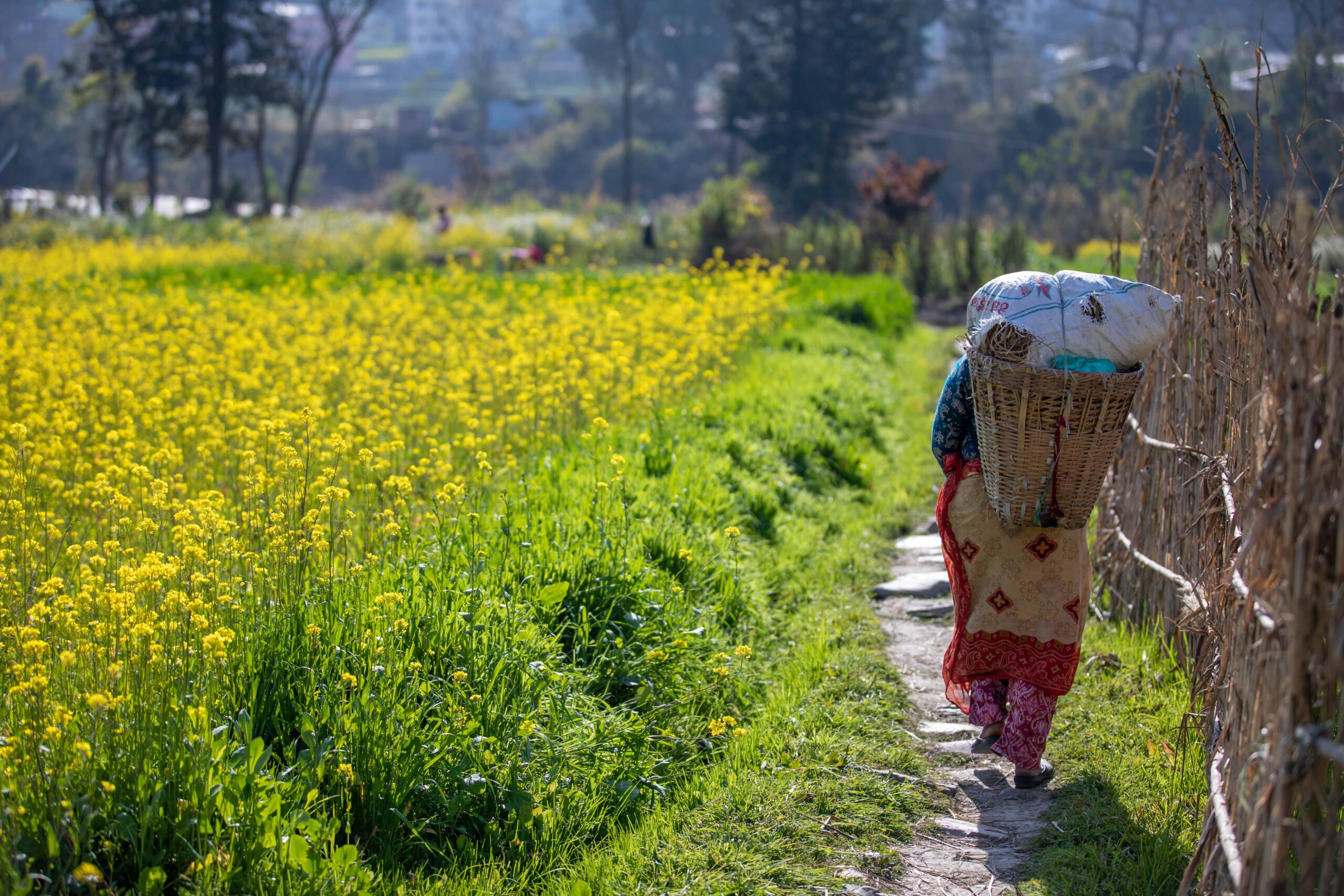
Nepal's Mustard Season: The Golden Fields
Every winter Nepal's countryside turns yellow with blooming mustard fields — when they bloom, where to see them, and why it's a dream for photography.