

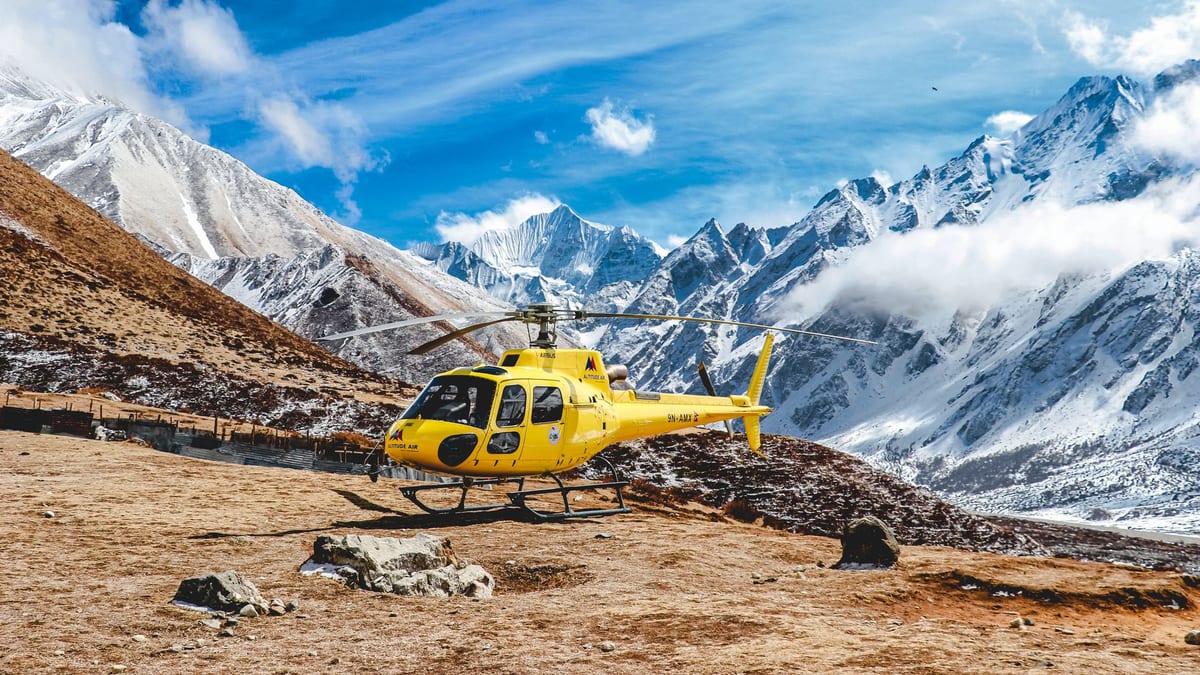
Seeing the summit of Everest from the air, without two weeks of trekking and acclimatisation, is the big draw of an Everest helicopter tour. In under a day you can see the roof of the Himalayas from angles very few trekkers ever reach, and in some versions you can actually set foot above 5,000 metres without walking a single step to get there.
This is a practical guide for anyone weighing that option: the types of flight on offer, how the return leg is organised, how much the weather controls the schedule, what passenger weight means for flight safety, where you actually land, what role altitude and oxygen play, what insurance you need, what happens if a flight is cancelled, and when a private charter is worth the extra cost over a shared seat.
This is not a sightseeing ride like any other. Helicopters in the Himalayas operate in one of the most demanding flying environments on the planet, where weather, altitude and weight shape nearly every decision a pilot makes. Before you put down a deposit, it pays to know what questions to ask — and what to expect realistically.
What an Everest helicopter tour actually is — the main flight types
There are three basic versions of a flight toward the Everest region, and the difference isn't just duration — it's what you actually see and experience. The first is the classic mountain flight out of Kathmandu: a small plane or helicopter flying alongside the range without landing, showing you a row of peaks above 8,000 metres in roughly an hour.
The second, and the one most people mean by 'Everest by helicopter', is a flight with a stop and a landing in the Khumbu region — usually near Everest Base Camp or the Kala Patthar area, with an intermediate breakfast stop at lower altitude. The third version combines it with trekking: many people doing the Everest Base Camp Trek choose to fly out afterward rather than walking back down or waiting on an uncertain flight from Lukla.
| Flight type | What it includes | Landing | Who it suits |
|---|---|---|---|
| Mountain flight from Kathmandu | Panoramic ~1-hour flight over the range | No | Those with very little time who just want the view |
| EBC / Kala Patthar heli tour | Flight with a breakfast stop at lower altitude, wrapped up in a few hours | Yes, at a point near Base Camp or the Kala Patthar area — depends on season and permits | Those who want to stand above 5,000m without trekking |
| Trek + helicopter combo | One direction on foot, one direction by air | Only at Lukla or the trek's own landing point | Trekkers who want to skip the return walk or an uncertain flight |
Schedule and return: a day trip or combined with a trek
The most common format is a day trip from Kathmandu: an early morning departure, a sightseeing circuit with or without landing, and a return to the same city within a few hours. It's the choice for anyone with only a few days in Nepal or no interest in trekking at all.
The second logic is combining it with a trek: many people doing Everest Base Camp prefer to walk up as far as Lukla or higher, then fly down by helicopter rather than retrace the same trail or wait on uncertain flights out of Lukla. This doesn't replace the acclimatisation you've already built up by walking in — it simply saves you one direction. Either way, the day's schedule is always hostage to the morning weather window, which is why nearly every flight departs very early.
Weather: the real decision-maker
In the Himalayas, weather isn't just a comfort factor — it's the factor that decides whether the flight happens at all. Helicopters here fly visually for much of the route, which means the pilot needs clear visibility for the climb, the route and the landing. Clouds, wind or haze that builds up after the early morning hours are the rule, not the exception, which is why flights are almost always scheduled at first light.
That means your itinerary needs margin. A flight booked for a specific day can slip to the next one, or be delayed by hours within the same day. If the flight is the last thing on your schedule before an international departure, skipping a buffer day is risky — the same issue we flag repeatedly around the Lukla–Kathmandu flights on the Everest Base Camp Trek.
Cancellations and delays: what to ask about the refund policy
Because weather cancellations are common, the operator's refund or rescheduling policy matters almost as much as the flight itself. Ask to see in writing what happens if the flight is cancelled outright, if it's moved to a day you no longer have available, or if it becomes a partial flight — for example, no landing because the weather window closed.
Good operators offer a full refund, a date change, or an alternative lower-altitude route the same day. A poor practice is flying anyway, with no real view, just to avoid losing the booking — that's not what you paid for, and it's worth ruling out by asking in advance.
Passenger and luggage weight — why it matters so much
At high altitude the air is thinner, which reduces lift and rotor performance; that's why the maximum allowed weight — passengers and luggage combined — drops as the landing altitude goes up. For helicopters flying into the Khumbu region and potentially landing above 5,000 metres, that means every kilogram matters far more than it would on a flight at sea level.
Serious operators weigh passengers and luggage before departure and apply strict per-passenger and total-flight weight limits; if the total runs over, seats may need reshuffling, an extra flight may be required, or luggage may be left behind. The practical advice is simple: declare your actual weight when booking, don't round it down, and ask in advance what luggage allowance applies — especially if you plan to carry heavy camera gear.
Landing: where you actually set foot
Where the helicopter actually lands depends on the season, current permits, and congestion in the area. During climbing season, Everest Base Camp itself can be crowded with expeditions and gear, which affects whether landing there is even permitted, or whether the flight heads instead to the broader Kala Patthar area or a nearby lower point.
Almost every itinerary also includes an intermediate stop at lower altitude, around Namche or the Syangboche area, typically for a breakfast with a view — giving both the pilot and the passengers a break before the climb to the highest point. Never assume the exact landing spot from promotional photos; get it confirmed in writing before you pay, since it changes by season and by flight.
Altitude, oxygen and brief exposure — what it means for your body
The most misunderstood part of these flights is the assumption that, because you're only on the ground for a few minutes, altitude sickness isn't a concern. That's not quite right. Jumping from Kathmandu (around 1,400m) to a point above 5,000m in under an hour, with zero acclimatisation, leaves the body no time to adjust — and some people can feel headache, dizziness or nausea even during such a brief exposure, especially if they step off the helicopter and move quickly.
That's not cause for alarm — the vast majority of passengers feel nothing notable during a stop of a few minutes. But it does mean you should move slowly at the landing site, avoid sudden exertion (like running for a photo), and tell the operator about any cardiac, respiratory or other relevant history before booking. For a full picture of the mechanism and the warning signs to watch for, read our detailed guide to altitude sickness in the Himalayas — the same recognition rules apply, just compressed into a shorter window.
Insurance for a Himalayan helicopter flight
Insurance for a scenic flight isn't quite the same thing as trekking insurance, but the checking logic is identical: read the policy line by line and confirm it explicitly covers 'helicopter flight as a tourist activity', not just 'helicopter evacuation in an emergency'. Those are two different things, and plenty of basic travel policies cover only the second.
If the flight is combined with high-altitude trekking, you also need the cover described in detail in our guide to travel insurance for Nepal: an altitude limit above the maximum point of your flight, and explicit cover for helicopter evacuation if something goes wrong. Don't assume that 'because it's only a few minutes' no cover is needed — get written confirmation from your insurer before you leave home.
What to ask the operator before you book
A short list of questions before you put down a deposit saves you a lot of surprises later. You don't need to ask every one, but the more premium the experience you're after, the more detailed the answers should be.
How specific, documented and in writing the answers are tells you almost everything about how seriously an operator treats the flight — not as just another seat to fill, but as a commitment they stand behind. If someone won't put basics like their operating licence or cancellation policy in writing, treat that as a red flag and look elsewhere before committing a deposit.
- What is the operator's exact operating licence, and who is the actual carrier of the flight (many agencies resell seats on other operators' aircraft)?
- What is the exact landing point planned — and what happens if it isn't available that day?
- What is the policy for cancellation or a partial flight due to weather?
- Is this a shared flight with split seats, or a private helicopter?
- What is the weight limit per passenger and in total, and what happens if you exceed it?
- Is oxygen carried on board, and what altitude-related experience does the crew have?
- What insurance coverage is required of you, and what coverage does the operator itself carry?
When a private charter is worth it
A shared, group flight is the most cost-efficient option when you simply want to see Everest and don't mind fitting your schedule around other passengers' availability. The downside is that the flight happens once the helicopter fills up, not when it suits you, and there's little room to shift the departure time.
A private charter is worth it when your time is limited and valuable, when you want to pick the exact departure window, when you're marking a special occasion, or when you have needs that don't fit a group flow — photography work that requires specific light, for example, or a medical consideration you want to manage with more flexibility. For travellers who want this level of tailored planning across their whole Himalayan trip, Elysian Himalaya organises premium experiences where the flight becomes one piece of a carefully designed, wider itinerary.
What drives the cost — and what pushes it up or down
There is no single price for 'Everest by helicopter', because the cost is shaped by very different variables: the type of flight (a simple sightseeing pass with no landing versus a flight that stops and lands at high altitude), whether you share seats or book a private helicopter, the season, and whether the flight is bundled into a wider itinerary or booked on its own.
In general, a private flight costs proportionally much more per passenger than a shared one, landing at high altitude pushes the cost up compared to a flight with no stop, and peak season (spring, autumn) usually sees higher demand. The most useful thing you can do is tell us exactly what you're after — shared or private, with or without landing, combined with a trek or standalone — and we'll send you something specific: Ask us for a quote.
Helicopter or trek — or both
From what I've seen on the ground, a helicopter flight and the Everest Base Camp Trek aren't really competing options — they answer different questions. The trek gives you a gradual, physical relationship with the mountain: the acclimatisation days, the Sherpa villages, the sense that you earned the view step by step. The helicopter gives you access without the time or physical demand, which is genuinely valuable for people with limited days, limited fitness, or who simply want the view without the journey.
The smartest combination I keep seeing work well is walking up — so you get proper acclimatisation and the experience of the trail — and flying back down instead of retracing the whole route. Whichever you choose, the common thread is respect for the weather, the altitude and proper preparation — that's what decides whether the experience is unforgettable or just stressful.
Frequently asked questions
- It depends on the type. A mountain flight with no landing from Kathmandu lasts around an hour. A heli tour with a breakfast stop and a landing near Base Camp or the Kala Patthar area usually takes half a day once you count transfers, waiting, and the flight itself. Weather can stretch this out or cancel it entirely.
- On a clear day, yes — that's exactly why flights depart so early, while skies are usually clearest. There's no guarantee, though: if clouds build up faster than expected, the pilot may change course for safety reasons. Ask the operator in advance what happens to your payment in that scenario.
- Sometimes, but not always. The exact availability of landing at Base Camp itself depends on the season, current permits, and congestion from climbing expeditions. In many periods the landing happens in the broader Kala Patthar area or a nearby point instead. Get written confirmation of the planned landing site before you put down a deposit.
- Weather cancellations or delays are common in the Himalayas. Good operators offer a full refund, a date change, or an alternative lower-altitude route the same day. Ask to see this policy in writing before booking, and avoid scheduling the flight on your last day before an international departure.
- You need insurance that explicitly covers a helicopter flight as a tourist activity, not just helicopter evacuation in an emergency — those are different things. If the flight is combined with high-altitude trekking, you also need altitude cover. Read your policy line by line, or see our detailed guide to travel insurance for Nepal.
- Yes, even during a stop of just a few minutes, because the body has no time to adjust to the sudden change in altitude. Most passengers feel nothing, but headache, dizziness or nausea can occur. Move slowly at the landing site and tell the operator about any relevant health history before booking.
- It depends on the helicopter type and the landing altitude, since thinner air reduces lift and forces strict weight limits per passenger and in total. Serious operators weigh passengers and luggage before departure. Declare your actual weight when booking and ask about the luggage allowance in advance.
- It's worth it if your time is limited, you want to choose the exact departure window, you're marking a special occasion, or you have needs that don't fit a group flow. A shared flight is more cost-efficient but ties you to other passengers' availability. Tell us what you're after and we'll send a specific proposal through our contact page.
Keep reading
Related articles
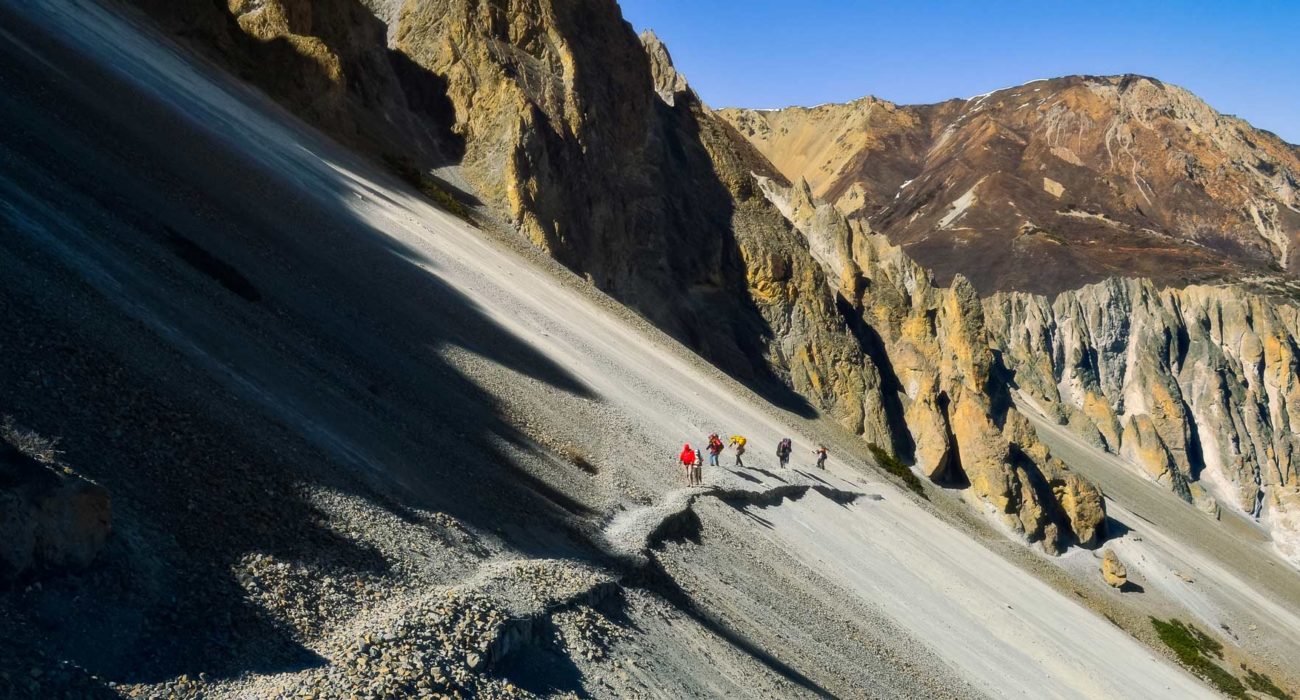 Activities
Trekking in Nepal: The Complete Hiking Guide
The definitive guide to trekking in Nepal: teahouse trekking, the main regions, a comparison of the top treks, permits, seasons and how to choose your route.
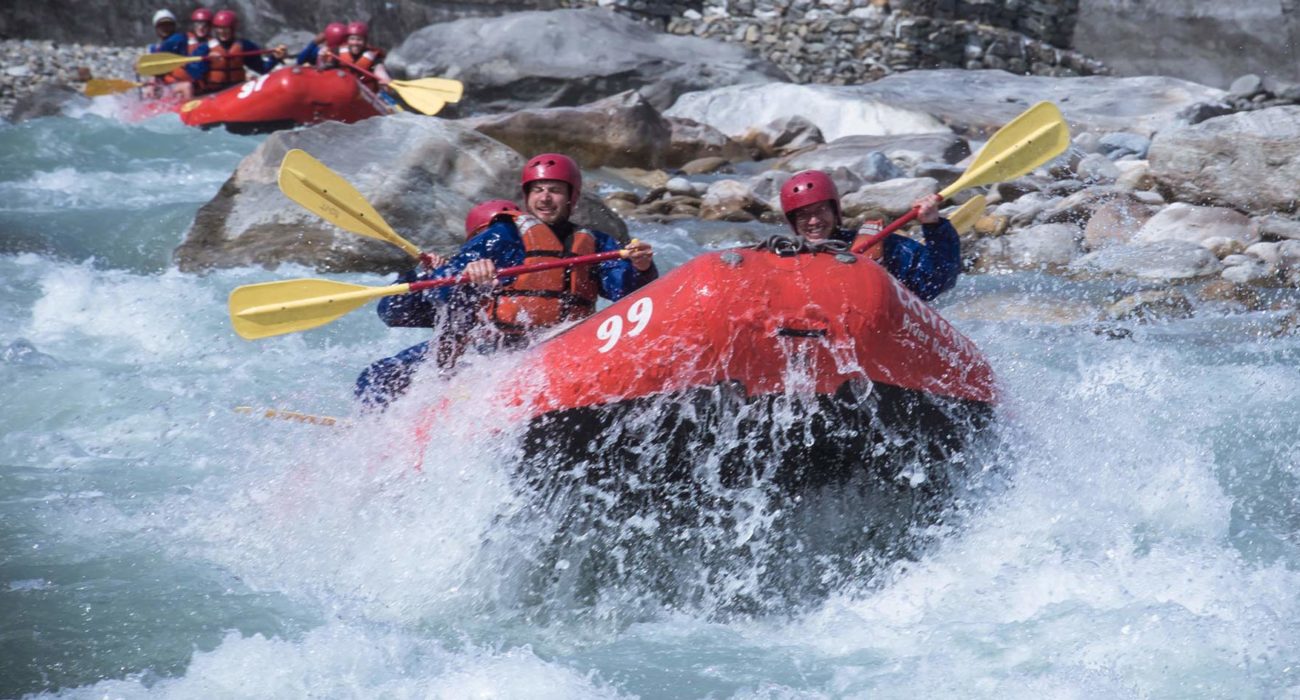 Activities
Rafting & Kayaking in Nepal
The complete guide to rafting & kayaking in Nepal: a river table (Trishuli, Seti, Bhote Koshi, Kali Gandaki, Sun Koshi, Marsyangdi, Karnali), difficulty grades, seasons, costs in euros, safety, and how to combine it with trekking.
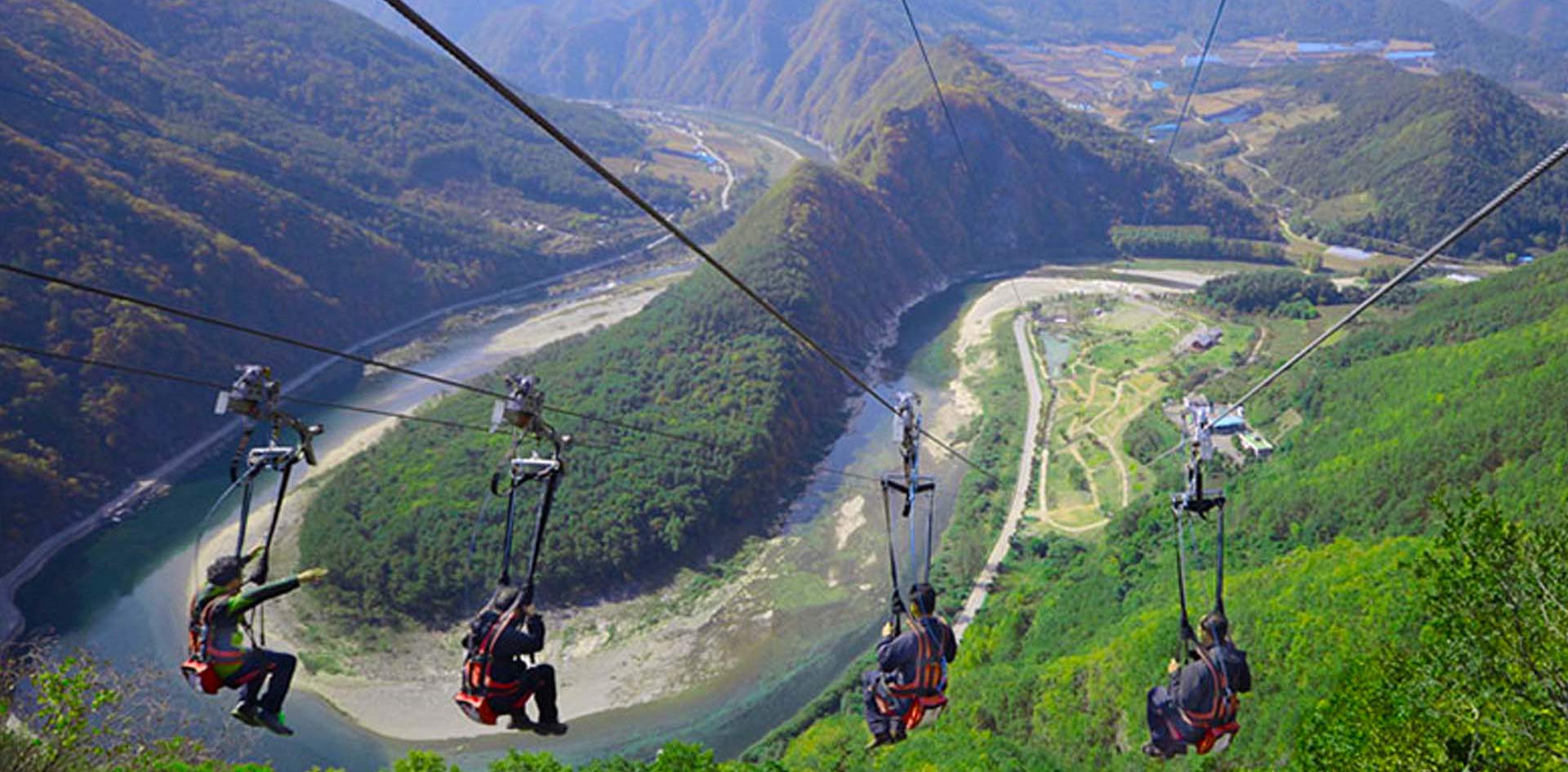 Activities
Ziplining in Pokhara: Nepal's Most Intense Adventure
A 1.8 km, 600 m-drop zipline over Pokhara at up to 120 km/h — specs, cost, booking, safety, best season and how it pairs with paragliding.