

Dashain and Tihar in Nepal: The Two Great Festivals and How to Join In Respectfully
If you asked me which two weeks of the year teach you the most about Nepal, I would say Dashain and Tihar. They are not festivals staged for tourists. They are the festivals of the family, and the whole country arranges itself around them: offices empty out, roads fill with people heading back to their villages, houses are cleaned and decorated, and elders bless the younger ones.
For a Greek traveller, the closest comparison is Easter and Christmas rolled into one, except that here the rhythm is not one night but many days. Dashain celebrates the victory of the goddess Durga over evil. Tihar, which follows a few weeks later, is the festival of lights, animals and the bond between siblings.
In this article you will see what happens on each day, what tika is, why people honour crows and dogs, and what all this means for your own planning. I will also tell you how to behave if someone invites you into their home. For the wider picture of religion and etiquette, see our guide to culture and customs in Nepal.
Two festivals, two different rhythms
Dashain is the big, serious, family-centred one. It lasts around fifteen days, following the lunar calendar, and builds towards its final days. In practice the country slows down. Government offices, schools and many businesses close for a long stretch, and people travel to their ancestral home, where parents and grandparents live.
Tihar is brighter and more playful. It lasts five days, and each day has its own protagonist: crows, dogs, cows, the goddess of wealth Lakshmi and, at the end, siblings. In the evenings neighbourhoods fill with small lamps, candles and oil lights, and groups of children and young people go from house to house singing.
Do not confuse them with Nepal's other festivals. Holi and Shivaratri are more public and spectacular. Here the centre of gravity is the home. As a visitor you will see a lot from the street, but the best part happens behind the front door.
Dashain: what is celebrated and how the days unfold
The story behind Dashain is the victory of Durga over the demon Mahishasura, that is, good over evil. The festival opens with Ghatasthapana, the first day, when in many Hindu households a vessel of soil and barley seeds is placed in a sacred room. The seeds are watered and guarded for days, and the yellow shoots that grow, called jamara, are used at the end as a blessing.
In the middle of the period come the days that stand out. The seventh, Fulpati, brings ceremonial flowers and plants in procession, and in Kathmandu the ceremony has an official character. The eighth and ninth, Maha Asthami and Maha Navami, are days of intense worship of the goddess. The tenth, Bijaya Dashami, is the climax: that is when the blessing with tika and jamara takes place.
Alongside that is the everyday festive mood. You will see large bamboo swings, called ping, set up in villages and open spaces. You will see kites in the sky and card games in living rooms. The festival closes around the full moon that follows. Exact dates change every year, so check an official calendar before you book anything.
Tika and the blessing of the elders
Tika is the defining image of Dashain. On the tenth day, the elders of the family prepare a mix of rice, yoghurt and red colour and place it on the forehead of the younger ones. Along with it they place the yellow jamara on the head or behind the ear, and say a wish for health, success and protection.
What moves me each time is that this is not an abstract ritual. It is a reason for the whole family to be in one room again. The younger ones pass one by one in front of the grandfather or grandmother, bow and receive the blessing. Order matters, and the process continues for days as relatives visit one another, sometimes in different villages.
If a Nepali gives you tika, do not wipe it off immediately and do not treat it as a photo souvenir. Receive it as you would a wish from an elder in your own village: politely, with a smile and a Namaste or a thank you. If you are unsure how to proceed, ask first.
Tihar: five days of lights
Tihar, also called Deepawali or Yamapanchak, is Nepal's version of Diwali. The five days follow a fixed order. The table below gives you the outline, with the caveat that local traditions vary, especially between communities in the Kathmandu Valley and the rest of the country.
You do not need to catch all five days. For a visitor, the easiest moments to experience are the evening of the third day with its lights and the fifth day with Bhai Tika. Exact dates change every year, so confirm them before you organise your schedule.
| Day | Name | Who is honoured | What you will see |
|---|---|---|---|
| First | Kaag Tihar | Crows, messengers of death | Food offerings on rooftops and in courtyards |
| Second | Kukur Tihar | Dogs, loyal companions | Flower garlands and tika on street dogs |
| Third | Gai Tihar and Laxmi Puja | The cow and the goddess Lakshmi | Lamps, candles and rangoli at thresholds in the evening |
| Fourth | Goru Puja or Mha Puja | Oxen, and for the Newar the worship of the self | Special rites and the new year in the Newar calendar |
| Fifth | Bhai Tika | The bond between siblings | Sisters apply multicoloured tika to their brothers |
Animals, lights and rangoli: the heart of Tihar
To a visitor's eye, the most unexpected sight is the one involving animals. Crows, which we chase away elsewhere, are honoured guests here. Dogs, even the stray ones of the neighbourhood, receive garlands, tika and food. The cow, sacred all year round, becomes the star of the third day. The logic is that life rests on a network of relationships, and people owe gratitude to those who share their surroundings.
The evening of the third day is the spectacular part for visitors. Families light lamps and candles on windows, roofs and entrances so that Lakshmi can find her way to the house. At the threshold, rangoli are drawn, patterns made of coloured powder, rice or petals. Whole neighbourhoods glow, and a slow walk after sunset is well worth it.
In the neighbourhoods you will also meet the Deusi and Bhailo groups, children and young people who sing from door to door and bless each household, while the household offers them sweets, fruit or a small gift in return. If they approach you, it is an honour to stop and listen. If you would like to take part in that exchange, ask a local or your guide first what is appropriate.
The harder side: animal sacrifice during Dashain
I have to say this plainly, because you should know it before you come. On certain days of Dashain, particularly around Maha Navami, traditional animal sacrifices take place at temples of the goddess and in family settings, and the meat is shared as an offering at the festive table. For many families this is a central part of worship. Other Nepalis avoid it or replace it with symbolic offerings.
You do not need to take a side or pass judgement. If you do not want to see such scenes, simply avoid the goddess temples on those days and ask your guide what to steer clear of. If you find yourself nearby, do not photograph without explicit permission and do not comment aloud. The general rule that applies across Nepal applies here too: you are a guest in a faith, not a spectator at a show.
Also note that practices and rules differ from temple to temple and from year to year. Local regulations and temple instructions can change, so confirm with locals or with your trip organiser before going to anything you plan to watch.
Closed shops, packed buses and a half-empty city
Here the traveller needs to be realistic. During Dashain, and especially around its peak, many shops, offices and small restaurants close because their owners are celebrating in their villages. In Kathmandu a large part of the population does not come from the city, so the city's everyday fabric thins out. Thamel and the tourist areas keep working, but with fewer options and shorter hours.
Transport is the most sensitive point. In the days before the peak, buses to the provinces fill to bursting, tickets sell out early and delays on long routes are common. Domestic flights are also under pressure. After the festival, the flow reverses and everyone returns towards the city.
Tihar is gentler, but there too you will find closed shops on the day of Lakshmi Puja and Bhai Tika. My advice is simple: do not schedule an important transfer or domestic flight on the peak days, book early anything that needs a reservation, and leave a safety margin before your return flight. To see how routes are built with buffer days, look at our Nepal itineraries.
When they fall and how to fit them into your trip
Dashain usually falls in autumn, between September and October, and Tihar a little later, between October and November. The dates are set by the lunar calendar and change each year, so do not rely on a previous year. Check an official Nepali calendar and confirm with your organiser before booking flights.
Fortunately, the period coincides with one of the best seasons for Nepal, with stable weather and clear skies after the monsoon. For the broader picture, see the best time to travel to Nepal. The trade-off is that demand for lodging and transport is high and practical organisation needs more foresight.
If you want to see the festivals without straining your schedule, the most balanced approach is to place Kathmandu and the valley on the quieter days and leave the long journeys for before or after the peak. Cost depends on how your dates sit against the festival peak, trip length, domestic transport, lodging availability at high demand and group size. Ask us for a quote.
Where to be: Kathmandu and the valley
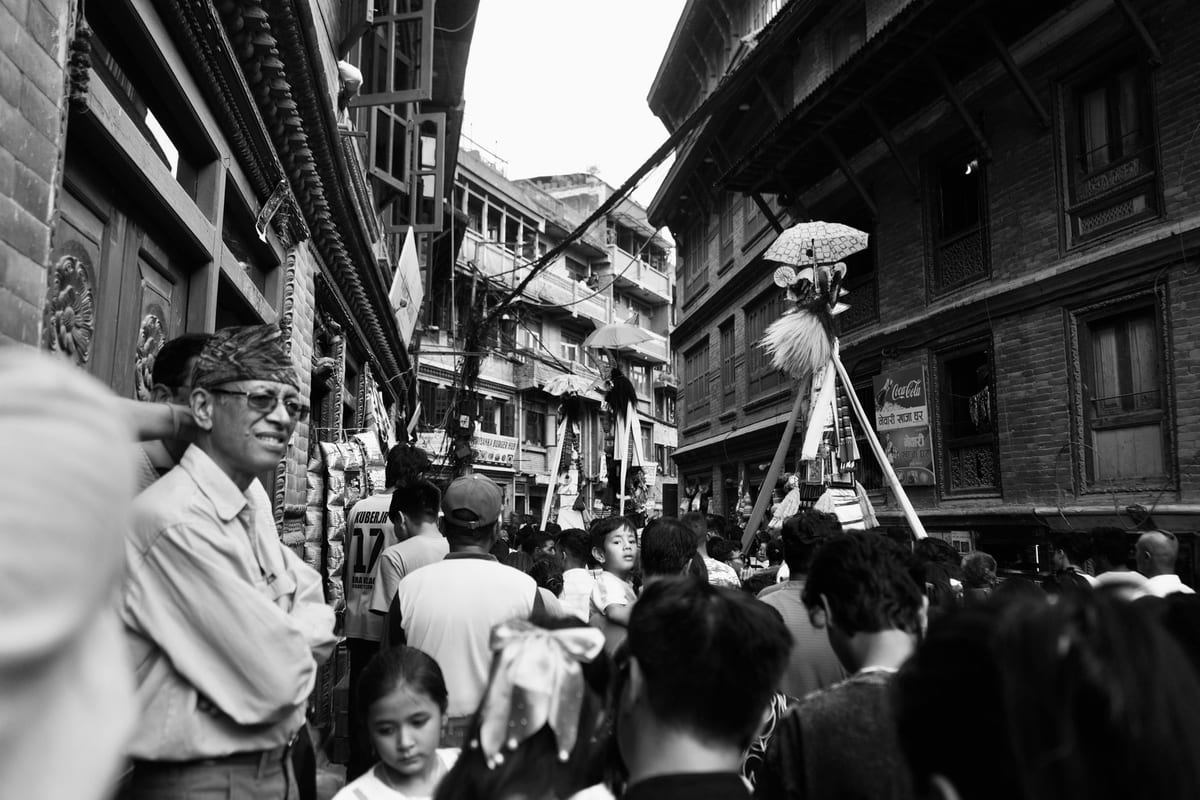
For a visitor, the Kathmandu Valley is the easiest place to follow the festivals, because the temples, squares and neighbourhoods are close together. During Dashain you can observe life around the Durbar Squares, the processions and the movement of families without leaving the city. During Tihar, the evening of Lakshmi Puja is worth a walk through neighbourhoods of lamps, candles and rangoli.
You will find more on the city itself in the guide to Kathmandu, the capital of Nepal. Keep in mind that some temples and monuments may change their hours or be busier on ceremony days, so confirm hours with your guide, your hotel or locals the day before.
If you are interested in a more personal and less touristy experience, sometimes families who know your guide will invite you for tea or a meal. Do not approach it as a right. If it happens to you, it is a gift worth honouring with courtesy and discretion.
How to take part respectfully
My general impression, from watching how travellers react in these days, is that the ones who do best go with curiosity rather than a camera. Ask before photographing, especially at ceremonies and family moments. If you are unsure, ask your guide or your host. This approach fits what we describe in the general etiquette of Nepal.
Dress modestly and remove your shoes before entering a home or temple. Accept food and gifts with your right hand, or with both hands. If someone applies tika, bow your head slightly and receive it calmly. Do not join rituals unless explicitly invited, and do not touch offerings, altars or ceremonial objects. If you are invited to a family table, do not criticise the food and try a little of everything.
Finally, remember that these days are sensitive for those who cannot be with their loved ones. Some families are in mourning or have someone far away. A discreet manner, a calm voice and a smile open doors that no organisation can open.
Who this period suits
If you love culture and human stories and do not mind adapting your schedule, Dashain and Tihar are among the most meaningful experiences you can have in Nepal. If, however, you want a completely predictable trip with many transfers and everything open, another season may suit you better.
My personal advice: do not try to see everything. Choose one or two experiences, such as the evening of Lakshmi Puja or a morning walk in Kathmandu during Dashain, and leave room for the unexpected. Often the loveliest moment is the one you had not planned.
If you would like us to build a trip around the festivals together, with sound timing and a realistic plan, tell us which dates interest you. You will find more stories and guides in the Stories category.
Keep reading
Related articles
 Articles
The biggest help you can give Nepal is to visit
On 26 August 2026 a piece of mountain turned into water and took villages, bridges and more than a thousand lives with it. I have lived here for fifteen years. Here is what happened, what is open, how you can help today, and why your trip in October is the biggest help of all.
 Articles
Shivaratri in Nepal: The Great Night of Shiva
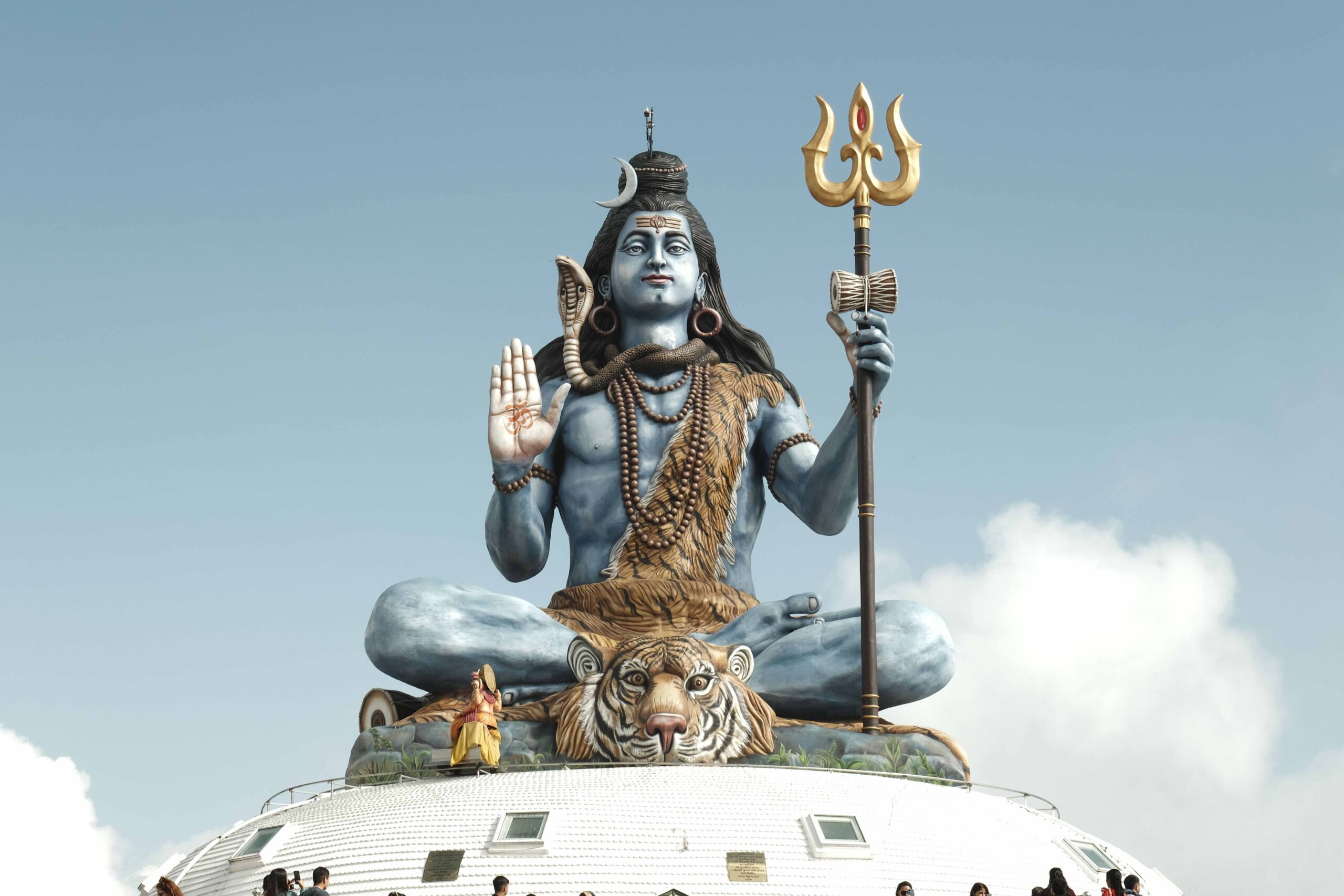
Maha Shivaratri at Pashupatinath temple: ash-covered sadhus, all-night fires, chanting and up to a million pilgrims. When it happens and how to experience it respectfully as a traveller.
 Articles
Nepal's Mustard Season: The Golden Fields
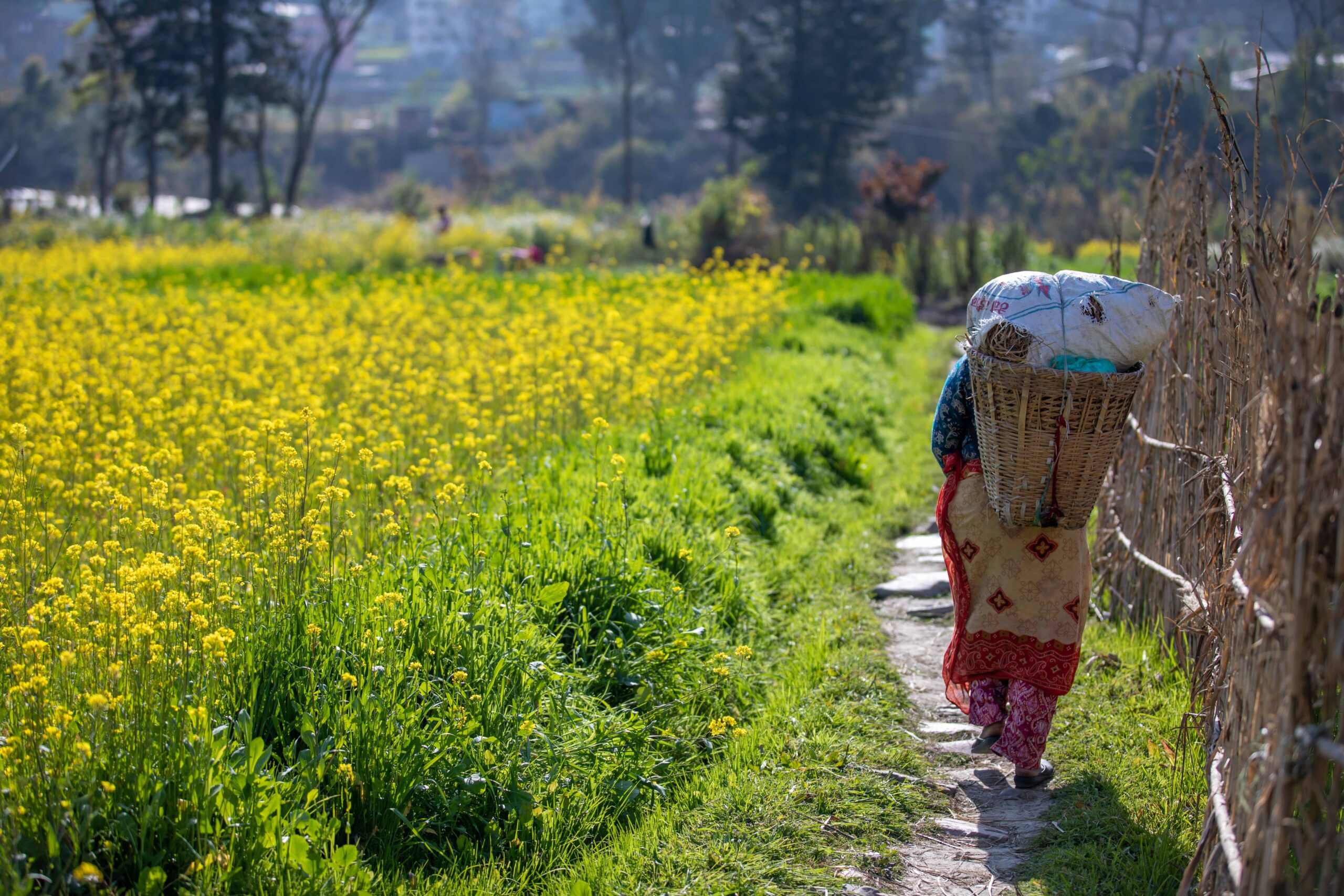
Every winter Nepal's countryside turns yellow with blooming mustard fields — when they bloom, where to see them, and why it's a dream for photography.