

Nepal isn't only a destination for mountaineers with heavy packs. Temples with monkeys running free, elephants and rhinos in the jungle, boat rides on a lake with the snow-capped Himalayas behind it — for a child, these scenes feel closer to a storybook than a tourist checklist. The real question isn't whether Nepal is worth it with kids, but which version of Nepal fits your family.
The answer changes sharply depending on your children's ages and on whether Himalayan trekking is on your mind at all. A family trip through the Kathmandu Valley, Chitwan and Pokhara is an entirely different undertaking from a climb above 3,000 metres with a six-year-old. Both are technically "a trip to Nepal" — but only one of them is built for families.
This guide isn't here to talk you out of it — it's here to help you choose well: ages, pace, a low-altitude itinerary, transport, food, health, rooms, activities kids genuinely enjoy, and — most importantly — when a trek is not the right choice for your family.
Which age works best for Nepal
There's no strictly "off-limits" age for a low-altitude trip to Nepal — babies, toddlers and school-age kids have all made the journey. What changes is what you can realistically enjoy. With a baby or toddler, the trip looks more like a relaxed, cultural experience with plenty of pauses than a schedule packed with activities.
From experience, the age that tends to work best for a first family trip to Nepal is around 5–6 and up: kids can walk without a stroller, they remember the experience, they light up around the animals in Chitwan, and they cope with hours in a car or bus. Teenagers, in turn, can add a gentle low-altitude walk, always with proper preparation beforehand.
The real factor isn't the number on a birth certificate but how that specific child handles heat, a change in diet and long transfers. A lively four-year-old who sleeps easily anywhere may cope better than a six-year-old who struggles with unfamiliar surroundings. Judge by your own child, not by the average.
The right pace: fewer sights, more time
The most common reason a family trip to Nepal wears everyone out is simple: it copies the pace of a fast, adult-only itinerary. With kids, the rule flips — two sights done comfortably beat four done in a rush. Build in midday downtime, especially in the first days, while the family adjusts to the heat and the time difference.
In practice, that means one main sight in the morning, something lighter in the afternoon, and deliberate slack in the schedule for the unexpected — rain, a tired toddler, a moment where the kids just want to play in the hotel garden. Nepal's traffic, noise and smells are thrilling but also genuinely tiring for small children — they need breaks.
A practical gauge: if your itinerary has more than 3 hours of travel on the same day as a major sight, something has to go. Families ask me about this a lot, and I tell them the same thing: Nepal isn't going anywhere, so it's better to see less with a smile than everything with a meltdown.
The low-altitude itinerary that actually works
The classic triangle of Kathmandu – Chitwan – Pokhara is, with very few exceptions, the best route for families: altitude only ranges from roughly 100–200 m in Chitwan to about 1,400 m in the Kathmandu Valley, well below the 2,500 m mark where altitude sickness actually becomes a risk, and every stop offers something different — culture, jungle, lake — without requiring a trekker's fitness.
In practice, a 10 or 12-day version of this logic works better than a packed 7-day trip, since it leaves room for slow days. For the full day-by-day breakdown, with indicative costs and alternatives, see our detailed Nepal itineraries guide — the 10-day classic there is essentially the base you build a family programme on.
If you have fewer days, keep Kathmandu plus either Chitwan or Pokhara — not both in a rush. Kids remember two relaxed days in one place better than one rushed day in three. If you have two weeks or more, there's room to add a very gentle, low-altitude walk near Pokhara, short of a real trek.
Getting around: flight, bus or private car
The Kathmandu–Pokhara transfer is the first decision point. By road it's 6–7+ hours on a winding route — manageable for older kids, tough for babies and small toddlers who can't sit still that long. The domestic flight takes about 25 minutes and, while it costs more, with young children it's often worth the difference — less time strapped in means fewer frayed nerves for everyone.
For transfers within the cities and to Chitwan, a private vehicle with a car seat (if you need one, request it in advance — availability isn't guaranteed) gives far more flexibility than a shared tourist bus, with stops whenever needed.
One practical rule holds throughout the trip: schedule long transfers in the morning, not the afternoon, and don't pack something important right after a long drive. Roads in Nepal move slower than the map distance suggests — always plan realistic, not optimistic, travel times.
Food with kids: what works and what to watch for
Nepali dal bhat (lentils, rice, vegetables, often with a free refill) is freshly cooked, mild and manageable even for fussier young stomachs. Momo (steamed dumplings) are typically a kids' favourite — simple, hot, familiar in taste. In the bigger cities you'll also find Western dishes, pasta and pizza at many tourist-facing restaurants.
The hygiene rule stays the same for kids and adults alike: never tap water, only bottled, boiled or filtered, avoid ice cubes and raw salads washed in tap water. With children, it's worth being extra careful and leaning on fruit you peel yourselves (banana, orange) as a safe, easy snack between meals.
If your child has specific dietary needs or allergies, write them out in English before you leave and show the note at restaurants — English communication can be limited at smaller places outside the major cities. Always pack a couple of reliable snacks from home for travel days.
Health, vaccines and safety for children
Health is where preparation matters most. There are no mandatory vaccines for travellers from Greece, but several are strongly recommended — for children specifically, this needs a conversation with a paediatrician or a travel-medicine clinic, since some vaccines have age restrictions or a different protocol for young kids.
The most important everyday risk isn't some rare illness but ordinary travellers' diarrhoea from water or food — and in children dehydration progresses faster than in adults, so ORS sachets (electrolytes) should be in the bag from day one, not something you go hunting for on the spot. See our full guide to vaccines and health for Nepal for the complete picture before you book your doctor's appointment.
Travel insurance with medical cover is essential for the whole family, regardless of age — check that it explicitly covers children and includes medical repatriation. This guide provides general information and doesn't replace medical advice; the final call on vaccines and medication always belongs to your paediatrician.
Rooms and accommodation: what to ask for
At the larger hotels and lodges in Kathmandu, Pokhara and Chitwan, family rooms or connecting rooms aren't always the default setup — ask explicitly at booking, not at check-in. A crib, extra pillows or an additional mattress often need a heads-up a day or two ahead, especially outside Kathmandu.
In Chitwan, most lodges are built around a garden with space for kids to run — request a ground-floor room if you have a toddler, to avoid stairs with luggage and a stroller. In Pokhara, the Lakeside area offers the widest range of options with easy access to a pedestrian promenade, which is genuinely useful when you want to step out in the evening without needing a car.
One small but useful detail: at smaller properties outside the main tourist hubs, heating and hot water can be limited on cold winter days — if you're travelling then, confirm this before booking, especially with a baby.
Activities kids genuinely love
A safari in Chitwan National Park is, by far, the activity children remember most: a jeep safari among rhinos, a canoe safari past crocodiles basking on the riverbank, and an evening of traditional Tharu dance. It's altitude-free, requires no physical exertion, and comes with a near-certain sighting of wildlife on any given visit.
In Pokhara, a boat ride on Fewa Lake is a simple, calm and safe choice for younger children, while the area's more adrenaline-heavy activities, such as paragliding or the zipline, typically carry a minimum age or weight limit — always confirm directly with the operator before promising anything to your child, since terms change and vary by company.
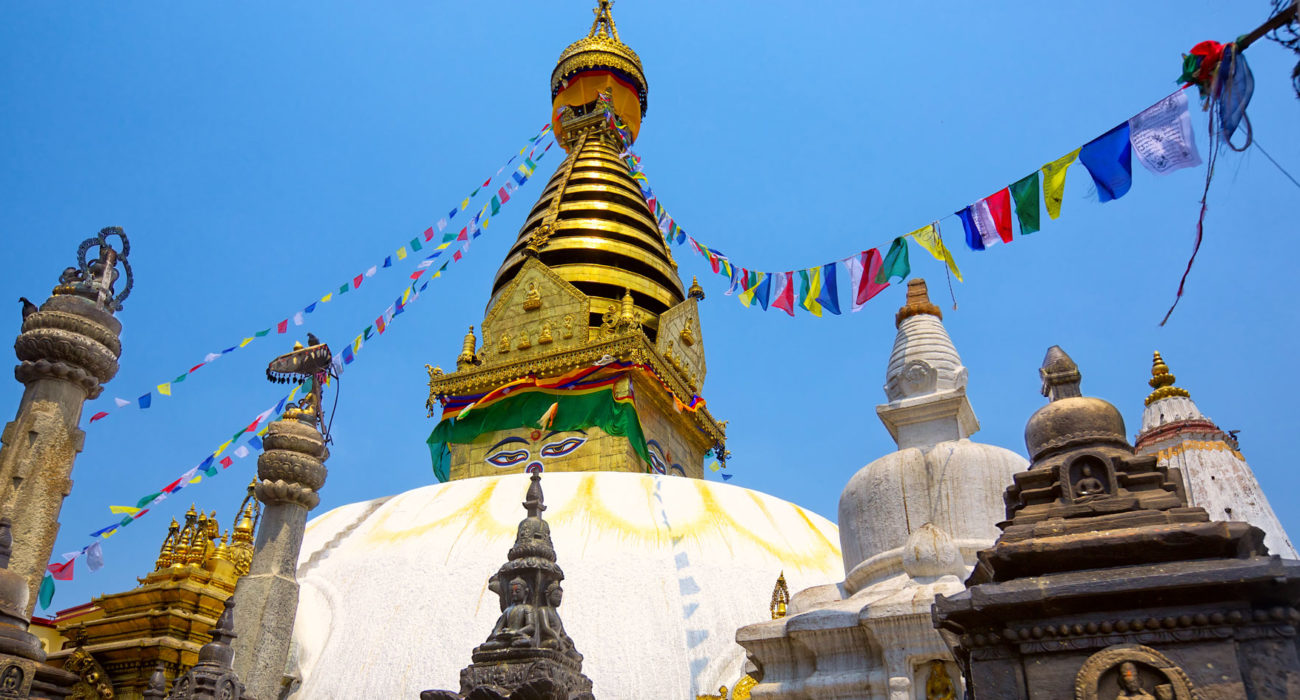
In Kathmandu, kids usually get more excited about the free-roaming monkeys around Swayambhunath (the "Monkey Temple") than about the historical significance of the temples — which is entirely normal. Leave room in the schedule for simple things too: a wander down narrow lanes, an ice cream, some unstructured play in a hotel garden.
Nepal with a baby or a very young child
Travelling to Nepal with a baby is doable, but it calls for a different planning logic: fewer transfers, more days at the same base, and realistic expectations about what you'll actually see. A stroller only works in a few spots — Kathmandu's pavements are uneven and most temples involve steps — so a soft baby carrier is a far more practical choice than a bulky stroller.
Medication, nappies and infant formula in familiar brands aren't always easy to find outside Kathmandu and Pokhara, so the basic strategy is to bring a supply for the whole trip rather than counting on finding it locally. The same applies to a specific milk formula or diaper cream your baby is used to.
Talk to your baby's paediatrician before you leave — about vaccines, about what medication to pack, and about how your baby typically reacts to a change in climate and time zone. It's a conversation worth having well before your flight date.
When trekking is not the right choice
This part calls for honesty: most classic Nepal treks climb above 3,000 metres, where altitude sickness becomes a genuine risk — even the "gentle" Poon Hill reaches 3,210 m. Altitude sickness has nothing to do with fitness and everything to do with the rate of ascent, and in young children symptoms are harder to catch early, since they can't always describe how they feel.
For that reason, a multi-day trek above roughly 2,500–3,000 metres is generally not a good choice for very young children or babies — and for older kids it absolutely requires a pre-trip doctor's visit, a realistic itinerary with acclimatization days, and readiness to descend immediately if a serious symptom appears in any family member.
The good news is you don't have to choose between "Nepal" and "no mountains at all." A short, low-altitude walk near Pokhara offers a genuine first taste of the Himalayas without the risk, while a proper trek can easily wait until the kids are old enough to actually enjoy it — not just endure it.
Checklist before you go
Before you lock in the trip, run through this short checklist — most problems on family trips don't come from bad luck, but from something that could have been planned for in advance.
Keep a copy — paper and digital — of vaccination records, insurance details and key phone numbers (doctor, insurer, hotels, your nepal.gr contact). On a trip with kids, this small bit of organisation makes a real difference if something doesn't go as planned.
- Appointment with a paediatrician or travel-medicine clinic, 4–8 weeks before departure
- Travel insurance with explicit cover for children and medical repatriation
- A low-altitude itinerary (Kathmandu – Chitwan – Pokhara) with a realistic pace and free days
- Room bookings with an explicit request for a crib/connecting room, not an afterthought
- A full-trip supply of medication, ORS, nappies and familiar baby products
- Age/weight limits confirmed directly with the operator for every adrenaline activity
Frequently asked questions
- There's no strict cutoff, but around 5–6 and up tends to make the trip more enjoyable: the child walks without a stroller, remembers the experience, and copes better with transfers. Younger children and babies can travel too, just with a slower pace and fewer transfers.
- A low-altitude itinerary (Kathmandu – Chitwan – Pokhara) is doable with a baby, as long as you keep a slow pace, carry a full supply of medication and baby products, and talk to your paediatrician before departure about vaccines and precautions. Trekking at altitude is not advisable with a baby.
- The classic triangle of Kathmandu – Chitwan – Pokhara, with no altitude and no trekking, is the safest and most rewarding choice. See the detailed 10-day plan in our Nepal itineraries guide and adjust the pace with more restful days built in.
- There are no mandatory vaccines, but several are recommended for children too, with age restrictions that differ from adults. Book an appointment with a paediatrician or travel clinic 4–8 weeks before departure, and don't rely on general information in place of medical advice.
- Older children can join very gentle, low-altitude walks, but classic treks often exceed 3,000 metres, where altitude sickness becomes a real risk and symptoms are harder to spot in kids. A serious multi-day trek is generally better left until they're older.
- Stick to freshly cooked dishes like dal bhat and momo, avoid raw salads washed in tap water, and never drink tap water — only bottled, boiled or filtered. Pack reliable snacks from home for travel days and carry ORS sachets just in case.
- A 10 to 12-day trip works better than a rushed 7 days, since it leaves room for slow days, rest and time to adjust to the heat, especially with young children. If you have less time, cover fewer destinations properly rather than rushing between several in too few days, so the trip stays a good memory rather than an exhausting one.
- A safari in Chitwan National Park is almost always the favourite — rhinos, crocodiles and an evening of Tharu dance, with no altitude or physical demands. In Pokhara, a boat ride on Fewa Lake is a calm choice, while more intense activities usually carry age limits you'll need to confirm.
Keep reading
Related articles
 Articles
The biggest help you can give Nepal is to visit
On 26 August 2026 a piece of mountain turned into water and took villages, bridges and more than a thousand lives with it. I have lived here for fifteen years. Here is what happened, what is open, how you can help today, and why your trip in October is the biggest help of all.
 Travel
Nepal – On Top of the World | 10 Days, 8 Nights
Our 10-day / 8-night group tour of Nepal — Kathmandu, Chitwan and Pokhara — with a Greek-speaking host and a full day-by-day itinerary.
 Travel
Nepal Itineraries: Ready-Made 7, 10, 14 & 21-Day Plans
Ready-made Nepal itineraries, day by day: a 7-day cultural trip, a 10-day classic with Chitwan, a 14-day plan with a trek, and a 21-day adventure with Everest Base Camp. With practical tips and links to every destination guide.