Nepal is one of the safest and most rewarding trips you can take — as long as you approach the health side with a little preparation. The good news is that there are no mandatory vaccines for European travellers going to Nepal. The realistic news is that a few vaccines are strongly recommended, tap water is undrinkable everywhere, and travellers' diarrhoea is by far the most common problem you'll face. With the right moves, all of this is entirely manageable.
Important note: This guide provides general, informational content and is not medical advice. Your vaccine and medication needs depend on your medical history, age, and the length and nature of your trip. Book an appointment at a travel-medicine clinic 4–8 weeks before departure and follow your doctor's instructions.
This guide is part of our practical Nepal travel guide and complements our detailed guide to altitude sickness, which is the most critical health topic if you plan to go high.
Before you go: the travel-clinic appointment
The single most important health move happens at home, before you even board the plane. Book an appointment at a travel-medicine clinic 4 to 8 weeks in advance. The reason is simple: some vaccines (rabies, hepatitis B) require more than one dose spread over weeks to protect you fully. If you only have a few days left, go anyway — even a single dose offers partial protection, and the doctor will adjust the schedule.
Bring your vaccination record to the appointment. The doctor will check what you already have (tetanus, measles, polio), suggest what's missing, and prescribe your "travel" medications — typically an antibiotic for diarrhoea and, if you're heading high, Diamox for altitude. Cost-wise, a session with the core vaccines usually runs around €100–250 depending on what you need; a full rabies course raises the total.
Vaccines for Nepal: what's recommended
We split vaccines into three groups: the routine ones (everyone should have them, regardless of travel), those recommended for Nepal, and the conditional ones that depend on where you go and how long you stay.
| Vaccine | Category | Who it's for | Note |
|---|---|---|---|
| Tetanus / Diphtheria (Td/Tdap) | Routine | Everyone | Booster if it's been 10 years |
| Measles–Mumps–Rubella (MMR) | Routine | Everyone | Two lifetime doses; measles circulates in the region |
| Polio | Routine | Everyone | Booster if needed |
| Hepatitis A | Recommended | Almost everyone | Spread by contaminated water/food — the number-one risk |
| Typhoid | Recommended | Almost everyone | Also from water/food; injectable or oral |
| Hepatitis B | Conditional | Long stays, medical procedures, tattoos | Many already have it from childhood |
| Rabies | Conditional | Trekkers, remote areas, animal contact | Many strays & monkeys; see below |
| Japanese encephalitis (JE) | Conditional | Long stays in the Terai (southern plain) in summer/monsoon | Mosquito-borne; rare for a classic tourist itinerary |
| Yellow fever | On requirement only | Those arriving from an endemic country | Not present in Nepal — see below |
The two vaccines your doctor will almost certainly recommend
Hepatitis A and typhoid are the two "constants" for Nepal. Both spread through contaminated water or food — exactly the risk you live with daily in a country with basic food hygiene. Hepatitis A is typically given in two doses (the second at 6–12 months) and protects for years; even a single dose covers your trip. Typhoid comes as an injection (one dose, ~3 years' protection) or as oral capsules.
Rabies: the "question-mark" vaccine
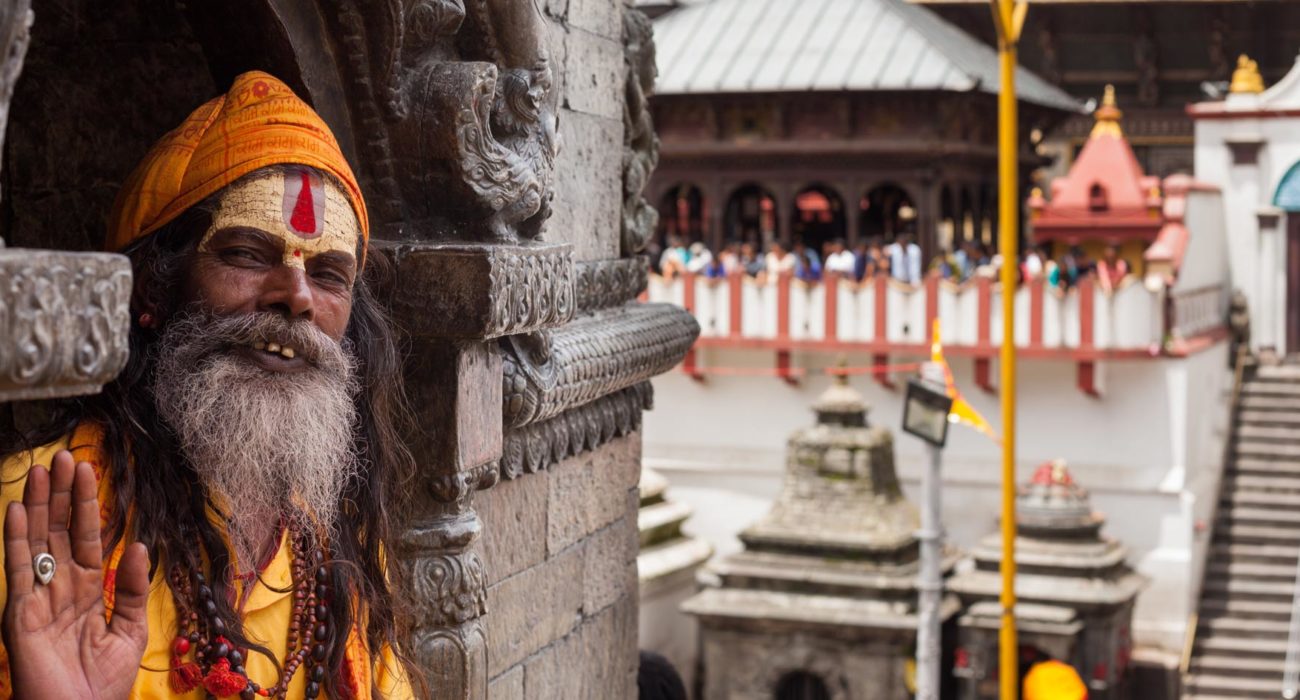
Rabies deserves a separate word, because Nepal has many stray dogs and bold monkeys (especially around temples like Swayambhunath and Pashupatinath). The vaccine doesn't make you "invincible": after any bite or scratch you absolutely still need medical care. What the pre-exposure dose does is buy you precious time (you need fewer, simpler injections after exposure, without the immunoglobulin that's often hard to find in the mountains). For trekkers on remote routes, where the nearest hospital is days away, pre-exposure rabies is a sensible investment. Rule: whatever you do, don't touch stray animals or monkeys.
Yellow fever: what actually applies
Yellow fever doesn't exist in Nepal, so you don't need the vaccine for your own protection. The catch is different: Nepal requires proof of vaccination only if you arrive from a country where the virus is endemic (parts of sub-Saharan Africa and tropical South America). If you fly from Athens with a layover in Istanbul, Doha, Abu Dhabi or Delhi, it doesn't apply to you. But if your route passes through such a country, carry the yellow international certificate.
Water: the most important health rule in Nepal
If you keep only one thing from this guide, let it be this: never drink tap water in Nepal — not in Kathmandu, not in hotels, not in the mountains. Water is the main source of travellers' diarrhoea, hepatitis A and typhoid. Your safe options:
- Bottled water — cheap and everywhere (NPR 20–50 / ~€0.15–0.35 in town, pricier high in the mountains). Check the cap is sealed.
- Boiled water — completely safe. Teahouses sell boiled water.
- Filter or chemical treatment — chlorine/iodine tablets, drops, or a SteriPen/LifeStraw-type filter. The most eco-friendly option for the mountains, as it cuts down on plastic bottles.
Easily forgotten practical details: avoid ice cubes in drinks (made from tap water), brush your teeth with safe water, and prefer hot beverages (tea) that have been boiled. The local masala tea is your friend.
Food: how to eat well without getting sick
Food in Nepal is delicious and a big part of the experience — no need to be afraid, just selective. The travel doctors' golden rule is: "Boil it, cook it, peel it — or forget it."
- Prefer food served hot and freshly cooked. Dal bhat (lentils, rice, vegetables) is ideal: cooked, nutritious, fresh and with free refills. There's a reason it's every trekker's choice.
- Be cautious with raw salads and vegetables washed in tap water. Fruit you peel yourself (banana, orange) is safe.
- With street food, pick busy stalls where the food is cooked in front of you. Momo (steamed dumplings) served piping hot are usually fine.
- Meat: at high altitude the cold chain is unreliable — many trekkers go vegetarian for the trek days. Dal bhat does the job.
- Avoid unpasteurised dairy and anything left standing at room temperature.
Travellers' diarrhoea: what to do if you catch it
Let's be realistic: despite precautions, a good share of travellers "get it" at some point. It's not a disaster — it's manageable. The plan:
- Hydrate, hydrate, hydrate. The real danger of diarrhoea is dehydration. Carry ORS sachets (electrolyte salts) — you'll also find them cheaply at any Nepali pharmacy.
- Loperamide (Imodium-type) to "stop" it temporarily — useful for a bus day or a walk, not to ignore the problem.
- Antibiotic (typically azithromycin) prescribed by your doctor: if the diarrhoea is severe, with fever or blood, start it as directed.
- Rest and a bland diet (rice, banana, crackers, boiled potatoes).
See a doctor if symptoms last more than 2–3 days, if there's high fever, blood in the stool, or signs of serious dehydration.
The travel medical kit
In the cities, Nepal's pharmacies are everywhere and cheap (many medicines without a prescription), but in the mountains and countryside you'll find nothing. Prepare a small, targeted kit. See also our guide on what to pack for Nepal for the rest of your gear.
| Category | What to bring |
|---|---|
| Stomach | ORS (electrolytes), loperamide, diarrhoea antibiotic (on prescription), antacids |
| Pain & fever | Paracetamol, ibuprofen |
| Altitude | Diamox (if your doctor approves), see the altitude-sickness guide |
| Wounds | Plasters, gauze, antiseptic, blister tape (Compeed), antibiotic ointment |
| Other | Antihistamine, SPF50+ sunscreen, lip balm, insect repellent (DEET), personal medication in sufficient quantity |
Tip: keep your personal medication in your carry-on, in its original packaging with the prescription, and pack a little extra in case of delays.
Altitude sickness: the top health topic in the mountains
If your trip includes trekking in the Himalayas above 2,500 metres, altitude sickness is the most important health risk — more serious than any microbe. It has nothing to do with your fitness; it has everything to do with your rate of ascent. The key rule is not to raise your sleeping altitude by more than 300–500 m per day above 3,000 m, and to descend immediately at the first serious symptom.
Because it's so critical, we cover it in a dedicated guide: read everything about altitude sickness in the Himalayas — symptoms, the role of Diamox, when to descend, and the risk on each trek.
Medical care in Kathmandu and Pokhara
For the region, medical care in the two big cities is decent — especially for travellers.
- Kathmandu: There are specialised travel-medicine clinics to international standards, such as the historic CIWEC Clinic and the Nepal International Clinic, where staff speak English and know travel problems well (diarrhoea, altitude, bites). For more serious cases, private hospitals like Grande and Norvic.
- Pokhara: There's also a CIWEC branch and decent hospitals — handy, since Pokhara is the base for the Annapurna treks.
- Pharmacies: plentiful and cheap in the cities; many medicines available without a prescription. Always check the expiry date and packaging.
The big gap is outside the cities: in the mountains and countryside, care is basic, medicines are scarce, and the nearest serious hospital may be a day away by road or a helicopter flight. That is exactly why insurance is not a luxury.
Travel insurance: the most important "vaccine"
No dose protects you as much as proper travel insurance. For Nepal, your policy must explicitly cover three things:
- Trekking to your trip's maximum altitude. Many cheap policies stop at 3,000 or 4,000 m. For Everest Base Camp you need cover to 5,500 m or even 6,000 m. Read the fine print.
- Helicopter evacuation. A Himalayan rescue typically costs 4,000–10,000 USD. Without insurance, the helicopter often won't take off until payment is secured.
- Medical repatriation for serious cases requiring transport.
The cost of a good policy with altitude cover is small against the risk — typically a few dozen euros for two weeks. It is, without exaggeration, the most important purchase of your trip.
Other health risks — and how to handle them
- Mosquitoes in the Terai: In the southern plain (Chitwan, Lumbini, low altitudes) there are mosquito-borne diseases — dengue fever and, more rarely, Japanese encephalitis, while malaria is low-risk and limited. In the high mountains there are no mosquitoes. Protection: DEET repellent, long clothing at dusk, a mosquito net where needed.
- Sun & UV: At altitude the sun "burns" far more strongly. SPF50+ sunscreen, UV-protective sunglasses (snow blindness) and a hat are essential.
- Air pollution: Kathmandu has dust and exhaust fumes; asthmatics should carry their medication and perhaps a mask.
- Heat & cold: The plain is hot and humid, the mountains freezing at night. Layering solves the problem — see the gear guide.
Pre-departure health checklist
- Travel-clinic appointment, 4–8 weeks before.
- Vaccines: hepatitis A + typhoid (and case by case rabies, hepatitis B, JE); tetanus check.
- Prescriptions: diarrhoea antibiotic and Diamox (if going high), personal medication in sufficient quantity.
- Travel medical kit prepared — ORS, painkillers, wound supplies.
- Travel insurance with altitude + helicopter cover, checked line by line.
- Water strategy: bottled/boiled/filtered — never tap.
How we look after it on a guided trip
Health preparation doesn't have to stress you out. On our organised trips we send you a detailed list of recommended vaccines and medical-kit items well in advance, our guides are first-aid trained and carry a kit and an oximeter, and itineraries are designed with a safe acclimatisation pace. For those who want the highest level of care — a private guide, medical support and priority on helicopter evacuation — Elysian Himalaya offers premium versions of the classic trips, where safety and health are engineered down to the last detail.
With a little preparation, an appointment with your doctor and the simple rule "never tap water", Nepal is an exceptionally safe destination. Your health shouldn't hold you back — it just needs planning. Remember: this guide is informational; the final word always belongs to your doctor.
Gallery
Frequently asked questions
- There are no mandatory vaccines for EU travellers. Hepatitis A and typhoid are recommended, along with up-to-date tetanus/diphtheria, and — case by case — hepatitis B, rabies and Japanese encephalitis. Book a travel-clinic appointment 4–8 weeks before you leave.
- No, not if you're coming from Greece or Europe — there is no yellow fever in Nepal. Proof of vaccination is required only if you arrive from a country where the virus is endemic (parts of Africa and South America).
- No, never. Drink only bottled, boiled or filtered/chemically treated water, avoid ice cubes, and brush your teeth with safe water. Contaminated water is the number-one cause of travellers' diarrhoea.
- Recommended case by case: for trekkers in remote areas, long stays, or anyone in contact with animals. Stray dogs and monkeys are common in Nepal. Even if vaccinated, you still need medical care after a bite.
- Yes, for the region. Kathmandu has specialised travel-medicine clinics (e.g. CIWEC, Nepal International Clinic) and private hospitals; Pokhara has a clinic too. In the mountains and countryside, however, care is basic — which is why insurance with helicopter evacuation is essential.
- Ideally 4–8 weeks before departure. Some vaccines (rabies, hepatitis B) need more than one dose spread over weeks. If you only have a few days left, go anyway — even a single dose offers protection.
Keep reading
Related articles
 Articles
The biggest help you can give Nepal is to visit
On 26 August 2026 a piece of mountain turned into water and took villages, bridges and more than a thousand lives with it. I have lived here for fifteen years. Here is what happened, what is open, how you can help today, and why your trip in October is the biggest help of all.
 Info
InfoWhat Is the Climate Like in Nepal?
Everything about Nepal's climate — four seasons, three climate zones, temperatures by region and when the sky is clear for the Himalayas.
 Info
InfoThe Best Time to Visit Nepal
When should you travel to Nepal? A decision guide by activity — trekking, safari, culture — with a table, crowds, prices and festivals.