

When someone writes to me, "I'd love to go to Nepal, but I'm not up for mountains any more," I usually hear a half apology in it. There's no need. Nepal is not only trekking. It is temples, squares, living neighbourhoods, lakes, jungle and views of the Himalayas even from a hotel balcony. A trip for older travellers isn't a smaller trip. It is a trip planned differently.
The hard part isn't the country, it's the details: uneven pavements, lots of steps at temples, long hours on the road, domestic flights that shift with the weather. All of it can be handled if you think it through before booking and not once you're there. This article shows how to build a gentle itinerary, without luxury excess but also without hardship.
Your doctor decides on matters of health. If you'd like to see ready-made plans first, take a look at the Nepal itineraries and come back here for the gentler filter.
What a "gentle" trip to Nepal really means
Gentle doesn't mean dull or limited. It means each day has one main thing to see and not four, that transfers are comfortable and predictable, and that there's time for coffee, for a midday rest, for simply sitting in a square watching people go by. In Nepal this makes all the difference, because the country keeps pulling you toward something new.
It also means you choose where to spend your effort. You may want to see sunrise over the mountains without walking for hours. You may want the temples but not all the steps. All of this fits, as long as the plan is built around you and not around a ready-made list of sights.
My personal observation, from what I've seen on the ground: the travellers who do best are not the fittest, but the ones who accept from the start that they'll go slower. When the pace is right, Nepal becomes far more generous.
Pace: fewer places, more time
The most common planning mistake is cramming many places into few days. On the map Nepal's distances look small, but the roads are slow and delays are frequent. For a comfortable trip I suggest two or three bases at most, with two or three nights in each, so you aren't packing every morning.
Keep one "heavy" activity a day, preferably in the morning when the air is clearer and the city quieter. Afternoons are for rest, for a light stroll, or for something done sitting down, such as a boat ride or tea with a view. If the length of your trip allows, one entire free day in the middle works like insurance: if something changes, the rest of the plan survives.
The table below shows a sensible flow, not a rigid programme. It adapts to the days you have and the season.
| Phase of the trip | What you do | Why it works |
|---|---|---|
| Arrival in Kathmandu | Rest, a gentle walk near the hotel | Your body needs time after the journey and the time difference |
| Kathmandu Valley | One major visit a day, with a private vehicle, driver and guide | Culture without long walks between sites |
| Transfer to Pokhara | Morning transfer, calm afternoon by the lake | You avoid rushed changes and fatigue |
| Free day | No scheduled activity | A reserve day for weather or tiredness |
| Return and departure | Nothing important on the day of the flight | Flights shift and need a margin |
Stairs, pavements and the reality of the monuments
Let me say it plainly: Nepal isn't designed for easy access. Many temples sit on high platforms, squares have uneven paving, and in old neighbourhoods walking needs attention to your feet. That doesn't mean you lose the monuments. It means you choose which ones to see up close and which to enjoy from their base.
The solution is to ask beforehand about each site: how many steps, how close can the vehicle get, is there somewhere to sit? A good guide knows this by heart and suggests the route with the least effort. In quite a few places the atmosphere comes across better from a square with a coffee than from the top of a temple.
Wear steady, non-slip shoes, even if you only plan strolls. At many temples you take shoes off at the entrance, so socks that are easy to put on help, as does a small spot to sit. A walking stick or a light folding pole helps many people, but try it at home first.
Transfers: private vehicle and sensible flights
If there's one area where it's worth giving more, it's transport. A private vehicle with an experienced driver lets you stop when you need to, get out close to the entrance, and avoid waiting for crowded buses. On Nepal's roads, with their bends and trucks, the difference in comfort is large.
For Kathmandu to Pokhara, think about the flight. A domestic flight saves many hours on the road, but it depends on the weather, so don't plan anything important right after it. If you prefer the road, ask for an early start, a private vehicle and plenty of stops. In the same spirit, don't treat Chitwan as a long transfer without rest: if it fits, give it two nights.
Timetables and flight schedules change and need confirming before the trip. I always prefer to have an alternative and a spare day before the return flight.
Altitude: where care is needed and where it isn't
The Kathmandu Valley sits fairly high, but most travellers cope with it without trouble. Pokhara and Chitwan are lower, and Chitwan lies on the low Terai plain. A cultural itinerary built on these places doesn't involve the real altitude challenge of treks.
Even so, some lovely viewpoints are higher, and some routes climb quickly by vehicle. If you're considering something like that, first read the guide to altitude sickness, and talk to your doctor if you have a heart, breathing or other health condition. The doctor is the one who can say what suits you.
If you want the Himalayas without gaining height, there's the combination of views from Pokhara, short scenic flights or calm sunrises from spots reached by vehicle. The point is that you're never forced to climb fast, and you keep room to change the plan.
Accommodation: comfort without luxury excess
You don't need five stars, but some things aren't negotiable. A lift or a ground-floor room, a clean bathroom with reliable hot water, a good mattress, a quiet location and vehicle access to the door. In Kathmandu, Thamel is lively but noisy; a quieter neighbourhood with a short ride in is often worth more.
In Pokhara, ask about distance from the lake and the slope of the road. In Chitwan, choose a lodge with few steps and well-organised activities, because programmes there start early. On hot days, ask about air conditioning or a fan, and whether the place has a backup power supply for any power cuts.
The cost of accommodation rises with season, location and level of service. I won't name figures here because they change. My advice: if you have to cut somewhere, don't cut on the quiet of the room and on accessibility.
Season: when Nepal is friendliest
For a comfortable trip the season counts twice. Autumn and spring have the steadiest weather and clear views, but also more people. Winter is excellent for culture and safari at low altitude, with quieter streets, though mornings and evenings can be cool and accommodation isn't always well heated.
The monsoon is the hardest period for travel and flights, with rain affecting roads and views. For the full picture by activity, see our guide to the best time to travel to Nepal.
One detail that's often overlooked: the big festivals are wonderful but fill roads and buses, and some shops close. If pace is the priority, you may prefer quieter days.
Cultural experiences that don't tire you
Nepal suits people who love culture, because its best moments happen at a low pace. Watching worshippers circle a stupa in the morning, a cooking class done seated, a visit to a craft workshop, a quiet moment in a monastery: none of these demands physical effort, only attention.
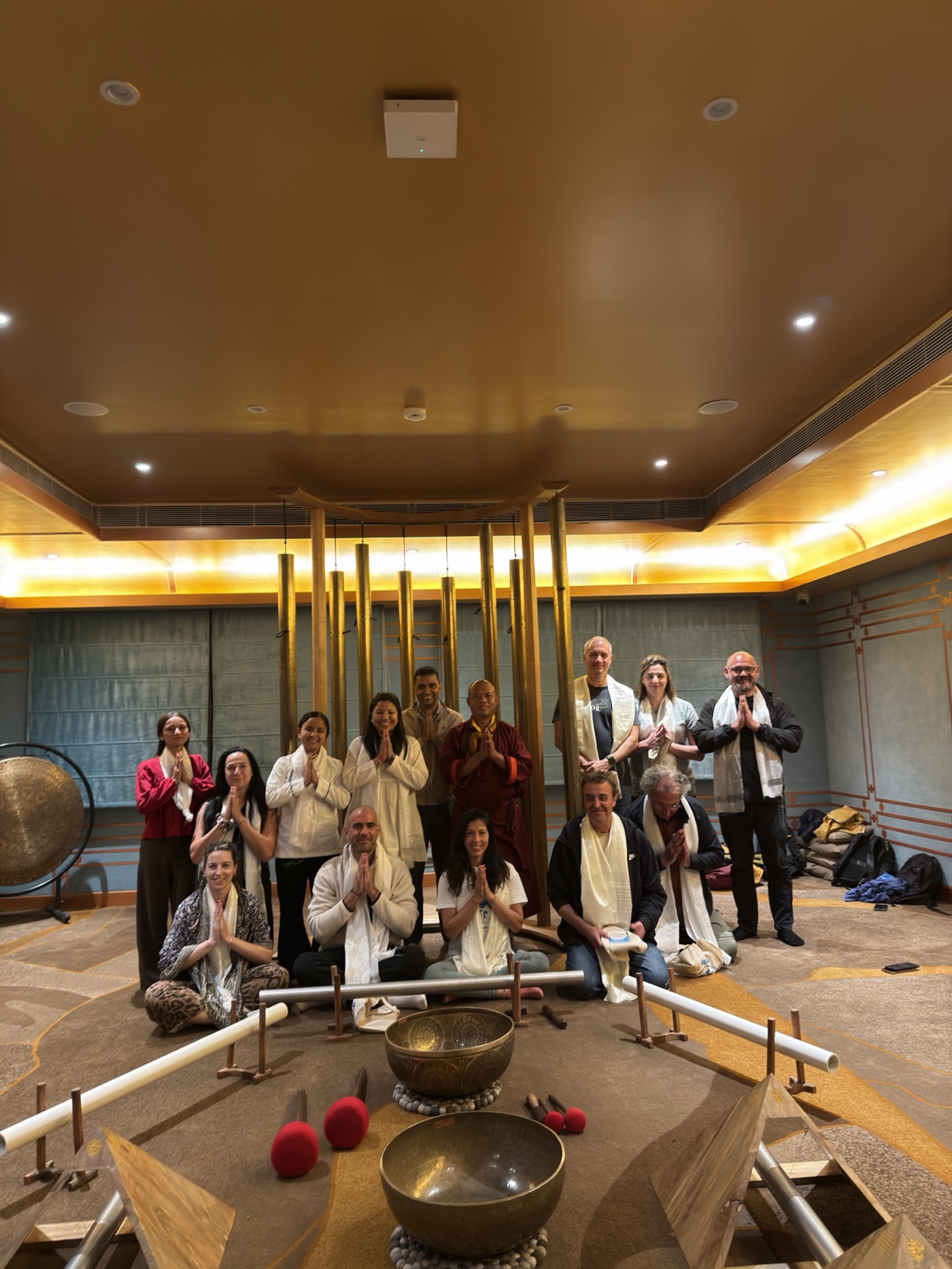
You can also include wellbeing experiences such as gentle yoga, meditation or a relaxing singing-bowl sound session, as long as you treat them as pleasant rest and not as treatment.
At monuments, put the quality of the moment first. One temple seen at your own pace with a good guide will stay in your memory longer than five seen in a hurry. And keep time for people: a conversation with a local is often the best moment of all.
Health, insurance and preparation
Before booking, have a conversation with your doctor and ask about vaccinations, medication and whether the trip suits your condition. Bring your medicines in sufficient quantity, with the prescription and a list in English.
Travel insurance is essential. Check carefully what it covers for medical care, repatriation and anything to do with altitude, especially if your plan includes higher points. For visas, fees and regulations, always confirm with official sources before travelling, because they change.
In the bag, mind the basics: sunscreen, a hat, hand sanitiser, a light jacket for mornings and evenings, and shoes you've already worn in. One last tip: drink clean bottled water and start gently over the first days.
Cost, and how to ask for a plan that fits you
I won't write figures, because that wouldn't be honest. The price of a trip like this is shaped per trip. It goes up with season, private vehicles, domestic flights, a private guide, more comfortable accommodation and more nights in each base. It goes down with flexible dates, fewer destinations and simpler lodging outside peak season.
The place worth giving more is comfort in transfers and quiet in the room. That's where a trip is either enjoyed or endured. If you want something more complete, with a private guide and selected stays, Elysian Himalaya is our premium partnership for tailor-made journeys.
If you want a concrete picture, send us your days, your season and what worries you. Ask us for a quote and we'll suggest a plan with a pace that suits you, without promises that can't be kept.
Keep reading
Related articles
 Articles
The biggest help you can give Nepal is to visit
On 26 August 2026 a piece of mountain turned into water and took villages, bridges and more than a thousand lives with it. I have lived here for fifteen years. Here is what happened, what is open, how you can help today, and why your trip in October is the biggest help of all.
 Travel
Nepal – On Top of the World | 10 Days, 8 Nights
Our 10-day / 8-night group tour of Nepal — Kathmandu, Chitwan and Pokhara — with a Greek-speaking host and a full day-by-day itinerary.
 Travel
Nepal Itineraries: Ready-Made 7, 10, 14 & 21-Day Plans
Ready-made Nepal itineraries, day by day: a 7-day cultural trip, a 10-day classic with Chitwan, a 14-day plan with a trek, and a 21-day adventure with Everest Base Camp. With practical tips and links to every destination guide.