

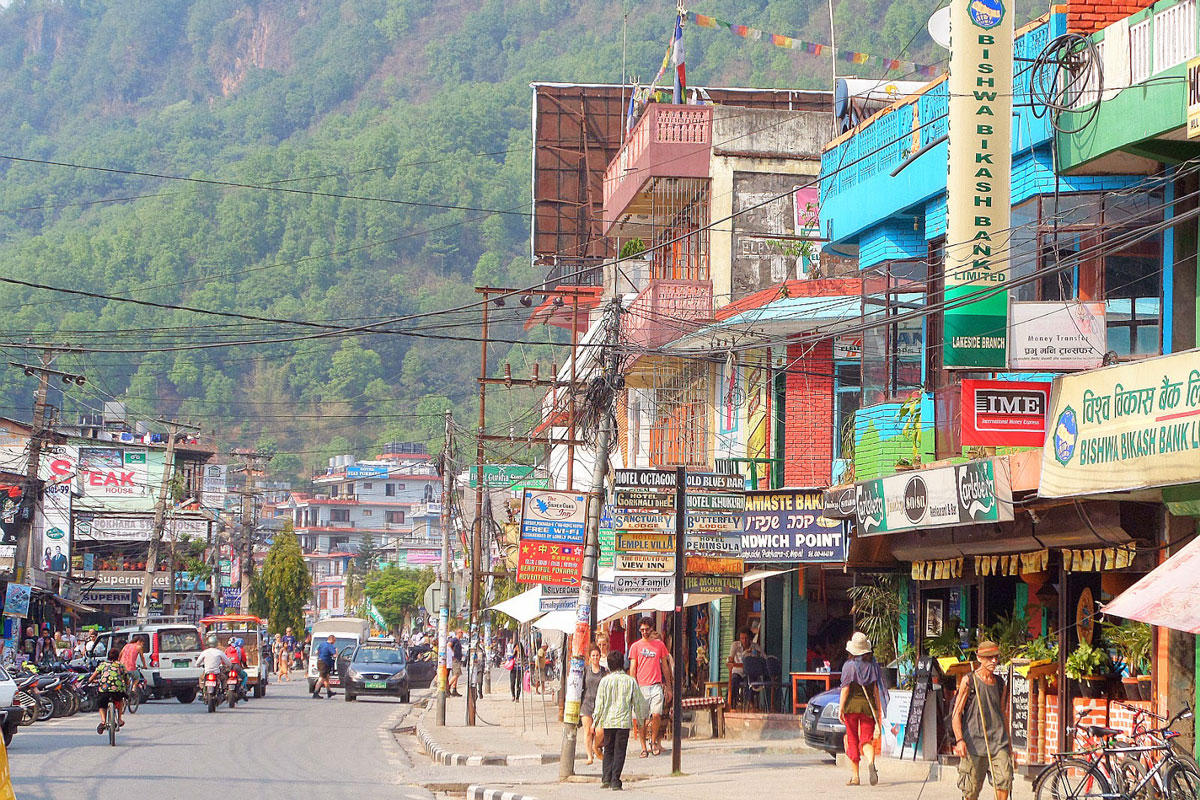
No decision on this route feels as simple right now as it did before the summer of 2026, and the clearest example is the classic Kathmandu–Pokhara transfer. It used to be a purely personal call — save time, or watch the scenery roll by from a car window. Now there's a third factor that has nothing to do with preference: what's actually available on the day you travel.
As of 5 September 2026, Nepal's domestic flights, including the Kathmandu–Pokhara route, are running normally without any interruption. The Prithvi Highway, by contrast, remains closed at one specific point, Krishnabhir, where a stretch of the roadbed subsided. This isn't a matter of taste at the moment — it's a matter of what's actually available.
This article walks through how the choice looks today, what the road closure means for planning a travel day, when flying is clearly the better call, what to do if your flight is delayed or cancelled, and how all of this connects with your arrival at Tribhuvan airport. Everything about what's open, where there's disruption and how much delay it adds comes solely from the living article on the situation in Nepal, which is updated as things develop — that's where you'll always find the most current picture, more current than anything this article can promise you.
The situation on the ground, right now
The Prithvi Highway is the main road link between Kathmandu and Pokhara, a route of roughly 200 kilometres. At Krishnabhir, the Trishuli river undercut the base of the slope and about 200 metres of road subsided completely. This isn't an ordinary small-scale landslide that clears in a day or two; it's the loss of the roadbed itself at a pinch point on the route.
Since 4 September the Department of Roads has been cutting a temporary 350-metre track into the hillside above the collapsed section. The site manager has estimated 7 to 10 days, and the government has set a target of reopening within September. Both are site estimates, not binding dates.
Until the reopening is officially announced, the road counts as closed, and traffic is being diverted to alternative routes. Nepal Police is also advising against non-essential long-distance travel more broadly. The most sensible thing you can do is not build your plans around a reopening date, however that target has been described by an official body.
Why flying is the obvious choice at the moment
With the road closed, flying isn't just the more comfortable option — right now it's the only reliable one. Domestic flights to Pokhara are running normally, without interruption, and the route takes about 25 minutes, against several hours by road under normal conditions — and longer still at the moment, with traffic diverted onto alternative routes.
The view from the window, when the sky is clear, is reason enough on its own to prefer flying even when the road is fully open: you see the Annapurna range unfold beneath you, something no road trip offers. Right now, that advantage comes with the added certainty that you won't end up stuck in a diversion of unknown length.
You won't find airline names, departure times or fares in this article — those change often and are handled by your local agency depending on the season and availability. If you want to see what it actually costs for your own trip, the right move is to ask us for a quote, so you get a figure shaped around your dates rather than a generic price that may already be out of date.
What the road closure means for planning a travel day
Even if the road does officially reopen in the coming weeks, that doesn't automatically mean 'normal traffic' from day one. A 350-metre stretch cut hastily into a hillside, above a collapsed section of road, doesn't carry the same capacity as the old highway — it's quite likely there will be one-way alternating traffic, time-of-day restrictions or queuing delays in the first weeks.
If you're planning a day around a fixed schedule — a flight connection, a guided tour, the start of a trek — don't build it around an overland Kathmandu–Pokhara transfer before you've confirmed not just that the road has opened, but that it's running without serious delays. Ask your local agency the day before, not a week ahead, because the picture can shift within a few days.
I've seen this pattern before: whenever a major highway in Nepal closes temporarily, the first days after it 'reopens' often run slower than the announcement suggests — I've watched it happen repeatedly with smaller-scale closures over the years. It's better to treat any reopening announcement as the start of an adjustment period, not as an overnight return to normal.
When flying is clearly worth it
Beyond the current state of the road, there are cases where flying is the better choice no matter what happens with the Prithvi Highway. If your total time in Nepal is short, every hour spent on a road is an hour you don't get in Pokhara, on a trek, or in Chitwan.
It's not only about the current state of the road. Even under normal conditions, flying saves time and energy you can put to better use in Pokhara or on a trek, especially if your itinerary already involves several transfers within a few days.
- You have a tight schedule and need to connect your arrival in Pokhara with a flight onward to a mountain destination, or with the start of a trek the same or the next day.
- You're travelling with children, older travellers, or anyone who struggles with long overland transfers.
- You want the Himalayan view from the air without waiting for a clear day at a ground-level viewpoint.
- You're travelling during a period when the road, even when open, is carrying heavier traffic or temporary restrictions from ongoing works.
When the road will be worth it again
Once the Prithvi Highway reopens properly — something that will be confirmed officially, not by rumour or site estimates — the overland route has advantages a flight doesn't. You pass through the Trishuli river valley, with the option to stop for a meal or an activity in one of the villages along the way.
It's also the only realistic option if you're carrying a lot of luggage, travelling with a group that wants flexibility for stops, or simply prefer to watch the landscape change gradually, from the Kathmandu valley all the way to the shores of Fewa Lake.
Until there's an official reopening announcement, though, there's no point building your plans around that scenario. If you're travelling in the coming weeks, ask your agency or check the living article on the situation in Nepal shortly before you leave Greece, not at the moment you booked your trip.
What to do if your flight is delayed or cancelled
Domestic flights between Kathmandu and Pokhara are weather-sensitive, particularly around visibility near the mountains, regardless of the current state of the road. Morning delays or cancellations because of fog or low cloud aren't unusual, especially in the transition from monsoon into autumn.
The simplest way to protect yourself is not to book tight same-day connections — avoid, where you can, scheduling a morning flight and the start of a trek or activity that same afternoon. A one-day buffer in Pokhara, before or after the flight, absorbs most delays without derailing the rest of your itinerary.
If your flight ends up cancelled for days rather than hours, don't automatically treat the road as a backup at the moment — the Prithvi Highway is closed at Krishnabhir, not just slow. The right move is to contact your local agency, check the next available flights and, if needed, rearrange your schedule in Pokhara or Kathmandu for the days you're waiting.
How this connects with your Tribhuvan arrival
If you're arriving from Greece with a connecting stop, you'll land first at Tribhuvan International Airport in Kathmandu, as we describe in detail in the guide to arriving at Kathmandu airport. The flight to Pokhara leaves from the domestic terminal of the same airport, a separate building a short transfer away, so allow time for the visa, baggage and the transfer between the two sections.
If you're planning to fly on to Pokhara the same day as your international arrival, leave a generous margin — at least a few hours, more if you're landing after a long journey. The visa process and passport control can take longer than you'd expect, especially at a busy hour with several flights landing together.
Most travellers prefer to spend the first night in Kathmandu, rest, and fly to Pokhara the next day at an easier pace. That way you're not building the entire first 24 hours of your trip around one tight connection.
A practical booking timeline
Because domestic flights are running normally, you don't need to book months ahead for availability the way you might for your international flight — but during a higher-demand period like autumn, it's still worth not leaving the booking to the last minute.
If you're travelling with an organised itinerary or a local agency, the most practical approach is to leave the flight-or-road choice open until a few days before, so the agency can adapt to the current situation instead of locking it in early based on outdated information.
Cost is shaped around each trip, depending on your dates, group size and whether you need extra flexibility because of the current situation. If you want to see what it works out to for your own plans, ask us for a quote and we'll come back with figures shaped around your actual dates.
What to confirm before you leave home
None of the following is stable for months — it shifts week to week as the work at Krishnabhir progresses.
The simplest approach is to keep a short checklist and run through it a few days before you leave, not the moment you booked your tickets. Most changes will reach you through your local agency, but it's worth asking directly if you haven't heard anything close to departure.
- The status of the Prithvi Highway, close to your departure date rather than when you booked your trip — see the living article on the situation in Nepal.
- Whether your domestic flight to Pokhara has any changes or delays, through your local agency.
- If you're planning to continue the same day from Pokhara to a trek or other activity, that there's enough margin built in.
- Any current advisories from Nepal Police or the authorities about long-distance travel at the time.
Pokhara and Kathmandu in your plan
Whichever transfer you choose, it's worth knowing what's waiting for you at both ends of the route. Pokhara is running normally — hotels, activities and the gateway to Annapurna are all open, as we describe in the guide to Pokhara.
Kathmandu, meanwhile, deserves its own time before or after Pokhara — the UNESCO sites, temples and squares of the old city were unaffected by the situation in Rasuwa, as covered in the guide to Kathmandu.
The flight-or-road decision is, in the end, just one piece of a trip that's running normally at both ends. Don't let one closed stretch of road unsettle you — adapt how you get there, not where you're going.
Frequently asked questions
- By air. As of 5 September 2026, domestic flights are running normally and the route takes about 25 minutes, while the Prithvi Highway remains closed at Krishnabhir. Before booking anything by road, confirm the current status through the living article on the situation in Nepal, since the picture keeps changing as the repair work progresses.
- There's no official date. The site manager at Krishnabhir has estimated 7 to 10 days for the temporary track, and the government is targeting reopening within September, but until there's an official announcement the road counts as closed. Always confirm the latest status shortly before you travel.
- Flights to Pokhara are weather-sensitive regardless of the road situation, especially in the morning because of fog or low cloud around the mountains. Build a one-day buffer into your schedule before or after the flight, and avoid tight same-day connections, so a delay doesn't derail the rest of your trip.
- Not at the moment. The Prithvi Highway is closed at Krishnabhir, not just slow, so it isn't a realistic backup for the coming weeks. If your flight is cancelled for days rather than hours, contact your local agency about the next available flights or about rearranging your schedule in Pokhara or Kathmandu.
- It leaves from the domestic terminal of the same Tribhuvan airport where your international flight lands. If you're planning to continue the same day, leave several hours of margin for the visa, baggage and transfer — most travellers prefer to spend the first night in Kathmandu and fly to Pokhara the next day at an easier pace.
- Yes, for specific reasons: it runs through the Trishuli valley with the option of stops along the way, and it's the only choice if you're carrying a lot of luggage or want flexibility in the route. Until there's an official reopening announcement, though, it's not worth building your plans around that scenario.
- We don't quote prices here, since they change often and depend on your dates, group size and the current situation. The right move is to ask us for a quote for your own itinerary, so you get a cost figured for your actual needs rather than a generic estimate.
Keep reading
Related articles
 Articles
The biggest help you can give Nepal is to visit
On 26 August 2026 a piece of mountain turned into water and took villages, bridges and more than a thousand lives with it. I have lived here for fifteen years. Here is what happened, what is open, how you can help today, and why your trip in October is the biggest help of all.
 Info
InfoWhat Is the Climate Like in Nepal?
Everything about Nepal's climate — four seasons, three climate zones, temperatures by region and when the sky is clear for the Himalayas.
 Info
InfoThe Best Time to Visit Nepal
When should you travel to Nepal? A decision guide by activity — trekking, safari, culture — with a table, crowds, prices and festivals.