
Update, 16 October 2026: some details in this article date from 5 September and have changed. The Kathmandu–Pokhara road is open again: Krishnabhir since 17 September, while a new subsidence at Galaundi on 9 October closed the road for two days. Langtang is gradually reopening from Thulo Syabru, with no official announcement yet. Manaslu was hit by a new flood on 11 October: the lower trail is damaged and Tsum Valley is closed. See what applies today.
If you've booked October in Nepal, or you're still deciding, you've probably asked yourself the same question a few times already: will I find the country standing? You're asking because you saw the images from Rasuwa in August, heard numbers that are genuinely shocking, and now you're not sure whether what you'd pictured — clear skies, dry trails, Himalayan peaks sharp above Pokhara — still exists.
As of 5 September 2026, most of the Nepal a traveller will actually see — Kathmandu, Pokhara, Chitwan, and the Everest, Annapurna and Manaslu regions — is operating normally. What remains closed are specific areas around the disaster site, north of Kathmandu, toward the border with Tibet.
I'm not going to tell you 'everything's fine', because it isn't, and I'm not going to tell you when Langtang reopens, because nobody knows that for certain yet. I'll tell you what you'll actually see when you land, what October is like here, what changes for getting around, and what it means to travel right now in a country that is grieving.
What you'll see in Kathmandu and Pokhara
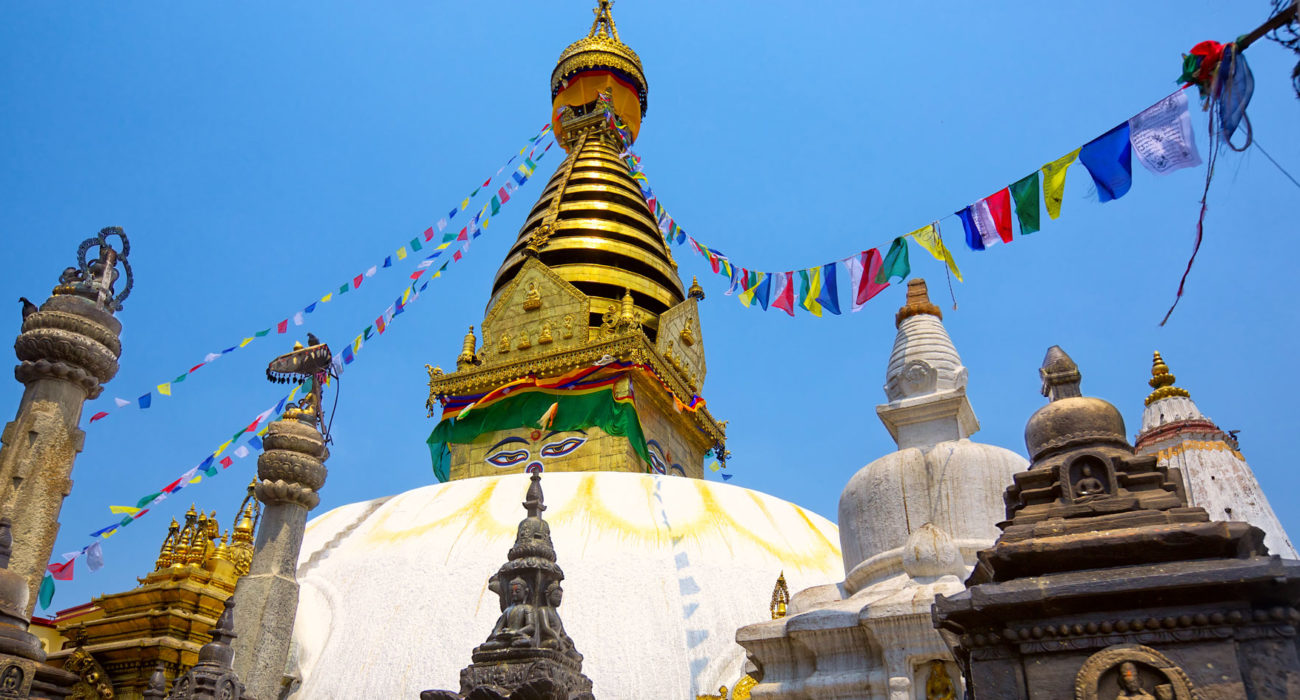
Nothing in Kathmandu's daily rhythm suggests the country just went through the heaviest disaster in decades. Hotels are taking guests normally, the valley's monuments — Boudhanath, Swayambhunath, the Durbar Squares — are open, the restaurants of Thamel are full in the evening. The same is true of Pokhara, which sits about 100 kilometres from where the temporary ice-and-rock dam on the Lhende Khola gave way: Phewa Lake is calm, the cafés along Lakeside are running, and for activities like paragliding, ask your local agency what's running that particular week.
That doesn't mean you won't feel anything. You'll hear people talking about relatives or neighbours they lost, and you'll see appeals for donations through official channels. Nepal is grieving, but it hasn't stopped — and the people who will host you, the guides, the lodge owners, the jeep drivers, are exactly the people who need your booking this year more than any other.
Chitwan National Park, in the south, is also operating normally: safaris, lodges, restaurants. If your plan combined culture, mountains and jungle, as we suggest in our ready-made Nepal itineraries, that part of the trip needs no change at all.
The sky and the weather in October
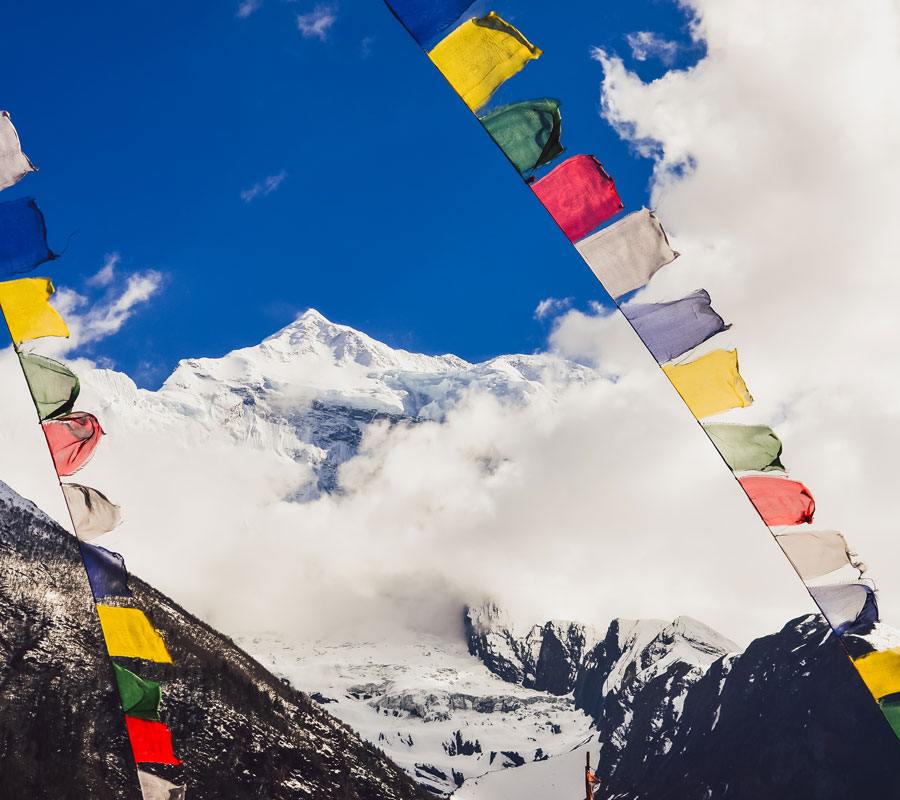
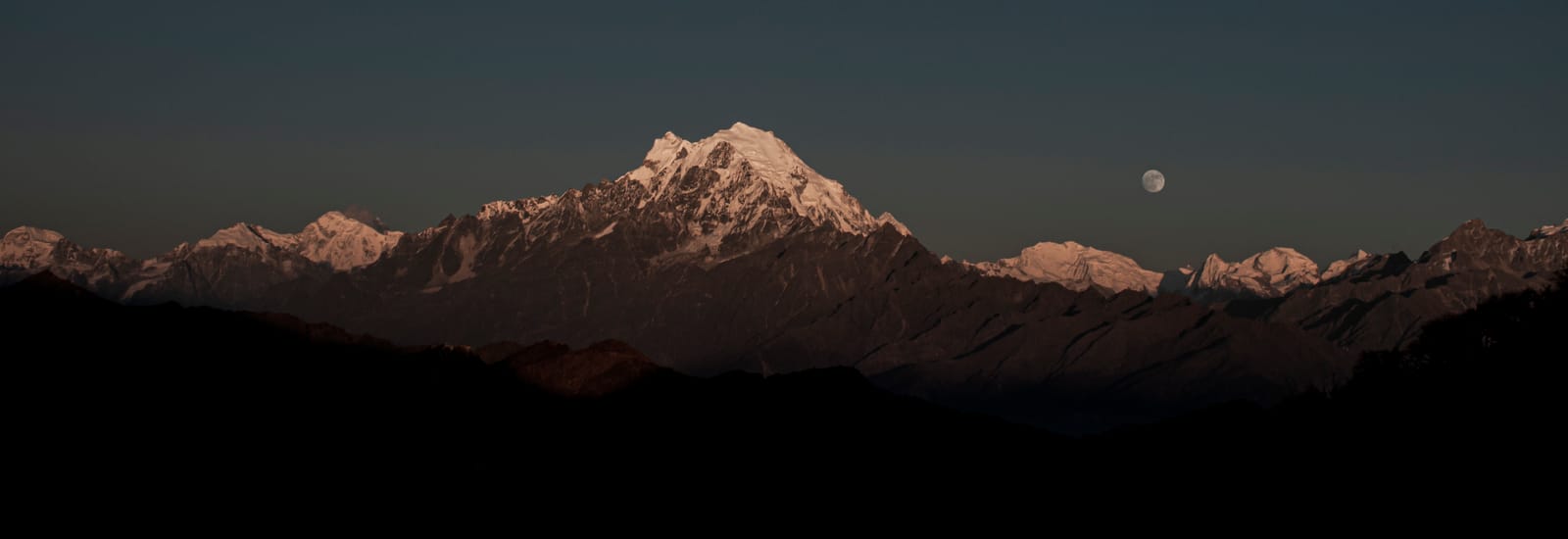
It's no accident that October is Nepal's busiest travel month. The monsoon tails off by late September, and what follows is an atmosphere that feels washed clean: the dust and humidity have settled, the sky stays deep blue for days on end, and the Himalayan peaks show up with a clarity that's hard to match any other time of year. It's exactly why our guide to the best time to travel to Nepal puts October and November at the top every year.
Temperatures are comfortable wherever a typical traveller will go: warm days and cool nights in Kathmandu and Pokhara, and on the trekking trails a cold that rises and falls with altitude but without winter's extremes. The ground has dried out after the rains, so the trails — outside the closed zones, of course — are in good shape.
The question a lot of people are asking this year is whether the August floods changed anything in that pattern. They didn't: this was a geological event, a glacier and temporary lake-dam collapse in one specific valley, not a climatic event affecting weather across the country. October 2026 will have the same clear sky as any other autumn, in the areas that are open.
Everest, Annapurna, Manaslu: elsewhere, and open
The fear I hear most often is whether someone's booked trek — Everest Base Camp, the Annapurna Circuit, Poon Hill, the Manaslu Circuit — sits anywhere near the disaster. It doesn't. Rasuwa is a specific district north of Kathmandu, in the Bhote Koshi and Trishuli valley. Everest sits in an entirely different mountain range, to the east, tens to hundreds of kilometres away. Annapurna sits to the west. And the Manaslu Circuit runs along a different river system altogether, the Budhi Gandaki, which was not touched by what happened on the Bhote Koshi and the Trishuli.
In practical terms this means the trails, the lodges and the flights to Lukla are all operating normally in the Everest region, as is the entire network around Annapurna Base Camp, the Circuit and Poon Hill. Domestic flights across the country — to Pokhara, Lukla, Bharatpur — have not been affected by the disaster at all and continue without interruption.
The one thing I'd recommend for Manaslu is asking your local agency about the specific access road before you book, simply because the road network around Kathmandu has local disruptions at the moment — not because the trek itself has any issue.
What actually changes for getting around
The one real, tangible problem you'll run into is the Kathmandu–Pokhara road, the Prithvi Highway. At Krishnabhir, about 200 metres of road subsided after the Trishuli undercut the base of the slope, and the road remains closed. The Department of Roads is cutting a temporary bypass track, with estimates pointing to reopening within September, but until the reopening is officially announced, don't count on the road at all.
The practical fix is to fly: 25 minutes instead of several hours by road, and even more than that right now if a detour is needed. If your plan had you on a Kathmandu–Pokhara bus, switch it to a domestic flight, at least until there's an official announcement that the road is back.
Beyond this one point, the transport a typical traveller relies on — Kathmandu, Pokhara, Chitwan, Lukla, the trekking trails outside Rasuwa — has no practical change at all. Your local agency or guide will know exactly which alternate route applies that particular week, because it's something that shifts almost daily.
Rasuwa and Langtang: why they stay closed
If you had planned anything in the Langtang Valley, at Gosaikunda, or in the Rasuwa district itself, this is the part that genuinely changes. The Rasuwa district and the banks of the Trishuli and Bhote Koshi remain a disaster zone with entry prohibited. The road to Syabrubesi, the starting point of every Langtang trek, no longer exists. Dhunche is reachable again only via a narrow, unpaved alternative route for light four-wheel-drive vehicles, which is not a regular trekking approach. The land crossing to Tibet at Rasuwagadhi is closed too.
I'm not going to tell you when Langtang reopens, because no one in a position to know is certain yet, and any date you'd hear right now would be a guess. What we do know is that the government has declared 15 municipalities disaster zones for three months and has mobilised thousands of soldiers, police officers and rescuers in the area.
If your trek was in Langtang, the sensible move is to swap it for Annapurna, Everest or Manaslu, ideally keeping the same guide and the same local agency, so the person who lost their work in Langtang doesn't lose it on your alternative trip either. The full live picture — what's open, what's closed, the casualty and missing-person figures — is kept current on our article on the floods and how to help, which is updated as the situation develops. That's always going to be the more current picture, more current than anything an article written for October can offer.
Travelling in a country that is grieving
There's something strange about packing a suitcase for a holiday while reading about more than a thousand dead and thousands still missing in that same country. I've thought about this a lot, living here for many years: the experience isn't as contradictory as it looks. Nepal isn't one place — it's a country of dozens of valleys, mountain ranges and communities, each living its own reality. Rasuwa is grieving heavily. Pokhara, a hundred-plus kilometres away, is living its ordinary October, with the same schedules, the same festive tables of Dashain and Tihar that usually fall around this time of year.
What you'll feel travelling this year is a mild, honest sadness in the air — not a spectacle, not exaggerated. You'll meet people who are working normally but have lost someone they knew or were related to. That isn't a reason to stay away; it's a reason to be a bit more considerate, a bit calmer, to not ask for a selfie in front of disaster, not to grill people who just buried relatives with reporter-style questions.
My own experience, having lived here for over a decade, is that after every major disaster the second wound for Nepal is the void left by cancellations. Tourism is a large slice of the economy, especially in the mountain countryside, and a group that shows up in October means work for guides, porters and families running small lodges who have nothing to do with Rasuwa but get hit just as hard by a blanket image of a 'dangerous country'.
Practical steps before you book
First, work with a local agency and a licensed guide. It's not just a legal requirement in Nepal since 2023 — right now it's also a matter of practical safety, because local guides know which roads have changed, which alternate route applies that particular week, and which areas remain off-limits.
Second, make sure you have travel insurance with altitude and helicopter evacuation cover if you're heading out to trek. That's true always, regardless of floods, but it carries extra weight this year with part of the road network in flux.
Third, don't rely on old information or on articles dated before 26 August. The situation on the roads and in the closed zones shifts week to week, so whatever you read needs a final confirmation shortly before you leave. If your plan has several legs — culture, trekking, safari — take a look at our ready-made Nepal itineraries to see how the transfers fit together and what applies to each leg right now.
How this affects the cost of your trip
I won't give you figures here, because it wouldn't be honest to — the cost of a Nepal trip is shaped case by case, depending on the season, the length, whether it includes trekking, domestic flights and the comfort level of the accommodation. What I can tell you qualitatively is where something might shift this year: if your plan had a Kathmandu–Pokhara bus and you switch it to a flight because of the closed Prithvi Highway, that nudges the transport cost up slightly, but it also saves you a lot of road time.
If, instead, you had Langtang booked and swap it for Annapurna or Everest, the cost doesn't change dramatically — they're different treks with different logistics, but at a comparable level. October in general is the year's most in-demand period, so accommodation and domestic flights get booked up — reserve early, regardless of the floods.
If you want to see exactly how your own trip shapes up, based on your days, the trek and the period you're considering, ask us for a quote and we'll reply with information that's current now, not general estimates.
Where to check before you leave
Everything you've read here reflects the picture as of 5 September 2026. Between now and your October departure, something may change — hopefully for the better, with the Prithvi Highway reopening, and perhaps progress on Langtang too.
That's why we keep a separate, living article dedicated to the post-flood situation, updated whenever something material changes: casualty and missing-person figures, which areas open or close, when the main road link is expected back. That page, not this one, is the reference point for the most current picture.
If you want the bigger picture of when it's worth travelling to Nepal beyond this year, or a clearer sense of autumn's climate against the other seasons, see our guide to Nepal's climate. And if you have a specific question about your own trip, write to us — we'd rather tell you the truth than leave you wondering.
Frequently asked questions
- Yes, based on the picture as of 5 September 2026. Kathmandu, Pokhara, Chitwan and the Everest, Annapurna and Manaslu regions are operating normally, and October is the best time of year for clear skies and dry trails. Before you leave, confirm the most current picture on our living flood article, since some details may have shifted by then.
- No. Both regions sit in entirely different mountain ranges from the disaster site, tens to hundreds of kilometres away. The trails, the lodges, the flights to Lukla and the whole network around Annapurna Base Camp, the Circuit and Poon Hill are operating normally, with no connection to what happened in Rasuwa.
- Langtang, Gosaikunda and the Rasuwa district remain closed, with no known reopening date. The sensible move is to swap the trek for Annapurna, Everest or Manaslu, ideally keeping the same guide and the same local agency, so the work that person had in Langtang isn't lost.
- By air, 25 minutes, is the best option right now. The Prithvi Highway remains closed at Krishnabhir, where about 200 metres of road subsided, with a temporary bypass track under construction. Until the reopening is officially announced, don't count on the bus connection.
- You'll feel a mild sadness in places, especially if you talk with people who've lost relatives or friends, but daily life in Kathmandu, Pokhara and Chitwan runs normally. Nepal is grieving without having stopped, and your visit this year directly helps the people who make their living from tourism.
- There's no single answer, because cost is shaped per trip, depending on season, length, the trek and internal transport. The one clear change is that the Kathmandu–Pokhara flight temporarily replaces the bus, which nudges the transport cost slightly. To see how your own trip shapes up, ask us for a quote.
- On our living article dedicated to the floods, updated whenever something material changes: which areas open or close, what's happening with the Prithvi Highway, and the official casualty and missing-person figures. This article gives the general picture for October, but the living article always has the final word.
Keep reading
Related articles
 Articles
The biggest help you can give Nepal is to visit
On 26 August 2026 a piece of mountain turned into water and took villages, bridges and more than a thousand lives with it. I have lived here for fifteen years. Here is what happened, what is open, how you can help today, and why your trip in October is the biggest help of all.
 Travel
Nepal – On Top of the World | 10 Days, 8 Nights
Our 10-day / 8-night group tour of Nepal — Kathmandu, Chitwan and Pokhara — with a Greek-speaking host and a full day-by-day itinerary.
 Travel
Nepal Itineraries: Ready-Made 7, 10, 14 & 21-Day Plans
Ready-made Nepal itineraries, day by day: a 7-day cultural trip, a 10-day classic with Chitwan, a 14-day plan with a trek, and a 21-day adventure with Everest Base Camp. With practical tips and links to every destination guide.