

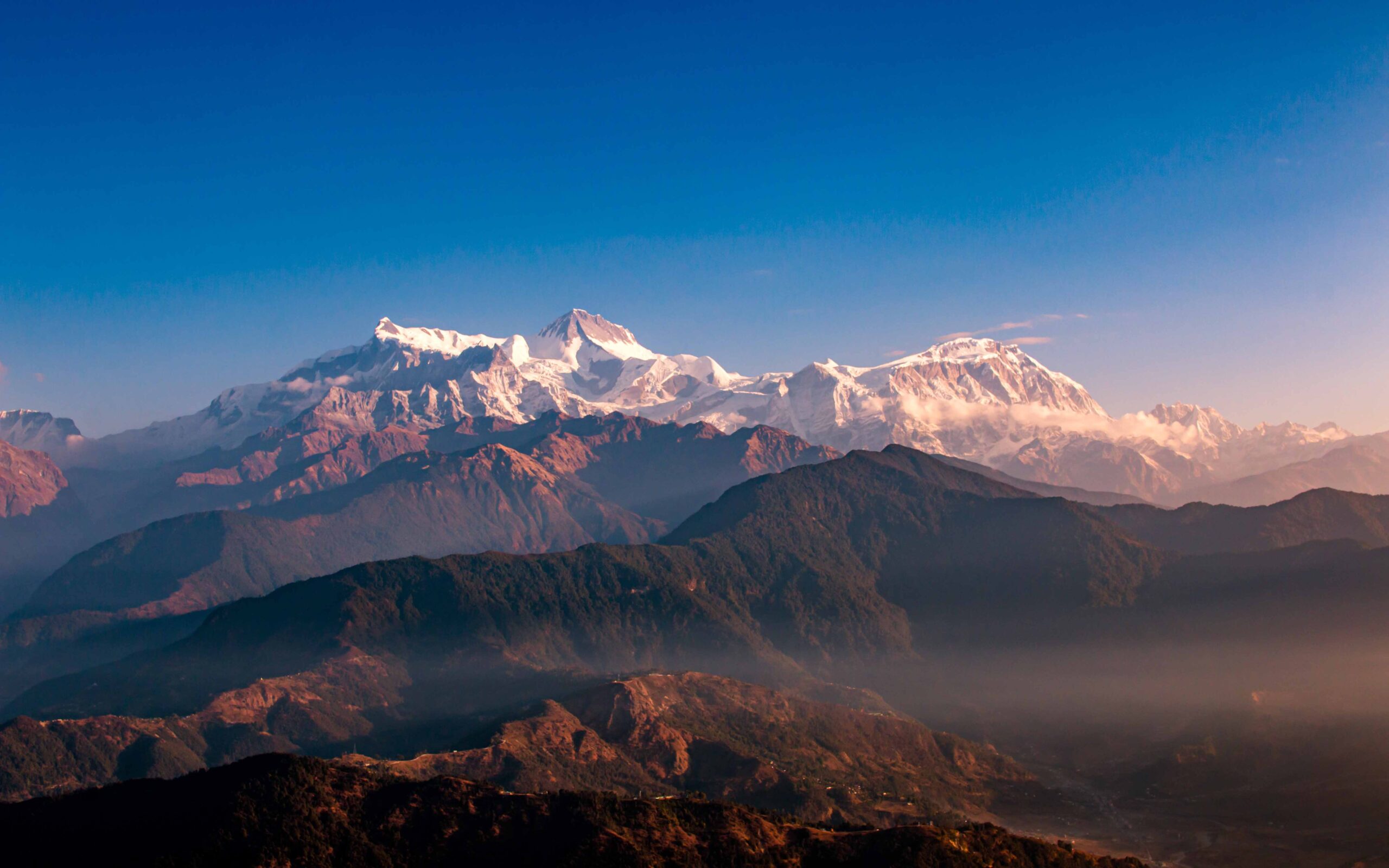
If you want to walk in Annapurna but do not have two weeks, and would rather not share the trail with hundreds of other people, the Mardi Himal trek is one of the most interesting options. It is a short route that climbs onto a narrow ridge, with Machapuchare (Fishtail) keeping you company at almost every turn and the Annapurna range opening up behind it.
The trail was officially opened to trekkers in 2012, so it is newer than Nepal's classics. You can feel that in the path and in the lodges: simpler, quieter and less commercial than Poon Hill or Annapurna Base Camp. It starts close to Pokhara, which makes it a good fit for a trip with limited time.
This guide covers the route day by day, the real level of difficulty, what High Camp actually means, which seasons are worth it, how the lodges work, what applies to permits and guides, and an honest comparison with the two big alternatives in the region. Wherever something changes from season to season, I say so, so that you can confirm it before you leave.
What Mardi Himal is and why it stands out
Mardi Himal is a peak in the Annapurna region, but the trek does not aim for the summit. It aims for a ridge that climbs gradually through forest, opens onto alpine meadows and ends at a viewpoint at around 4,500 metres, known as the Upper Viewpoint. Exact altitudes differ a little between maps and sources, so read them as approximations.
What defines the route is that you walk along a ridgeline rather than through a valley. The views do not arrive only at the end: from a certain point onward they are in front of you constantly. Machapuchare looks so close that at times you feel you could touch it.
That is why I recommend it to two kinds of people: those who have already done an easy trek and want something more adventurous, and those who prefer quiet to fame. If you want the wider picture of the region before deciding, start with our guide to trekking in Annapurna.
At a glance
The table gathers the essentials. Hours and altitudes are indicative and depend on where you start, your pace and the weather.
Read it as a first picture, not as a final plan. Anything that can change, such as trailheads, permit rules and the weather, needs to be confirmed before you travel.
| Detail | Info |
|---|---|
| Duration | Usually 5 to 7 days from and back to Pokhara |
| Maximum altitude | About 4,500m (Upper Viewpoint) |
| High Camp | About 3,500 to 3,600m |
| Difficulty | Moderate, with steady climbing and steep ridges |
| Start | Near Pokhara, by jeep or taxi transfer |
| Best seasons | Autumn and spring |
| Accommodation | Teahouses, simpler higher up |
| Permits | ACAP and the licensed-guide rule, to be confirmed before travel |
The route day by day
There are variations, depending on where the vehicle drops you and how much time you have. The most common version climbs from Pokhara towards Kande or Phedi, passes Australian Camp and Deurali, and then enters the forest towards Forest Camp. From there the ridge opens up: Low Camp, Badal Danda and High Camp.
The Upper Viewpoint day starts very early. From High Camp you climb towards the Upper Viewpoint and, if the weather allows, watch the first light hit the peaks. The return usually goes down towards Siding and Lwang, or back along the same ridge, depending on the plan and the condition of the trails.
The plan below shows a realistic 5-day version and a more relaxed 6 to 7-day one. Ask your guide or agency to confirm the current trailheads, because roads change and with them the first and last day.
| Day | Plan | Character |
|---|---|---|
| 1 | Pokhara, transfer, climb towards Forest Camp or Deurali | Forest, steady climbing |
| 2 | Forest Camp to Low Camp and Badal Danda | The ridge starts to open |
| 3 | On to High Camp | Views and thinner air |
| 4 | Upper Viewpoint and descent | The big day |
| 5 | Descent towards Siding and Pokhara | Long downhill |
| 6 to 7 (optional) | Extra day for acclimatisation or weather buffer | Flexibility |
High Camp and the view
High Camp is where you sleep before the big day. It sits on an open ridge at around 3,500 to 3,600 metres and has a few simple lodges facing Machapuchare and the Annapurna range. There are no luxuries, but there is something rarer: silence, and a sky full of stars when the weather allows.
This is where good preparation shows. It is cold, the wind blows, and the morning wake-up happens in the dark. You need a proper layering system, a headtorch and patience. The reward is that, with a clear sky, sunrise over the ridge is one of the strongest images in the region.
From my experience in the mountains, the biggest mistake on this route is arriving at High Camp already exhausted and assuming the next day will take care of itself. Save your energy, do not rush the first days and leave room for weather. The view is not guaranteed on any given day, and a flexible plan makes the difference.
Difficulty, altitude and fitness
Mardi Himal is considered moderately difficult. You do not need technical mountaineering, ropes or crampons in a normal season, but the climb is steady and in places steep. You walk several hours every day, often on a narrow ridge, and the descent tires knees and thighs more than most people expect.
The key issue is altitude. You gain height fairly quickly over a few days, and the highest points are high enough to deserve respect. The basic rules: ascend slowly, drink water, sleep lower than your highest point of the day where possible, and do not hide symptoms. If a headache, nausea or dizziness persists, the right move is to stop climbing and descend.
For medical questions, such as preventive medication or pre-existing conditions, talk to a doctor before the trip. A travel guide cannot decide that for you. Also make sure your travel insurance covers trekking at this altitude and evacuation, and read the terms carefully.
When to go: seasons
The two good seasons are autumn and spring. Autumn, mainly October and November, usually offers clearer skies and steadier weather, but also more people. Spring, from March to May, brings blooming rhododendrons in the forest and warmer days, with a hazier horizon often building in the afternoon.
Winter has clear days but is very cold, with a chance of snow on the higher sections, which changes both the route and the safety picture. The monsoon, from June to September, brings rain, leeches and cloud that hides exactly what you came to see. I avoid it for this route.
Weather in the Himalaya does not always follow the calendar. For more background, see our best-time guide, and ask your guide for the current picture shortly before you set out.
Accommodation and food
You sleep in teahouses, which are simple family-run lodges. Lower down you will find more comfort. As you climb, rooms become plainer, hot water scarcer and charging more limited. The shared dining room with its stove is where you spend the evenings.
Food is simple and filling: dal bhat, noodles, rice, eggs, soups, tea. Try to eat what the locals eat, because it is cooked fresh and keeps you going after a long day. At this altitude it is wise to avoid alcohol and drink plenty of fluids.
Know early that lodging at High Camp is limited. In peak season it can fill up, and a booking made by your guide or agency makes a practical difference. Bring a sleeping bag suited to the cold, even if lodges provide blankets.
Permits, guide and what to confirm
The area belongs to the Annapurna Conservation Area, so you need the ACAP permit. There is an official fee that changes from time to time, so confirm it on the official source or through an agency before you travel. Issuing is normally done in Kathmandu or Pokhara and you need your passport and photos.
Since 2023 a rule has applied that, on the classic routes, requires a licensed guide through an agency, and its enforcement has shifted over time. For this route, in practice, expect to need a guide. For the full permit picture, read our guide to trekking permits in Nepal.
A guide is not only a formality. On a ridge, in fog or changing weather, someone who knows the trail, the lodges and when to turn back is genuine safety. Current rules, the TIMS card and local requirements must be confirmed before you leave.
Mardi Himal, Poon Hill or ABC: which to choose
The comparison is the most frequent question. Poon Hill is the gentlest option: fewer days, lower altitude and denser infrastructure. Annapurna Base Camp is the big classic, with more days and the amphitheatre experience. Mardi Himal sits in between: short, but wilder and quieter.
If you have few days and no experience, start with the Poon Hill trek. If you want the region's big classic and have the time, see the Annapurna Base Camp trek. If you want something short, quiet and more personal, Mardi Himal fits.
Many travellers also treat them as a combination, since the trails connect in wider programmes. That, however, means more days and more altitude, so it is worth discussing before you lock the plan.
| Criterion | Poon Hill | Mardi Himal | Annapurna Base Camp |
|---|---|---|---|
| Duration | Short | Short to medium | Medium to longer |
| Difficulty | Easy to moderate | Moderate | Moderate |
| Altitude | Lowest (3,210m) | High point about 4,500m, sleep about 3,600m | Sleep at 4,130m |
| Crowds | Many | Fewer | Many |
| Best for | First trek, families | Second trek, quiet | First big trek |
What drives the cost
Cost is not a fixed figure. It goes up when you pick peak autumn, a small group, a private vehicle, a porter, more comfortable lodging or extra days. It goes down when you travel off-peak, in a larger group and with simpler choices.
It is worth spending more where it counts: on an experienced guide, on a realistic plan with a buffer day, and on good insurance. It is worth saving where you lose nothing, such as excess gear you can rent instead of buy.
For a concrete number, the price is shaped per trip. Tell us when you are thinking of going, how many of you there are and whether you want Mardi Himal alone or with an extension. Ask us for a quote.
How to organise the trip
From Greece there is no direct flight to Nepal, so allow for one stop and some adjustment time. From Kathmandu, Pokhara is either a short flight or a longer road journey by bus or vehicle. Leave a day or two in Pokhara before and after the trek, because flight delays and weather are real factors.
Practically, three things make the difference: a plan with one spare day, gear you have already tested, and a guide who will say "we turn back" when needed. From what I see, a trek more often goes wrong because of a plan with no margin than because of fitness.
If you want the wider picture of the region before choosing, see our guide to trekking in Annapurna. And remember: Mardi Himal suits travellers who want a short trek with fewer people than the classic routes, and for many that is exactly the point.
Frequently asked questions
- Usually 5 to 7 days from and back to Pokhara. Five days is doable if you start early and the weather cooperates, while a sixth or seventh day gives you room for acclimatisation and bad weather. Confirm the final schedule with your guide.
- It is considered moderately difficult. No technical climbing is needed, but the ascent is steady, the ridge is steep in places and the altitude at the end is serious. Good preparation with walking and stairs helps a lot. If you have any health concern, consult a doctor.
- It is the overnight stop before the big day, on an open ridge at around 3,500 to 3,600 metres, with simple lodges and views of Machapuchare and the Annapurna range. It is cold, so you need warm clothing, a suitable sleeping bag and a headtorch for the early start.
- Autumn (October and November) usually offers the clearest skies, while spring (March to May) brings blooming rhododendrons. The monsoon brings rain and leeches, and winter is cold with possible snow. Mountain weather can always change, so keep some flexibility in your plan.
- You need the ACAP permit, because the area lies within the Annapurna Conservation Area. Since 2023 a licensed-guide rule through an agency applies on the classic routes, and its enforcement has shifted over time. Confirm the current rules before you travel.
- If you have few days and no experience, Poon Hill is gentler, with lower altitude and more infrastructure. If you have already done something easy and want quiet, a wilder ridge and a closer view of Machapuchare, Mardi Himal is the better fit for you.
- There is no single figure for everyone. The cost depends on the season, group size, length, vehicle, whether you want a porter and the comfort level of the lodges. The price is shaped per trip, so you can [ask us for a quote](/en/contact/).
Keep reading
Related articles
 Activities
Trekking in Nepal: The Complete Hiking Guide
The definitive guide to trekking in Nepal: teahouse trekking, the main regions, a comparison of the top treks, permits, seasons and how to choose your route.
TrekkingAnnapurna: The Complete Trekking Guide to Nepal's Most Popular Region
The Annapurna massif, the top routes (ABC, Circuit, Poon Hill, Mardi Himal, Tilicho), the ACAP permit, seasons, sample itineraries and how to choose.
 Trekking
Annapurna Base Camp Trek (ABC): The Complete Guide
The 'amphitheatre of the gods' at 4,130m: a day-by-day itinerary, difficulty, ACAP permits, seasons and how to combine it with Poon Hill.